Category: Food & Drink

Best Homemade Baked Beans Recipe: Easy & Delicious British-Style Baked Beans

When it comes to comfort food, hearty baked beans recipe tops the list. Whether you’re craving a traditional British-style dish or a homemade twist on canned beans, this guide will provide everything you need to create flavorful, wholesome baked beans in your kitchen. Say goodbye to artificial flavors & hello to decadent, savory goodness made from scratch.

Why Choose a Homemade Baked Beans Recipe?

While canned baked beans are convenient, they often contain preservatives and lack the depth of flavor that homemade recipes can provide. A homemade baked beans recipe gives you complete control over the ingredients, making it healthier, tastier, and customizable to suit your preferences.

Baked Beans RecipeIngredients You’ll Need

To prepare this classic baked beans recipe, gather the following ingredients:

  • Navy beans (or haricot beans): The star of the dish, providing a creamy texture.
  • Onion and garlic: For a robust, savory base.
  • Tomato paste: Adds depth and enhances the sauce’s flavor.
  • Brown sugar: Balances the tanginess with a touch of sweetness.
  • Molasses or honey: Traditional sweeteners for an authentic taste.
  • Dijon mustard: Adds a mild kick and rounds out the flavors.
  • Worcestershire sauce: For a subtle umami touch.
  • Chicken or vegetable stock: The liquid base for the beans.
  • Cornflour (optional): Helps thicken the sauce for a glossy finish.

Step-by-Step Baked Beans Recipe

Step 1: Prepare the Beans

If using dried beans, soak them overnight in water and cook until tender (approximately 1–2 hours). For convenience, canned beans can be rinsed and used directly.

Step 2: Sauté Aromatics

Heat some oil and sauté chopped onions and garlic until fragrant in a large pot or Dutch oven.

Step 3: Build the Sauce

Add tomato paste, brown sugar, molasses, Dijon mustard, and Worcestershire sauce to the pot. Stir well to combine, creating a thick and flavorful base.

Step 4: Add Beans and Stock

Pour in the beans and stock, ensuring the beans are fully submerged. Simmer on low heat for 30–40 minutes, permitting flavors to meld together.

Step 5: Thicken the Sauce

If the sauce is too thin, dissolve cornflour in water and stir it into the pot. Cook for an additional 5 minutes until the sauce thickens.

Step 6: Serve and Enjoy

Serve the baked beans warm with crusty bread, baked potatoes, or grilled meats.

Tips for Perfect Baked Beans

  1. Use the right beans: Navy or haricot beans work best due to their creamy texture.
  2. Don’t rush the simmering process: Slow cooking allows the flavors to develop fully.
  3. Customize sweetness: Adjust the amount of brown sugar and molasses to suit your taste.

Serving Suggestions

This versatile baked beans recipe can be enjoyed in numerous ways:

  • Spread on toast for a classic British-style breakfast.
  • As a side dish with grilled chicken or sausages.
  • Stuffed into baked sweet potatoes for a hearty vegetarian meal.
  • Served at barbecues as a crowd-pleasing addition.

Baked Beans RecipeNutritional Benefits of Homemade Baked Beans

Homemade baked beans are rich in protein, fiber, and essential vitamins. By controlling the ingredients, you can reduce added sugars and sodium compared to store-bought options, making it a healthy choice for the whole family.

Tags: , ,

6 Easy Apple Cider Vinegar Recipes for Flavorful Meals and Health Benefits

Apple cider vinegar is one of the pantry staples that has stood the test of time & is praised for its potential health benefits and culinary versatility. While many people are familiar with its use in health tonics or as a natural remedy, there’s so much more this humble ingredient can do. Whether you’re looking for a tangy vinaigrette, a flavorful marinade, or a way to elevate your vegetable dishes, there’s an apple cider vinegar recipe for every occasion. Let’s dive into how to incorporate Apple Cider Vinegar Recipe into your cooking.

1. Simple Apple Cider Vinegar Salad Dressing

A classic apple cider vinegar recipe is a basic salad dressing. This quick and easy recipe has just a few ingredients and is an excellent way to bring out the flavors of fresh greens & vegetables.

Ingredients:

  • 1 part Bragg Apple Cider Vinegar (with the mother)
  • 1 part olive oil
  • Salt and pepper to taste

Instructions:

  1. Whisk together apple cider vinegar & olive oil in a small bowl.
  2. Season with salt & pepper, adjusting to taste.
  3. Drizzle over your favorite salad or greens.

This tangy, slightly sweet vinaigrette pairs perfectly with simple salads, but you can also use it to dress cole slaw, pasta salads, or even warm potato salad.

2. Apple Cider Vinegar Marinade for Meat

Apple cider vinegar is a fantastic marinade ingredient because it tenderizes meat while adding a unique depth of flavor. You can use it to marinate chicken, or beef.

Ingredients:

  • 3 tbsp Bragg Apple Cider Vinegar
  • 2 tbsp olive oil
  • 1 tbsp honey
  • 1 tsp cayenne pepper
  • Salt and pepper to taste

Instructions:

  1. Whisk together all ingredients in a bowl.
  2. Pour over your choice of meat, ensuring it’s well coated.
  3. Allow it to marinate for at least 30 minutes before grilling, roasting, or pan-searing.

This apple cider vinegar marinade adds a spicy, tangy kick to meats and is especially great for grilling or barbecuing.

3. Quick Pickled Vegetables

Quick pickles are one of easiest ways to enjoy the flavor and benefits of apple cider vinegar. In minutes, you can pickle various vegetables, such as cucumbers, carrots, onions, or radishes.

Ingredients:

  • 1 cup Bragg Apple Cider Vinegar
  • 1 cup water
  • 1 tbsp sugar
  • 1 tsp salt
  • Sliced vegetables (cucumbers, carrots, onions)

Instructions:

  1. Combine apple cider vinegar, water, sugar, salt in a pot & bring to a simmer.
  2. Pour the hot brine over the sliced vegetables in a jar.
  3. Let the mixture sit for about 10 minutes before draining the vinegar.

These quick pickles can be stored in fridge and enjoyed as a crunchy side dish, topping, or snack.

4. Apple Cider Vinegar for Roasted Vegetables

Apple cider vinegar is also an excellent addition when roasting vegetables. Adding a splash of ACV to your oil mixture enhances the flavors and helps to caramelize the veggies beautifully in the oven.

Apple Cider Vinegar RecipeIngredients:

  • 1 tbsp Bragg Apple Cider Vinegar
  • 2 tbsp olive oil
  • Your favorite vegetables (carrots, Brussels sprouts, potatoes)
  • Salt and pepper to taste

Instructions:

  1. Preheat oven to 400°F (200°C).
  2. In bowl, combine olive oil, apple cider vinegar, salt, and pepper.
  3. Toss your vegetables in the mixture until well-coated.
  4. Roast for 30 minutes, stirring halfway through, vegetables are tender & slightly crispy.

Adding apple cider vinegar adds a tangy richness to the vegetables, making them irresistible.

5. Apple Cider Vinegar for Detox Water

While apple cider vinegar is known for its health benefits, it also makes a refreshing addition to a detox water recipe. This is an excellent option if you’re looking for a simple way to incorporate ACV into your daily routine.

Ingredients:

  • 1-2 tbsp Bragg Apple Cider Vinegar
  • 1 cup water
  • 1 tsp honey (optional)
  • Lemon slices (optional)

Instructions:

  1. Mix the apple cider vinegar with water.
  2. Stir in honey if desired for sweetness.
  3. Add few slices of lemon for extra flavor.

Drinking this ACV water in the morning or throughout the day is a popular way to support digestion and metabolism, making it a perfect addition to your wellness routine.

6. Apple Cider Vinegar Detox Smoothie

If you’re looking for an apple cider vinegar recipe that blends health benefits with flavor, try adding it to a smoothie—the vinegar’s acidity pairs surprisingly well with fruits like apples and berries.

Apple Cider Vinegar RecipeIngredients:

  • 1 tbsp Bragg Apple Cider Vinegar
  • 1 cup water or almond milk
  • 1 banana
  • 1/2 cup mixed berries (blueberries, strawberries)
  • 1 tsp honey (optional)

Instructions:

  1. Add ingredients to blender & blend until smooth.
  2. Adjust sweetness by adding honey if necessary.

This refreshing smoothie can kickstart your day and boost your digestion, making it an excellent healthy option.

Conclusion

Apple cider vinegar is more than just trendy health tonic—it’s a versatile ingredient that can enhance a variety of dishes in your kitchen. From salad dressings to marinades and even detox drinks, there are countless apple cider vinegar recipes to try. By incorporating it into your cooking routine, you’ll boost flavor and potentially reap the health benefits of this powerhouse ingredient. So why not explore how apple cider vinegar can elevate your meals and wellness today?

Tags: , ,

Top 10 Delicious High Protein Desserts to Fuel Your Fitness Goals

When it comes to attaining fitness goals, diet plays a huge role. High Protein Desserts is essential for muscle recovery, energy, and overall health, but who says you can’t enjoy a little sweetness while staying on track? High-protein desserts are here to satisfy your sweet tooth without derailing your progress. Whether craving something rich and chocolatey or light and fruity, these ten delicious high protein desserts are perfect for fueling your fitness goals.

Top 10 Delicious High Protein Desserts to Fuel Your Fitness Goals

1. Chocolate Protein Brownies

Rich, fudgy, and protein-packed, these chocolate brownies are the perfect guilt-free treat after a workout. Made with protein powder, almond flour, and dark chocolate, these brownies give you the indulgence you crave without the sugar overload. They’re simple to make and can be stored for a few days, so you always have a high-protein snack ready.

2. Greek Yogurt Parfait with Berries and Nuts

Layered with antioxidants, healthy fats, and a punch of protein, this Greek yoghurt parfait is as nutritious as it is delicious. Start with a base of Greek yoghurt, naturally in High Protein Desserts , then add fresh berries and a sprinkle of nuts for added crunch and flavour. It’s a quick, easy dessert that satisfies and fuels your body with essential nutrients.

3. Peanut Butter Protein Balls

These no-bake peanut butter protein balls are quick to make and perfect for a post-workout energy boost with High Protein Desserts. Made with ingredients like oats, peanut butter, and protein powder, these bites are both portable and filling. You can customize them by counting dark chocolate chunks, chia seeds, or shredded coconut for added texture and flavour.

4. Protein Ice Cream

You can enjoy ice cream and meet your High Protein Desserts goals! You can buy pre-made protein ice cream or make your own at home by blending protein powder with frozen bananas, berries, and almond milk. The result is a creamy, delicious dessert that gives you all the enjoyment of traditional ice cream with a high-protein twist.

5. Chia Pudding with Protein Powder

Chia pudding is already a healthy dessert, but adding protein powder becomes a powerhouse of nutrients. Mix chia grains with almond milk and your favourite protein powder, then let it sit in the fridge to thicken. Top it with fruits, nuts, or granola for a nutritious dessert perfect for any time of day.

6. Protein-Packed Cheesecake Bites

Cheesecake lovers, rejoice! These protein-packed bites give you all the creamy goodness without the guilt. You can create mini cheesecake bites rich in flavour and protein using low-fat cream cheese and protein powder. They’re easy to make and a perfect dessert to keep in the fridge for when cravings strike.

7. Almond Flour Protein Cookies

Craving cookies but don’t want the sugar crash? These almond flour protein cookies are your answer. Almond flour, combined with protein powder and a bit of honey, makes a soft, chewy cookie high in healthy fats and protein. These cookies are great as a post-workout snack or a mid-day treat.

8. Protein Mug Cake

Ready in just minutes, this protein-packed mug cake is an excellent solution for a rapid, healthy dessert. Mix the protein powder, almond flour, and a few other ingredients in a mug, microwave it for about a minute, and you have a warm, gooey dessert perfect for satisfying a sweet craving in a hurry.

9. High-Protein Chocolate Mousse

Silky, rich, and surprisingly High Protein Desserts , this chocolate mousse is a fitness-friendly dessert you’ll love. Made with Greek yoghurt, silken tofu, and high-quality cocoa powder, this mousse has a velvety texture that’s sure to please. It’s leisurely designed and can be stored in the fridge for several days.

10. Cottage Cheese and Fruit Bowl

This simple yet satisfying cottage cheese and fruit bowl is refreshing and packed with protein. Cottage cheese is a delicious source of slow-digesting protein, perfect for a nighttime snack, High Protein Desserts . Add some fresh berries, pineapple, or a drizzle of honey to elevate the flavour without sacrificing nutrition.

Conclusion:

High Protein Desserts doesn’t mean sacrificing your fitness goals; these high-protein treats ensure you can satisfy your precious tooth and fuel your body at the exact time. Whether preparing a quick snack or something more decadent, these desserts are a delicious way to boost your protein intake. Give them a try and enjoy the best of both worlds great taste and fitness success!

Frequently Asked Questions (FAQs)

[rank_math_rich_snippet id=”s-19e04714-6619-4a3b-ad5f-df4f4c7021f7″]

Easy Homemade French Bread Recipe | Bake Authentic Baguettes

[vc_row][vc_column][vc_column_text]There’s nothing quite like the taste of fresh, homemade French bread – the crispy golden crust, soft fluffy interior, and that irresistible aroma that fills your kitchen. While French bread (commonly known as a baguette) is a staple in France, you don’t have to be a professional baker or travel to France to enjoy a delicious loaf. With the right technique and ingredients, you can bake authentic, bakery-quality French bread at home.

In this article, we’ll walk you through an easy homemade French bread recipe. We’ll cover everything from selecting ingredients to mastering the kneading process, shaping the dough, and achieving that perfect golden crust. Whether you’re new to baking or a seasoned pro, this guide will help you bake the best French bread with ease.

Introduction to French Bread

French bread, especially the baguette, has been a cherished part of French culture for centuries. Renowned for its crunchy crust and elongated form, and soft interior, French bread is often used in everything from sandwiches to dipping into soups and sauces. This bread’s simplicity is what makes it so beautiful – it’s made from basic ingredients like flour, water, yeast, and salt, yet yields such rich flavor and texture.

While French bread may seem intimidating to make, the process is actually quite simple. By following this easy French bread recipe, you’ll be able to bake your own loaves with confidence, and enjoy the satisfaction of creating this iconic bread from scratch.

Ingredients for Homemade French Bread

To create authentic French bread, you’ll only need a handful of ingredients. However, the quality and balance of these ingredients have an important effect on the final result. Here’s what you’ll need:

A collection of ingredients for making homemade French bread sits on a wooden countertop. A bowl of flour, a measuring cup of water, a small dish of salt, a plate of sugar, and a packet of yeast are neatly arranged.
Simple ingredients for making fresh, homemade French bread: flour, water, yeast, sugar, and salt. ©Ideogram

Ingredients:

  • 4 cups of all-purpose flour (or bread flour for a chewy texture)
  • 1 ½ cups of warm water (about 110°F or 45°C)
  • 1 packet (2 ¼ teaspoons) of active dry yeast
  • 2 teaspoons of sugar
  • 2 teaspoons of salt
  • 1 tablespoon of olive oil (optional, for added flavor)

These ingredients form the foundation of a traditional French bread recipe, allowing you to craft a loaf with perfect texture and flavor.

Tools You’ll Need for This French Bread Recipe

Having the right tools can make the bread-making process smoother. Here’s what you’ll need for this recipe:

  • Mixing bowl: For combining the ingredients.
  • Use measuring spoons and cups: To measure ingredients precisely,
  • Baking sheet or baguette pan: A baguette pan is ideal for shaping, but a baking sheet works just as well.
  • Sharp knife or bread lame: To score the top of the bread before baking.
  • Clean kitchen towel: For covering the dough while it rises.
  • Stand mixer (optional): If you want to avoid kneading by hand.
  • Spray bottle of water: To create steam in the oven for a crispy crust.

Also Read: Simple Sandwich Bread Recipe | Homemade Bread for Every Meal

Step-by-Step French Bread Recipe

Now, let’s dive into the actual process of making homemade French bread. Follow this step-by-step guide, and you’ll have fresh, warm bread in no time.

A collage of steps in making French bread, showing the process from mixing dough to baking. The stages include mixing the dough, shaping it, scoring the loaves, and baking them in the oven.
Step-by-step guide to making homemade French bread: from mixing and shaping the dough to baking golden loaves. ©Ideogram

Activate the Yeast

Begin by activating your yeast. Mix the sugar, yeast, and warm water in a small bowl. Stir it gently and let the mixture sit for about 5–10 minutes. You’ll know the yeast is activated when it becomes frothy and bubbly on the surface. If it doesn’t foam up, your yeast may have expired, and you’ll need to start with fresh yeast.

Mix the Dough

Pour in the yeast mixture slowly, stirring with a spoon or on low speed in a mixer. Slowly pour in the yeast mixture and stir with a spoon or use the mixer on low speed. Add the olive oil if you’re using it, which will give the bread a slightly richer flavor. Continue mixing until a dough forms.

Knead the Dough

Kneading is essential for developing gluten, which gives the bread its structure and chewiness. If you’re kneading by hand, turn the dough onto a lightly floured surface and knead for about 8–10 minutes. The dough should become smooth, elastic, and slightly tacky. When utilizing a stand mixer equipped with a dough hook, knead on medium speed for 5–7 minutes.

Let the Dough Rise

After kneading, roll the dough into a ball and put it in a bowl that has been lightly oiled. Cover the bowl with a clean kitchen towel and let the dough rise for one to one and a half hours, or until doubled in size, in a warm location.

Shape the Dough

After the dough has risen, punch it down to release any air bubbles. Turn the dough onto a floured surface and divide it into two equal portions (for two baguettes). Shape each portion into a long, baguette-like loaf. You can use a baguette pan to help maintain the shape, or place them on a baking sheet.

Second Rise

Once shaped, cover the loaves again with a towel and let them rise for another 30–40 minutes until they puff up slightly.

Preheat the Oven

While the loaves are undergoing their second rise, preheat your oven to 450°F (230°C). To achieve a bakery-style crust, place an empty metal tray or cast-iron skillet at the bottom of the oven. This will be used to create steam.

Score the Loaves

Before baking, use a sharp knife or bread lame to make 3–4 diagonal slashes on the top of each loaf. This allows the bread to expand properly in the oven.

Bake the Bread

Arrange the loaves on the middle rack of the oven. Immediately pour about 1 cup of water into the hot tray or skillet at the bottom of the oven. The steam will contribute to a crust that is crunchy. For 20 to 25 minutes, bake, or until the loaves are hollow when tapped on the bottom and have a golden brown color.

Cool and Enjoy

After taking the bread out of the oven, let it cool for at least 15 minutes before slicing. Enjoy your homemade French bread with butter, jam, or as a side to any meal!

Tips for Perfecting Your French Bread

Even though this is an easy French bread recipe, a few tips can help you achieve an even better result:

  • Use warm water: Water that’s too hot can kill the yeast, while cold water won’t activate it properly. Aim for water that’s around 110°F (45°C).
  • Don’t over-knead: Knead the dough just until it’s smooth and elastic. Over-kneading can make the bread too dense.
  • Create steam: The steam created by pouring water into a hot tray helps the bread form a crispy, crackly crust – a hallmark of good French bread.
  • Slash the dough properly: Scoring the dough before baking not only looks professional, but it also helps the bread expand evenly in the oven.

Variations of French Bread

While the traditional French bread recipe is delicious on its own, you can also experiment with variations:

  • Garlic French Bread: Add garlic and herbs to the dough for a flavorful twist.
  • Whole Wheat French Bread: Substitute half the flour with whole wheat flour for a more wholesome version.
  • Stuffed French Bread: Stuff the loaf with cheese or deli meats before baking for a savory snack.

Also Read: 10 Delicious Sourdough Discard Recipes

Serving Suggestions for Homemade French Bread

A wooden platter displaying an assortment of sliced French bread, cheeses, ham, and olive oil. A glass of white wine is partially visible in the background.
A delicious spread featuring fresh French bread, a variety of cheeses, ham, and olive oil, perfect for a cozy gathering. ©Ideogram

French bread is incredibly versatile and pairs well with a variety of dishes:

  • Appetizer: Serve warm slices with olive oil and balsamic vinegar for dipping.
  • Soup or Stew: Use it to soak up the broth in your favorite soup or stew.
  • Sandwiches: Slice the bread lengthwise for a delicious sandwich base.
  • Toast: Make French toast or crostini with leftover slices.

Conclusion

French bread baking at home can be a rewarding and surprisingly straightforward process. With just a few basic ingredients and some simple techniques, you can create a loaf that rivals anything found in a bakery. This easy homemade French bread recipe ensures that even novice bakers can achieve a crispy golden crust and soft, fluffy interior, perfect for any meal. The key is patience, proper kneading, and understanding the importance of steps like creating steam in the oven, which helps to produce that signature crunchy crust.

Whether you’re making bread for a family dinner, a weekend brunch, or simply for the joy of baking, mastering this French bread recipe will open up a world of possibilities in your kitchen. Not only will you have the satisfaction of creating delicious, authentic bread, but you’ll also be able to experiment with different flavors, shapes, and uses. From savory sandwiches to dipping slices into rich soups, this recipe provides a versatile base that will quickly become a household favorite. So take your time, enjoy the process, and relish the reward of fresh, warm French bread made from scratch.[/vc_column_text][/vc_column][/vc_row][vc_row][vc_column width=”1/1″][us_separator size=”small”][us_text text=”Frequently Asked Questions (FAQs)” link=”%7B%22url%22%3A%22%22%7D” tag=”h2″][vc_tta_accordion][vc_tta_section title=”What is the best flour to use for French bread?” tab_link=”%7B%22url%22%3A%22%22%7D”][vc_column_text]All-purpose flour works well, but bread flour can be used for a chewier texture and better structure due to its higher protein content.[/vc_column_text][/vc_tta_section][vc_tta_section title=”How do I get a crispy crust on my French bread?” tab_link=”%7B%22url%22%3A%22%22%7D”][vc_column_text]To achieve a crispy crust, bake the bread with steam in the oven. You can create steam by placing a pan of water on the lower rack or misting the oven walls with water before baking.[/vc_column_text][/vc_tta_section][vc_tta_section title=”Can I make French bread without a stand mixer?” tab_link=”%7B%22url%22%3A%22%22%7D”][vc_column_text]Yes, French bread can be made entirely by hand. Kneading the dough by hand will take about 8-10 minutes until it’s smooth and elastic.[/vc_column_text][/vc_tta_section][vc_tta_section title=”How long does homemade French bread stay fresh?” tab_link=”%7B%22url%22%3A%22%22%7D”][vc_column_text]French bread is best eaten fresh on the day it’s baked, but it can be stored in a paper bag for 1-2 days. For longer storage, wrap and freeze it.[/vc_column_text][/vc_tta_section][vc_tta_section title=”Can I add flavorings or ingredients to this French bread recipe?” tab_link=”%7B%22url%22%3A%22%22%7D”][vc_column_text]Yes, you can customize the recipe by adding ingredients like garlic, herbs, or even cheese for a flavorful twist on the classic French bread.[/vc_column_text][/vc_tta_section][vc_tta_section title=”Section”][/vc_tta_section][/vc_tta_accordion][/vc_column][/vc_row]

Tags: , , , , , , , , , , , , , ,

Simple Sandwich Bread Recipe | Homemade Bread for Every Meal

[vc_row][vc_column][vc_column_text]There’s something comforting and special about homemade bread, particularly when it’s just taken out of the oven and has that tender, fluffy texture perfect for sandwiches. A well-made sandwich bread is the cornerstone of many meals, whether it’s a classic grilled cheese, a deli sandwich stacked high with meats and cheeses, or even something as simple as a peanut butter and jelly. With this simple sandwich bread recipe, you’ll be able to create homemade loaves that are not only easy to make but deliciously satisfying for any occasion.

In this article, we will walk you through every step of making the perfect sandwich bread at home. Whether you’re an experienced baker or a complete beginner, this recipe is designed to help you achieve consistently excellent results. From the basic ingredients you need to the right techniques for kneading and proofing, we’ll cover it all. Let’s dive into the process!

Why Make Your Own Sandwich Bread?

Before we get into the details of this sandwich bread recipe, let’s explore why you should consider making your own bread at home.

Healthier Ingredients

 When you make bread at home, you control exactly what goes into it. Store-bought bread often contains preservatives, high amounts of sugar, and unnecessary additives. Homemade bread, on the other hand, is free of these extras.

Cost-Effective

Making your own sandwich bread is often more affordable than buying pre-packaged loaves. You can make great bread without going over budget if you have a few simple pantry supplies.

Freshness

There’s nothing quite like the taste and texture of freshly baked bread. The aroma that covers your kitchen alone is worth the effort, and the taste of bread straight from the oven is unbeatable.

Customization

When you make your own bread, The recipe can be tailored to fit your tastes. Want to add some whole grains? Go for it! Prefer a slightly sweeter loaf? Adjust the sugar content. The possibilities are endless.

Now that you know why making homemade bread is a great idea, let’s get to the actual sandwich bread recipe.

Ingredients for Homemade Sandwich Bread

One of the best parts of this sandwich bread recipe is its simplicity. You don’t need a lot of fancy ingredients—just basic kitchen staples. Here’s what you’ll need:

  • 4 cups of bread flour: Compared to all-purpose flour, bread flour contains more protein, which helps give the bread structure and the deliciously chewy texture we associate with sandwich bread.
  • 2 teaspoons of active dry yeast: The secret component that causes your bread to rise is yeast.
  • 2 tablespoons of sugar: In addition to giving the bread a hint of sweetness, sugar feeds the yeast.
  • 1 ½ teaspoons of salt: Salt enhances the flavor of the bread.
  • 1 ½ cups of warm water (110°F to 115°F): The water should be just warm enough to kill the yeast, but not hot enough.
  • 2 tablespoons of unsalted butter, melted: Butter adds richness to the bread, making it soft and tender.

Optional Ingredients

If you’d like to add more flavor or texture to your sandwich bread, here are some optional ingredients you can incorporate into the recipe:

  • 1 tablespoon of honey: For a slightly sweeter loaf.
  • 2 tablespoons of olive oil: This makes a lighter, more Mediterranean-style bread when it is used in place of the butter.
  • 1 cup of whole wheat flour: You can use 1 cup of whole wheat flour in place of bread flour for a heartier, more healthy bread.

Also Read: Understanding Glútem | Health Benefits and Risks

Step-by-Step Sandwich Bread Recipe

A step-by-step collage of making sandwich bread, showing the stages of yeast activation, kneading, and proofing dough in a bowl.
Step-by-step guide to making homemade sandwich bread: from activating the yeast to kneading and proofing the dough for a perfectly soft and fluffy loaf. ©Ideogram

Easy steps break down this simple sandwich bread recipe so you can follow along at your own leisure.

Activate the Yeast

Begin by activating the yeast. Two teaspoons of active dry yeast and two tablespoons of sugar should dissolve in one and a half cups of warm water in a large mixing dish. Make sure the water is warm (between 110°F to 115°F) to help activate the yeast without killing it. Let this mixture sit for about 5-10 minutes until it becomes frothy and bubbly. This is a sign that your yeast is alive and active.

Mix the Dry Ingredients

While the yeast is activating, mix the dry ingredients in a separate bowl. Combine 4 cups of bread flour and 1 ½ teaspoons of salt. Stir them together to ensure that the salt is evenly distributed throughout the flour.

Combine Wet and Dry Ingredients

When the yeast mixture is ready, gradually incorporate the dry ingredients into it. Additionally, pour the melted butter into the bowl. Mix everything together using a wooden spoon or the dough hook on a stand mixer. Although sticky at first, the dough will start to come together.

Knead the Dough

The dough must be kneaded as a necessary step in developing the gluten structure that gives bread its chewy texture. If you’re kneading by hand, After dusting a clean area with flour, knead the dough for 8 to 10 minutes.  You’ll know the dough is ready when it becomes smooth and elastic, and it no longer sticks to your hands.

Knead dough in a stand mixer fitted with a dough hook for five to six minutes on medium speed.

First Rise (Proofing the Dough)

Once your dough is well-kneaded, it’s time for the first rise. Once the dough has been placed in a lightly oiled basin, cover it with a fresh kitchen towel. Allow the dough to rise for one to one and a half hours, or until it’s in a warm, draft-free space, and has doubled in size.

Form the Dough

Punch down the dough carefully to release some of the trapped air bubbles once it has risen. Shape the dough into a loaf by transferring it on a sanitized surface. To do this, flatten the dough slightly into a rectangle and then roll it up tightly, tucking the ends under to create a smooth, loaf-like shape.

Second Rise

Shape the dough and then slide it to a 9 x 5-inch bread pan that has been oiled. The dough should rise for a further thirty to forty-five minutes, or until it is about one inch over the loaf pan’s border, before you cover it once more with the kitchen towel.

Bake the Bread

Set your oven to 375°F (190°C) while the dough is doing its second rise. After the dough has risen, After preheating the oven, place the loaf inside and bake it for 30 to 35 minutes, or until the loaf feels hollow to the touch and the top is golden brown.

Freshly baked loaves of bread in a metal loaf pan cooling on a wire rack in a cozy kitchen.
Fresh homemade loaves cooling after baking, offering a delicious golden crust perfect for sandwiches or toast. ©Ideogram

Cool and Slice

After taking the bread out of the oven, allow it to cool for ten minutes or so in the pan. When the loaf is entirely cool, move it to a wire rack and cut into slices. It’s important to let the bread cool fully before slicing to ensure you get clean, even slices.

Tips for the Best Homemade Sandwich Bread

  • Use bread flour: Bread flour is key to achieving the ideal texture for sandwich bread. Its higher protein content helps develop the gluten that gives the bread its chewy yet soft crumb.
  • Don’t rush the proofing process: Allowing your dough to rise fully is crucial for achieving a light and airy loaf. Allow the dough to double in size throughout the two proving phases, and exercise patience.
  • Test your yeast: Always check the expiration date on your yeast, and if you’re unsure whether it’s still active, test it by adding a teaspoon of sugar to warm water and see if it bubbles after 5-10 minutes.
  • Keep the dough soft but manageable: If the dough feels too sticky while kneading, a tablespoon at a time, add tiny amounts of flour, until it becomes workable but still slightly tacky.

Also Read: Puff Pastry Shells Recipes, Techniques And Preparing Tips

Serving Ideas for Your Homemade Sandwich Bread

This homemade sandwich bread recipe is incredibly versatile. Here are some ways to enjoy it:

A selection of freshly sliced bread with jam, butter, cheese, and deli meats, presented with tomatoes and lettuce.
Serving ideas featuring fresh bread, jam, butter, cheese, and deli meats, perfect for a hearty breakfast or lunch. ©Ideogram
  • Classic Sandwiches: Use your freshly baked bread for ham and cheese, turkey club, or grilled vegetable sandwiches. The soft texture is perfect for absorbing sauces and holding ingredients together.
  • Toast: Spread butter, jam, or peanut butter on slices of your bread and toast them for a simple yet satisfying breakfast.
  • Grilled Cheese: The fluffy interior and crisp crust of this bread make it ideal for grilled cheese sandwiches.
  • French Toast: For a sweet twist, use this bread to make French toast. The thick slices absorb the egg mixture beautifully, resulting in rich and delicious French toast.

How to Store Your Own Sandwich Bread

To keep your homemade sandwich bread fresh, for up to three days, keep it at room temperature in an airtight container. You can freeze the bread to keep it fresh for longer by placing it in a freezer bag after securely wrapping it in plastic wrap. When you’re ready to use it, simply thaw the bread at room temperature or toast slices directly from the freezer.

Conclusion

Making your own sandwich bread at home is a rewarding experience that results in a delicious and versatile loaf. This simple sandwich bread recipe is perfect for beginners and seasoned bakers alike, offering a soft, fluffy loaf that’s perfect for sandwiches, toast, and more. With just a few basic ingredients and some time, you can enjoy fresh, homemade bread that’s healthier, more affordable, and tastier than anything you’ll find at the store.

Give this sandwich bread recipe a try, and you’ll never want to go back to store-bought bread again.[/vc_column_text][/vc_column][/vc_row][vc_row][vc_column width=”1/1″][us_separator size=”small”][us_separator size=”small”][us_text text=”Frequently Asked Questions (FAQs)” link=”%7B%22url%22%3A%22%22%7D” tag=”h2″][vc_tta_accordion][vc_tta_section title=”How long does it take to make homemade sandwich bread?” tab_link=”%7B%22url%22%3A%22%22%7D”][vc_column_text]On average, it takes about 3 hours, including time for mixing, kneading, proofing, and baking.[/vc_column_text][/vc_tta_section][vc_tta_section title=”Can I freeze homemade sandwich bread?” tab_link=”%7B%22url%22%3A%22%22%7D”][vc_column_text]Yes, you can freeze it. Just wrap the loaf or slices tightly in plastic wrap and store them in a freezer-safe bag for up to 3 months.[/vc_column_text][/vc_tta_section][vc_tta_section title=”What type of flour should I use for sandwich bread?” tab_link=”%7B%22url%22%3A%22%22%7D”][vc_column_text]Bread flour is ideal for a chewy, soft texture, but you can also use all-purpose flour for a lighter loaf.[/vc_column_text][/vc_tta_section][vc_tta_section title=”How can I tell when my sandwich bread is fully baked?” tab_link=”%7B%22url%22%3A%22%22%7D”][vc_column_text]The bread should be golden brown on top, and when tapped, it should sound hollow. You can also use a thermometer to check if the internal temperature reaches 190°F.[/vc_column_text][/vc_tta_section][vc_tta_section title=”Can I add seeds or herbs to the sandwich bread dough?” tab_link=”%7B%22url%22%3A%22%22%7D”][vc_column_text]Absolutely! You can mix in seeds like sesame or sunflower, or herbs such as rosemary, for added flavor and texture.[/vc_column_text][/vc_tta_section][vc_tta_section title=”Section”][/vc_tta_section][/vc_tta_accordion][/vc_column][/vc_row]

Tags: , , , , , , , , ,

Crispy Chicken Tempura | A Delicious Japanese Inspired Dish

[vc_row][vc_column][vc_column_text]Chicken tempura is a delightful twist on the traditional Japanese tempura, which typically features vegetables and seafood. This dish offers a crispy, golden-brown exterior with tender, juicy chicken inside, making it a popular choice for those who love the texture and taste of deep-fried foods but prefer chicken over other proteins.

In this blog post, we’ll explore how to make chicken tempura at home, the key ingredients, the step-by-step process, and tips to ensure your tempura turns out perfect every time. Whether you’re new to tempura or looking to try a new variation, this guide will walk you through everything you need to know.

What is Chicken Tempura?

Tempura is a traditional Japanese cooking method that involves dipping ingredients in a light batter and frying them to achieve a delicate, crispy texture. While seafood and vegetables are most commonly used in tempura, chicken tempura has become a favorite for those who prefer meat. The batter is typically made from a mixture of flour, water, and eggs, creating a light and airy coating that crisps up beautifully when fried. Typically, a dipping sauce is served with chicken tempura, such as tentsuyu, which enhances the flavors of the dish.

Why Chicken Tempura?

Chicken tempura is not just another fried chicken dish; it brings together the unique qualities of Japanese tempura with the universal appeal of chicken. The light batter allows the natural flavors of the chicken to shine through, unlike heavier breading used in other fried chicken recipes. Because of this, it’s a flexible dish that works well as an appetizer, main course, or even a snack. Additionally, the simple and quick cooking process makes it a great option for weeknight dinners or when you want to impress guests with something special.

Ingredients Needed for Chicken Tempura

Ingredients for making chicken tempura laid out on a table, including raw chicken fillets, flour, an egg, water with ice, milk, and seasonings.
Ingredients for preparing chicken tempura: raw chicken fillets, flour, an egg, cold water, milk, and a mix of seasonings. ©Ideogram

To make chicken tempura at home, The following ingredients are required:

  • Chicken: The best chicken to use is skinless, boneless breasts or thighs. To ensure consistent cooking, cut the chicken into bite-sized pieces or thin strips.
  • Tempura Batter:
    • 1 cup of all-purpose flour
    • 1 large egg
    • 1 cup of ice-cold water
    • 1/2 teaspoon of baking powder (optional, for extra crispiness)
    • A pinch of salt
  • Oil for Frying: Vegetable, canola, or peanut oil are good options for frying tempura.
  • Dipping Sauce: Tentsuyu is the traditional dipping sauce for tempura, made from dashi, soy sauce, and mirin. You can also serve chicken tempura with ponzu sauce, a citrus-based soy sauce, or simply with soy sauce.

Also Read: Healthy Chicken Taco Recipe for a Delicious Meal

Step-by-Step Guide to Making Chicken Tempura

Prepare the Chicken

Cut the chicken into bite-sized chunks or thin strips to start. When the chicken is fried, this will help it cook more quickly and evenly. Season the chicken lightly with salt and set it aside.

Make the Tempura Batter

In a mixing bowl, whisk the egg lightly, then add the ice-cold water. Keeping it cold is essential for a light and airy batter, so you may want to place the mixing bowl over another bowl filled with ice. Gradually add the flour and baking powder (if using) to the egg mixture, and stir just until combined. Be careful not to overmix; the batter should be slightly lumpy. Overmixing can lead to a heavy and dense coating, rather than the desired light and crispy texture.

Heat the Oil

Pour oil into a deep pan or wok, ensuring it’s deep enough to fully submerge the chicken pieces. Preheat the oil to 175°C, or 350°F. A small bit of batter can be dropped into the oil to check the temperature; if it glows and floats to the top, the oil is ready.

Dip and Fry the Chicken

Before gently putting each piece of chicken into the heated oil, dip it into the tempura batter and let any extra batter drop off. Batch-fry the chicken to prevent packing the pan too full, which can lower the oil temperature and result in soggy tempura. Fry the chicken pieces for 2-3 minutes on each side, or until they are golden brown and cooked through. Use a slotted spoon to remove the chicken from the oil and place it on a dish covered with paper towels to remove any excess oil.

Chicken tempura frying in hot oil with a slotted spoon used for turning and removing pieces.
Frying chicken tempura to golden perfection in hot oil, with a slotted spoon for easy handling. ©Ideogram

Serve the Chicken Tempura

Serve the chicken tempura hot, alongside your choice of dipping sauce. Tentsuyu is a traditional option, but soy sauce with a squeeze of lemon or lime also works well. For a more complete meal, consider serving the chicken tempura with steamed rice, miso soup, and a side of pickled vegetables.

Tips for Perfect Chicken Tempura

  • Keep the Batter Cold: The key to a crispy tempura is keeping the batter as cold as possible. You can do this by using ice-cold water and placing the batter bowl in another bowl filled with ice.
  • Don’t Overmix the Batter: A few lumps in the batter are okay. Overmixing can result in a dense, heavy coating rather than the desired light, airy texture.
  • Maintain Oil Temperature: The oil needs to stay at a consistent temperature of 350°F (175°C) for the best results. If the temperature drops, the batter will absorb more oil and become greasy.
  • Fry in Batches: Frying too many pieces at once can lower the oil temperature, leading to soggy tempura. Fry in small batches, letting the oil reheat in between each batch.

Variations of Chicken Tempura

While the classic chicken tempura is delicious on its own, there are many ways you can add variety to this dish:

  • Spicy Chicken Tempura: Add a pinch of cayenne pepper or chili flakes to the batter for a spicy kick.
  • Herb-Infused Tempura: Mix chopped fresh herbs like parsley, cilantro, or green onions into the batter for an extra layer of flavor.
  • Vegetable Tempura Combo: Pair chicken tempura with tempura vegetables like sweet potatoes, bell peppers, or zucchini for a colorful and nutritious meal.

Also Read: Easy and Creamy Tuscan Chicken Pasta Recipe

Nutritional Information

Chicken tempura can be part of a balanced diet when enjoyed in moderation. Here’s a general idea of the nutritional content per serving (assuming a serving size of about 4-5 pieces of chicken tempura):

  • Calories: Approximately 350-400 calories
  • Protein: 20-25 grams
  • Fat: 20-25 grams (depending on the amount of oil absorbed during frying)
  • Carbohydrates: 15-20 grams

Whole chicken tempura is higher in calories due to the frying process, using lean chicken and a light batter helps keep it relatively low in fat compared to other fried dishes.

Crispy chicken tempura served on a white rectangular plate with dipping sauce, lemon wedges, and a parsley garnish.
Crispy chicken tempura served with dipping sauce and lemon wedges, perfect for an authentic Japanese-inspired meal. ©Ideogram

Pairing Suggestions

Chicken tempura pairs well with a variety of sides and beverages. Here are some ideas:

  • Sides: Steamed rice, miso soup, pickled vegetables, or a fresh salad with a light sesame dressing.
  • Beverages: Green tea, sake, or a crisp, light beer complement the flavors of chicken tempura nicely.

Conclusion

Crispy chicken tempura is a delicious and versatile dish that brings a unique Japanese twist to traditional fried chicken. With its light and airy batter and tender, juicy chicken, it’s sure to become a favorite in your household. By using the advice and procedures provided in this handbook, you can easily make chicken tempura at home and enjoy a restaurant-quality dish without the need for special ingredients or equipment.

Whether you’re cooking for yourself, your family, or entertaining guests, chicken tempura is a crowd-pleaser that can be enjoyed as an appetizer, main course, or even a snack. Try your hand at creating your own unique versions of dipping sauces for this dish, and savor the delicious flavors of this Japanese-inspired treat.[/vc_column_text][/vc_column][/vc_row][vc_row][vc_column width=”1/1″][us_separator size=”small”][us_text text=”Frequently Asked Questions (FAQs)” link=”%7B%22url%22%3A%22%22%7D” tag=”h2″][vc_tta_accordion][vc_tta_section title=”What is the key to making crispy chicken tempura?” tab_link=”%7B%22url%22%3A%22%22%7D”][vc_column_text]The key to achieving crispy chicken tempura is to use ice-cold water when making the batter and to avoid overmixing. The cold batter helps create a light, airy coating that crisps up beautifully when fried. Also, maintaining the oil temperature at 350°F (175°C) is crucial to avoid soggy tempura.[/vc_column_text][/vc_tta_section][vc_tta_section title=”Can I use other types of meat or vegetables for tempura?” tab_link=”%7B%22url%22%3A%22%22%7D”][vc_column_text]Yes! While this recipe focuses on chicken, you can easily substitute other meats like shrimp or fish. Vegetables such as sweet potatoes, zucchini, and bell peppers also work wonderfully in tempura. The same batter and frying method can be used for all these variations.[/vc_column_text][/vc_tta_section][vc_tta_section title=”What dipping sauce pairs best with chicken tempura?” tab_link=”%7B%22url%22%3A%22%22%7D”][vc_column_text]The traditional dipping sauce for tempura is tentsuyu, made from dashi, soy sauce, and mirin. However, you can also serve chicken tempura with ponzu sauce (a citrusy soy sauce) or simply soy sauce with a squeeze of lemon or lime for a fresh, tangy flavor.[/vc_column_text][/vc_tta_section][vc_tta_section title=”Can I prepare the batter in advance?” tab_link=”%7B%22url%22%3A%22%22%7D”][vc_column_text]It’s best to prepare the tempura batter just before frying to ensure it stays cold. If you need to prepare it in advance, store the batter in the refrigerator, but keep in mind that the texture may not be as light and crispy if it sits for too long.[/vc_column_text][/vc_tta_section][vc_tta_section title=”How can I keep the tempura crispy if I’m serving it later?” tab_link=”%7B%22url%22%3A%22%22%7D”][vc_column_text]To keep tempura crispy for a longer time, place the fried pieces on a wire rack instead of directly on a paper towel. This allows air to circulate around the tempura, preventing it from becoming soggy. If you need to reheat the tempura, do so in an oven at 350°F (175°C) for a few minutes to restore its crispiness.[/vc_column_text][/vc_tta_section][vc_tta_section title=”Section”][/vc_tta_section][/vc_tta_accordion][/vc_column][/vc_row]

Tags: , , , , , , , , ,

Apple Cider Vinegar Recipe + Quick & Healthy Meal Prep Ideas

Whether juggling work, parenting, or studies, quick and healthy meal prep can transform your energy levels and support long-term wellness goals. One underrated star of clean eating? Apple cider vinegar  Recipe is a gut-friendly ingredient that can boost digestion, regulate blood sugar, and even aid weight management.

In this guide, you’ll learn:

  • How to make your apple cider vinegar from scratch
  • Balanced make-ahead meal prep ideas
  • Simple, energy-boosting recipes
  • Hydrating drinks to complement your plan

Let’s dive in and revitalize your wellness routine the smart way.

Homemade Apple Cider Vinegar Recipe

Apple cider vinegar is incredibly simple to make and requires minimal ingredients.

Ingredients:

  • Apple scraps (peels, cores – from 6–8 apples)
  • 2 tablespoons of organic sugar or raw honey
  • Filtered water (enough to submerge apples)
  • A wide-mouth glass jar
  • Cheesecloth or breathable fabric & rubber band

Apple Cider Vinegar RecipeInstructions:

  1. Fill your jar with the apple scraps.
  2. Mix sugar/honey with water and pour it over the apples until fully covered.
  3. Cover the jar with cheesecloth and secure with a rubber band.
  4. Store in a warm, dark place for 3–4 weeks, stirring every few days.
  5. Strain out the apple solids and ferment for another 3–4 weeks until it smells tangy.

Nutritional Benefits:

  • Probiotics to support gut health
  • Acetic acid for blood sugar control
  • Antioxidants from apple skins and peels

Pro Tip: Use ACV as a salad dressing base or dilute 1 tbsp in water for a morning detox drink.

Balanced Meal Prep Ideas with Apple Cider Vinegar Touches

Make-Ahead Breakfasts (Energy Boosting)

1. Apple Cinnamon Overnight Oats

  • Rolled oats, chia seeds, almond milk, chopped apples, cinnamon, and a drizzle of ACV
  • Benefits: Sustained energy, fiber, and gut health support
  • Time-saving tip: Prep three jars on Sunday night for the workweek.

2. ACV Morning Elixir Smoothie

  • 1 banana, 1 tbsp ACV, handful of spinach, coconut water, 1 tsp honey
  • Hydration + blood sugar balance in one glass

High-Protein Lunches

1. ACV Chickpea Power Salad

  • Chickpeas, cucumber, red onion, cherry tomatoes, parsley
  • Dressing: olive oil, lemon, and 1 tsp ACV
  • Macros: 22g protein, 12g fiber per serving

2. Grilled Chicken Quinoa Bowl

  • Grilled chicken breast, quinoa, roasted sweet potatoes, kale
  • ACV-honey-mustard dressing
  • Meal prep tip: Double-batch chicken and grains for 3+ days of lunches.

Easy Dinners for Weight Management

1. Stir-Fried Veggie & Tofu Rice

  • Brown rice, broccoli, bell peppers, tofu
  • Sauce: low-sodium tamari, garlic, ginger, ACV
  • Calorie smart + satisfying

2. Zucchini Noodles with ACV-Pesto

  • Spiralized zucchini, cherry tomatoes, basil-pine nut pesto with ACV twist
  • Light, low-carb, and refreshing

Hydrating Drinks & Smoothies to Complement Meal Prep

Apple Cider Vinegar Recipe1. Gut-Friendly ACV Lemonade

  • 2 tbsp ACV, juice of 1 lemon, water, mint leaves, a dash of stevia
  • Keeps you refreshed and supports digestion

2. Berry-Kefir Smoothie

  • Kefir (probiotic-rich), frozen berries, flaxseed, a splash of ACV
  • Rich in gut-friendly bacteria + antioxidants

3. Green Electrolyte Cooler

  • Coconut water, cucumber, lime juice, 1 tsp ACV
  • Ideal post-workout or hot afternoons

Clean Eating on a Budget: Smart Shopping Tips

  • Buy in bulk: Grains, oats, and legumes
  • Prep seasonal produce: Cheaper and fresher
  • Use scraps: Apple cores and peels are perfect for homemade ACV
  • Meal plan weekly: Saves both money and stress

Meal Prep for Beginners: Tips to Succeed

  • Start small: Prep 1–2 meals a day to build consistency
  • Use clear containers: They help with portion control
  • Label everything: Reduces waste and keeps you organized
  • Stay flexible: Mix and match grains, proteins, and veggies

Final Thoughts

From gut-loving apple cider vinegar to balanced, budget-friendly meals, taking small, consistent steps can transform your health routine. Whether meal prepping overnight oats or sipping on an ACV electrolyte drink, the key is to fuel your body intentionally, not ideally.

Frequently Asked Questions (FAQs)

How often should I consume apple cider vinegar?

1–2 tablespoons a day, diluted in water or used in food, is considered safe for most people.

Can I drink ACV on an empty stomach?

Yes, but always dilute it. Straight ACV may harm tooth enamel or cause stomach discomfort.

How long does homemade ACV last?

Up to a year when stored in a cool, dark place. Once opened, refrigerate to prolong freshness.

Tags: , , , , , , , , ,

Healthy Chicken Taco Recipe: Easy, Nutritious, Flavorful Meal

Tacos are universally loved, and their versatility makes them a fantastic meal option for any occasion. But if you’re aiming to maintain a healthy diet without sacrificing taste, chicken tacos can easily fit into your nutritious meal plan. With lean protein, healthy fats, & plenty of fresh vegetables, healthy chicken tacos perfectly balance flavor and nutrition.

This blog will walk you through a Healthy Chicken Taco Recipe that is quick, easy, and customizable. Whether you’re looking to meal prep or create a light dinner, these tacos check all the boxes: delicious, nutritious, and satisfying.

Why Choose Chicken for Tacos?

Chicken is a lean protein, offering numerous health benefits while keeping the calorie count in check. It’s lower in fat than other meats, making it an excellent choice for anyone looking to eat healthily while still enjoying the rich flavors of tacos. Plus, chicken is incredibly versatile, allowing it to adapt to different seasonings, cooking methods, and taco variations.

Chicken Taco RecipeHealthy Chicken Taco Recipe

Ingredients:

For the Chicken:

  • 1 lb (450g) boneless, skinless chicken breasts (organic or free-range if possible)
  • One tablespoon of olive oil
  • Two teaspoons taco seasoning (paprika, cumin, chili powder, garlic powder, onion powder, cayenne)
  • One tablespoon of fresh lime juice
  • Salt and pepper to taste

For the Toppings:

  • 1 cup shredded lettuce (romaine or spinach for added vitamins)
  • 1/2 cup diced tomatoes (rich in antioxidants)
  • 1/2 cup diced avocado (heart-healthy fats)
  • 1/4 cup diced red onion (for crunch)
  • 1/4 cup chopped cilantro (for fresh flavor)
  • 1/4 cup plain low-fat Greek yogurt (a protein-packed alternative to sour cream)
  • Tortillas (whole wheat, corn, or low-carb options)

Step-by-Step Instructions:

Prepare the Chicken

Begin by trimming any excess fat from chicken breasts. For more even cooking, place the chicken breasts between two sheets of plastic wrap & use meat mallet or rolling pin to quid them to an thickness.

Marinate the Chicken

Combine the taco seasoning, lime juice, olive oil, salt, and pepper in a small bowl. Coat the chicken breasts with this mixture. Allow the chicken to marinate for at least 15 minutes, but for best flavor, let it marinate in the refrigerator for up to 2 hours.

Cook the Chicken

Heat non-stick skillet or grill pan over medium-high heat. Heat the pan, then add the chicken breasts and cook for 6 to 7 minutes on each side, or until the internal temperature reaches 165°F (75°C). Be cautious not to overcook, as this can cause the chicken to become dry. After cooking, remove the chicken from the heat and let it rest for 5 minutes before slicing it into thin strips.

Warm the Tortillas

While the chicken rests, heat the tortillas. Place them on the stove burner for a few seconds on each side for a slight char, or heat them in a dry skillet for a softer option. Choose whole wheat or corn tortillas to keep things healthier and add more fiber.

Assemble the Tacos

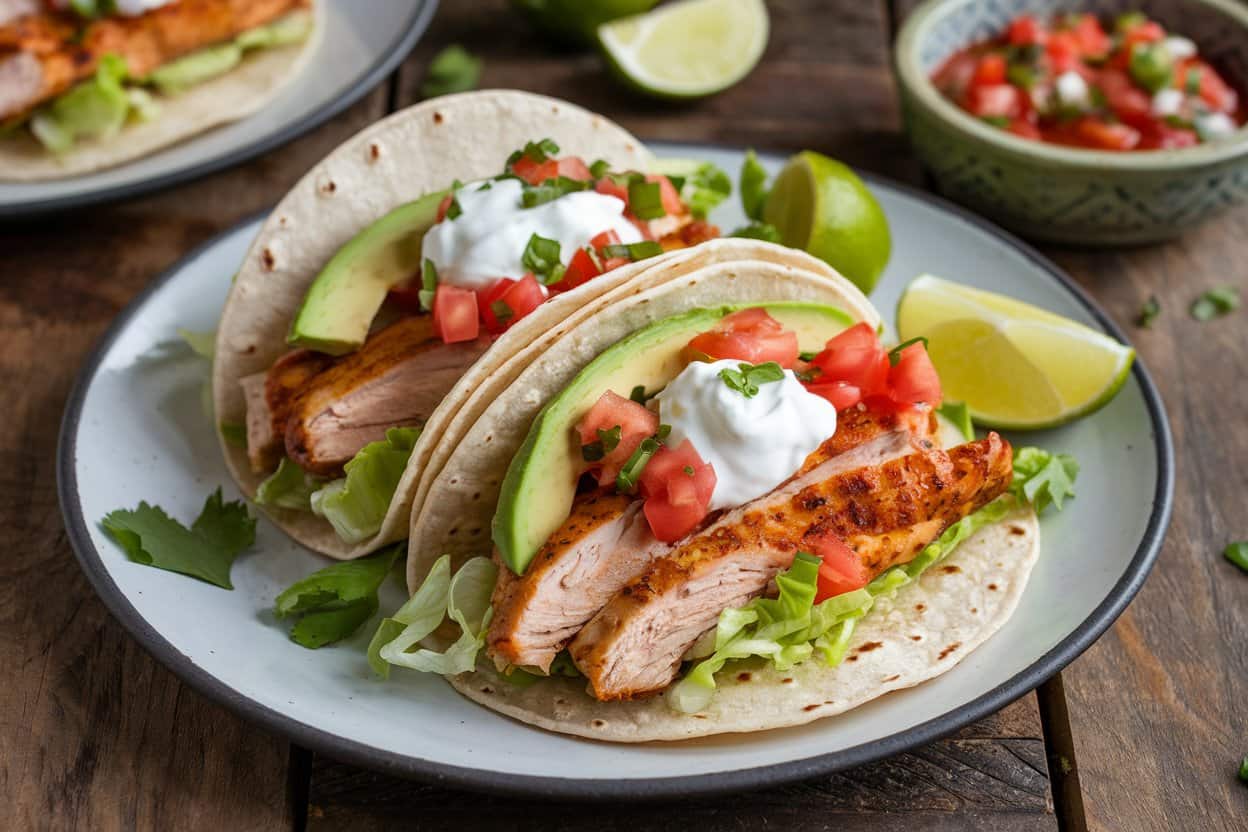
Now comes the fun part! Take a tortilla and layer it with a few strips of chicken—top with shredded lettuce, diced tomatoes, avocado, red onion, and cilantro. For creaminess, add a spoonful of Greek yogurt. To enhance the flavor, squeeze fresh lime juice over the top.

Tips for Perfect Healthy Chicken Tacos

  • Use Lean Chicken Breast: Skinless chicken breast is low in fat, making it the healthiest option. For variety, you can also use lean turkey or ground chicken.
  • Add Extra Veggies: Enhance the nutritional value of your tacos by adding bell peppers, cucumbers, or even a light slaw for crunch.
  • Go Light on the Cheese: While cheese adds flavor, it’s calorie-dense. If you want cheese, opt for a small amount of sharp cheddar or feta, which have more muscular flavors and don’t require much.
  • Greek Yogurt vs. Sour Cream: Swap sour cream for plain low-fat Greek yogurt. It’s packed with protein and cuts down on calories without losing creaminess.
  • Make it Spicy: If you enjoy spice, add jalapeños or drizzle on your favorite hot sauce to elevate the flavor profile.

Nutritional Benefits of Healthy Chicken Tacos

This chicken taco recipe isn’t just tasty—it’s also packed with nutritional benefits. Here’s a quick breakdown of why this recipe is a healthy choice:

  • Chicken Breast: High in lean protein, promoting muscle repair and satiety.
  • Avocado: Full of heart-healthy monounsaturated fats and essential nutrients like potassium and fiber.
  • Tomatoes are great source of vitamins C & K and lycopene, supporting heart health.
  • Greek Yogurt: A protein powerhouse packed with probiotics for gut health.
  • Whole Wheat Tortillas: Higher in fiber than regular flour tortillas, supporting digestion and keeping you full longer.

Variations of the Healthy Chicken Taco Recipe

  • Low-Carb Option: Swap tortillas for lettuce wraps or serve the chicken and toppings over a bed of mixed greens to make a fresh taco salad.
  • Grilled Chicken Tacos: Grill the chicken for a smoky, outdoorsy flavor. This reduces the need for extra oil and enhances the taste.
  • Spicy Chicken Tacos: Add extra cayenne, chili flakes, or hot sauce to the chicken marinade for a spicy kick.
  • Gluten-Free Option: Choose corn tortillas or go grain-free with cauliflower or almond flour alternatives.

Why These Tacos Are Great for Meal Prep

These healthy chicken tacos are quick and easy to make and perfect for meal prepping. Cook chicken in advance & store it in the refrigerator for up to three days. When ready to eat, warm the tortillas, reheat the chicken, and assemble your tacos with fresh toppings. You can even pack these tacos for lunch by storing the chicken and toppings separately to prevent sogginess.

Chicken Taco RecipeConclusion

These Healthy Chicken Tacos are the ultimate balance of flavor, health, and ease. You’re creating a delicious, satisfying, and nutritious meal by focusing on lean chicken, fresh vegetables, and healthier toppings like Greek yogurt and avocado. Whether you’re preparing meals for the week or seeking a quick, nutritious dinner, this recipe will quickly become a staple in your kitchen.

So, the next time you’re craving tacos, skip the greasy takeout and try this healthy chicken taco recipe instead! It’s the perfect way to enjoy a flavorful meal without compromising on your health goals.

Tags: , , , , , , , , , ,

How to Make In-N-Out’s Iconic Animal Style Fries at Home

[vc_row][vc_column][vc_column_text]For fans of In-N-Out Burger, few items are as coveted as the secret menu classic: Animal Style Fries. Known for their rich, flavorful toppings and decadent twist on traditional fries, this dish has earned a cult following across the West Coast and beyond. If you’ve ever tried them, you know how addictive the combination of crispy fries, melted cheese, grilled onions, and special sauce can be.

The good news? You don’t have to live near an In-N-Out to enjoy this famous side dish. In this post, we’ll walk you through everything you need to know about Animal Style Fries and how to make them right in your kitchen. Get ready to bring the taste of this secret menu favorite to your home!

What Are Animal Style Fries?

Before we dive into the recipe, let’s first talk about what exactly Animal Style Fries are. For those unfamiliar with the In-N-Out experience, this West Coast fast-food chain has a not-so-secret menu that includes unique twists on its regular offerings. The most famous of these is the Animal Style preparation.

Animal Style Fries consist of:

  • Crispy French fries: Either freshly cut or frozen, fried to perfection.
  • Melted American cheese: Slices of cheese that add a creamy, gooey texture.
  • Grilled onions: Slowly sautéed until caramelized, offering a rich, sweet flavor.
  • Thousand Island dressing: Known as the “secret sauce,” this tangy dressing ties everything together.

What makes these fries special is the layering of textures and flavors. The crispy fries serve as the perfect base for the creamy melted cheese, sweet onions, and tangy sauce. It’s fast food elevated to a whole new level, making it more than just a side dish—it’s an experience!

Ingredients You’ll Need

To recreate the magic of In-N-Out Animal Style Fries at home, you don’t need to be a professional chef. In fact, the recipe is relatively simple and relies on basic ingredients, many of which you may already have in your kitchen. Here’s what you’ll need:

A variety of ingredients displayed on a kitchen counter, including a bowl of french fries, Thousand Island dressing, diced onions, sliced cheddar cheese, cubed butter, sour cream, and a whole onion.
Ingredients for a hearty dish featuring fries, Thousand Island dressing, cheddar cheese, and a blend of onions and sour cream. ©Ideogram

For the Fries:

  • Frozen French fries (or freshly cut potatoes, if you prefer)
  • Oil for frying (vegetable or canola oil) if making fresh fries
  • Salt to season the fries

For the Toppings:

  • 4 slices of American cheese
  • 1 large onion, diced
  • 1 tablespoon butter or oil for sautéing the onions
  • ½ cup Thousand Island dressing (store-bought or homemade)

If you want to go the extra mile, consider making your own Thousand Island dressing. Here’s a simple recipe for it:

Homemade Thousand Island Dressing:

  • ½ cup mayonnaise
  • 2 tablespoons ketchup
  • 1 tablespoon sweet pickle relish
  • 1 teaspoon vinegar or lemon juice
  • Salt and pepper to taste

Mix these ingredients in a bowl, and you’ll have a delicious sauce ready to drizzle over your fries.

Step-by-Step Guide: How to Make Animal Style Fries

Now that you have all the ingredients, it’s time to get cooking! Follow these step-by-step instructions to make Animal Style Fries just like you’d get at In-N-Out.

A close-up of a loaded fries dish being prepared. A spoon drizzles Thousand Island dressing over melted cheddar cheese, caramelized onions, and crispy fries.
Loaded fries with melted cheddar, caramelized onions, and Thousand Island dressing being drizzled to finish the dish. ©Ideogram

Prepare the Fries

If you’re using frozen fries, follow the package instructions. You can either bake or fry them based on your preference. Baking is the healthier option, but frying gives you that authentic crispy texture.

If you’re making fresh-cut fries, here’s a quick method:
  • Peel and cut potatoes into thin strips.
  • To get rid of extra starch, soak the chopped potatoes in cold water for thirty minutes.
  • Pat the fries dry, then fry them in batches at 350°F (175°C) until golden and crispy. After draining, sprinkle salt on the fries and pat dry.
For extra crispy fries, try a double-fry method:
  • Reduce the temperature at which you fry the potatoes to about 325°F until they are cooked but not yet golden.
  • Remove and let them rest for a few minutes.
  • Fry in the oil after raising the temperature to 375°F again until crispy and golden.

Caramelize the Onions

While the fries are cooking, it’s time to tackle the grilled onions, a key component of Animal Style Fries. Here’s how to make them perfectly:

  • Dice one large onion finely.
  • One tablespoon of oil or butter should be heated over medium heat in a skillet.
  • Simmer the chopped onions after adding them to the pan, stirring occasionally. You want the onions to caramelize and turn a rich golden brown. This process can take up to 15-20 minutes, but don’t rush it—the slower you cook, the sweeter and more flavorful the onions will be.

Melt the Cheese

Once your fries are ready and crispy, it’s time to add the cheese. While In-N-Out uses American cheese, feel free to use your favorite melting cheese if you prefer a variation.

  • Place slices of cheese directly onto the hot fries.
  • Let the residual heat from the fries melt the cheese, or place them under a broiler for a minute if you want extra meltiness.

Assemble the Fries

Now for the fun part—assembling your Animal Style Fries:

  • Lay the fries on a plate or baking dish.
  • Top with the melted cheese.
  • Scatter the grilled onions over the fries.
  • Generously drizzle the Thousand Island dressing over the top.

Also Read: Papas Fritas | The Ultimate Guide to Perfect French Fries

Making It Your Own-Variations on Animal Style Fries

While the traditional Animal Style Fries are incredible on their own, there’s no harm in experimenting with the recipe to make it your own. Try these entertaining variants:

  • Spicy Animal Style Fries: Add a kick by mixing in sriracha or hot sauce with the Thousand Island dressing, or sprinkle diced jalapeños on top.
  • Cheese Lovers’ Animal Style: Swap out American cheese for other melting cheeses like cheddar, mozzarella, or even a blend for extra cheesiness.
  • Bacon Animal Style Fries: Sprinkle crispy bacon bits on top of the fries for a smoky, savory addition.
  • Sweet Potato Animal Style Fries: For a healthier and slightly sweeter alternative, use sweet potato fries instead of regular fries.
  • Healthier Version: Bake the fries instead of frying them and use low-fat cheese and a light version of the sauce.

Feel free to use your imagination and add your preferred toppings!

A plate of loaded fries topped with caramelized onions, melted cheese, Thousand Island dressing, and garnished with fresh herbs, served with a glass of soda.
A delicious serving of loaded fries with caramelized onions, melted cheese, and Thousand Island dressing, garnished with fresh herbs. ©Ideogram

Why Animal Style Fries Are So Beloved

So, why are Animal Style Fries so popular? For one, they offer a perfect balance of flavors and textures that appeal to fast-food lovers and foodies alike. The crispy, salty fries are a classic comfort food, but adding cheese, grilled onions, and special sauce takes them to a whole new level.

Additionally, In-N-Out’s secret menu is part of the chain’s allure. Customers love the idea of ordering something “exclusive” and unique. Animal Style Fries, along with other secret menu items like the Animal Style Burger, create a sense of personalization and indulgence that keeps people coming back.

The dish also taps into the nostalgia of comfort food. Fries, cheese, and sauce—it’s a trio that hits all the right notes for a satisfying treat.

Conclusion

Now that you’ve unlocked the secrets behind In-N-Out’s iconic Animal Style Fries, why not give them a try at home? Whether you’re a longtime fan of the fast-food chain or simply looking to upgrade your homemade fries, this recipe delivers all the indulgence and flavor that make these fries so beloved. The combination of crispy fries, melted cheese, caramelized onions, and tangy Thousand Island dressing will satisfy even the most intense cravings.

What’s great about making them at home is the freedom to customize the dish to suit your personal taste. You can experiment with different cheeses, spice it up with jalapeños, or even try healthier alternatives like baked or sweet potato fries. Whichever way you choose to enjoy them, these Animal Style Fries are sure to become a go-to favorite in your kitchen. Don’t forget to share your own creative twists and let us know how your homemade version turns out![/vc_column_text][/vc_column][/vc_row][vc_row][vc_column width=”1/1″][us_separator size=”small”][us_text text=”Frequently Asked Questions (FAQs)” link=”%7B%22url%22%3A%22%22%7D” tag=”h2″][vc_tta_accordion][vc_tta_section title=”What are Animal Style fries?” tab_link=”%7B%22url%22%3A%22%22%7D”][vc_column_text]Animal Style fries are a popular item from In-N-Out Burger that consists of crispy French fries topped with melted cheese, grilled onions, and a special spread similar to Thousand Island dressing.[/vc_column_text][/vc_tta_section][vc_tta_section title=”What ingredients do I need to make Animal Style fries?” tab_link=”%7B%22url%22%3A%22%22%7D”][vc_column_text]To make Animal Style fries, you’ll need frozen or fresh French fries, American cheese, yellow onions, mayonnaise, ketchup, sweet pickle relish, and vinegar for the special spread. Optional toppings include additional seasonings or hot sauce.[/vc_column_text][/vc_tta_section][vc_tta_section title=”How can I achieve crispy fries?” tab_link=”%7B%22url%22%3A%22%22%7D”][vc_column_text]To achieve crispy fries, you can either deep-fry or bake them. If baking, make sure to spread them in a single layer on a baking sheet and use a high temperature (around 425°F) for even cooking. For frying, ensure the oil is hot enough (about 350°F) before adding the fries.[/vc_column_text][/vc_tta_section][vc_tta_section title=”Can I make the special spread ahead of time?” tab_link=”%7B%22url%22%3A%22%22%7D”][vc_column_text]Yes! The special spread can be made ahead of time and stored in the refrigerator for up to a week. Just mix mayonnaise, ketchup, relish, and a splash of vinegar, and keep it in an airtight container until you’re ready to use it.[/vc_column_text][/vc_tta_section][vc_tta_section title=”Can I customize the toppings for my Animal Style fries?” tab_link=”%7B%22url%22%3A%22%22%7D”][vc_column_text]Absolutely! While the classic Animal Style fries include cheese and grilled onions, you can customize your toppings with ingredients like jalapeños, bacon, or additional sauces to suit your taste preferences.[/vc_column_text][/vc_tta_section][vc_tta_section title=”Section”][/vc_tta_section][/vc_tta_accordion][/vc_column][/vc_row]

Tags: , , , , , , , , ,

Homemade Chicken Dumpling Soup Recipe | Comfort in a Bowl

[vc_row][vc_column][vc_column_text]Nothing makes you feel more at home than a hot, filling cup of soup, especially when it’s homemade chicken dumpling soup. A classic comfort food, chicken dumpling soup offers a savory blend of tender chicken, fluffy dumplings, and rich, flavorful broth. It’s perfect for chilly nights or when you need a meal to lift your spirits. Not only does this dish evoke nostalgia, but it’s also incredibly easy to prepare, making it an ideal go-to for busy families. In this article, we’ll guide you through the steps of creating your very own bowl of chicken dumpling soup at home, providing pointers and advice to guarantee flawless results each and every time.

Why Chicken Dumpling Soup?

A Comfort Food Favorite

Chicken dumpling soup is beloved for its versatility and hearty appeal. Whether you’re under the weather, looking for a cozy meal, or just want something that tastes like a hug in a bowl, this dish delivers. The soup combines the protein of chicken, the satisfaction of dumplings, and the warmth of a homemade broth. It’s a one-pot meal that doesn’t require much beyond pantry staples, making it both affordable and time-efficient.

Nutritious and Balanced

Beyond the comfort factor, chicken dumpling soup is a balanced meal. With lean protein from the chicken, vegetables for vitamins and minerals, and dumplings made from simple ingredients like flour, eggs, and milk, it provides essential nutrients. Plus, the broth helps keep you hydrated and can soothe sore throats during the cold season.

Ingredients for Homemade Chicken Dumpling Soup

Before we dive into the recipe, gather these ingredients to ensure you have everything on hand for a smooth cooking experience:

A variety of ingredients for homemade chicken dumpling soup are laid out on a wooden surface. The ingredients include raw chicken breasts, celery stalks, garlic bulbs, onions, carrots, parsley, butter, cream cheese, flour, an egg, a small jug of chicken broth, and a cup of milk. A knife is also present next to the vegetables.
Ingredients for making a homemade chicken dumpling soup, including fresh chicken, vegetables, butter, cream cheese, and seasonings, ready for preparation. © Ideogram

For the Soup:

  • 1 lb. boneless, skinless chicken breasts or thighs (thighs add extra flavor)
  • 6 cups of chicken broth (preferably homemade or low-sodium)
  • 1 medium onion, diced
  • 3 medium carrots, sliced
  • 2 celery stalks, sliced
  • 2-3 cloves garlic, minced
  • 1 bay leaf
  • 1 tsp dried thyme or fresh thyme sprigs
  • Salt and pepper to taste
  • 2 tbsp olive oil or butter

For the Dumplings:

  • 1 1/2 cups all-purpose flour
  • 2 tsp baking powder
  • 1/2 tsp salt
  • 2 tbsp butter, melted
  • 3/4 cup milk (or buttermilk for extra tenderness)
  • 1 large egg, beaten
  • Optional: Chopped fresh parsley for added flavor

Also Read: Easy and Creamy Tuscan Chicken Pasta Recipe

Step-by-Step Guide to Making Chicken Dumpling Soup

Prepare the Chicken and Vegetables

Start by bringing a big saucepan of olive oil or butter to a medium temperature. Add the diced onion, carrots, and celery. Sauté the vegetables until they begin to soften, which takes about 5-7 minutes. Stir in the garlic and heat for an additional minute.

Cook the Chicken

Place the chicken thighs or breasts in the pot, and pour in the chicken broth. If you’re using a store-bought broth, consider using a low-sodium version to control the salt levels. Add the bay leaf and thyme. Use a small amount of salt and pepper to season the mixture, then heat the soup until it boils. For twenty minutes, reduce the heat to a simmer to twenty-five minutes, or until the chicken is fully cooked and tender.

Once the chicken is cooked through, remove it from the pot and let it cool slightly. Using two forks, shred the chicken and reserve for later use.

Make the Dumpling Dough

While the soup is simmering, it’s time to make the dumpling dough. In a medium-sized dish, mix the flour, baking powder, and salt. Beat the egg, milk, and dissolved butter together thoroughly in a separate basin. Add the wet items to the dry mixture gradually, gently stirring until a soft, slightly sticky dough forms. Avoid overmixing the dough to keep the dumplings light and tender.

Add Dumplings to the Soup

Bring the soup back to a simmer, ensuring it’s not boiling too hard. Drop your dumpling dough into the stock by the spoonful. The dumplings should be about the size of a tablespoon. As they cook, they will expand and become fluffy. Cover the pot with a lid and let the dumplings cook for about 15 minutes, or until they are puffed up and cooked through. Avoid lifting the lid too often as the steam is crucial for cooking the dumplings properly.

Finish the Soup

Once the dumplings are done, return the shredded chicken to the pot. Stir gently to incorporate the chicken and taste the soup to adjust the seasoning. You may want to add more salt, pepper, or even a splash of lemon juice to brighten the flavors. If the broth has reduced too much, If necessary, add a bit more water or chicken stock to keep the soup’s consistency.

Serve and Enjoy

Ladle the chicken dumpling soup into bowls and Add some freshly sliced parsley as a garnish for some color and freshness. Serve it alongside crusty bread or on its own for a satisfying, comforting meal.

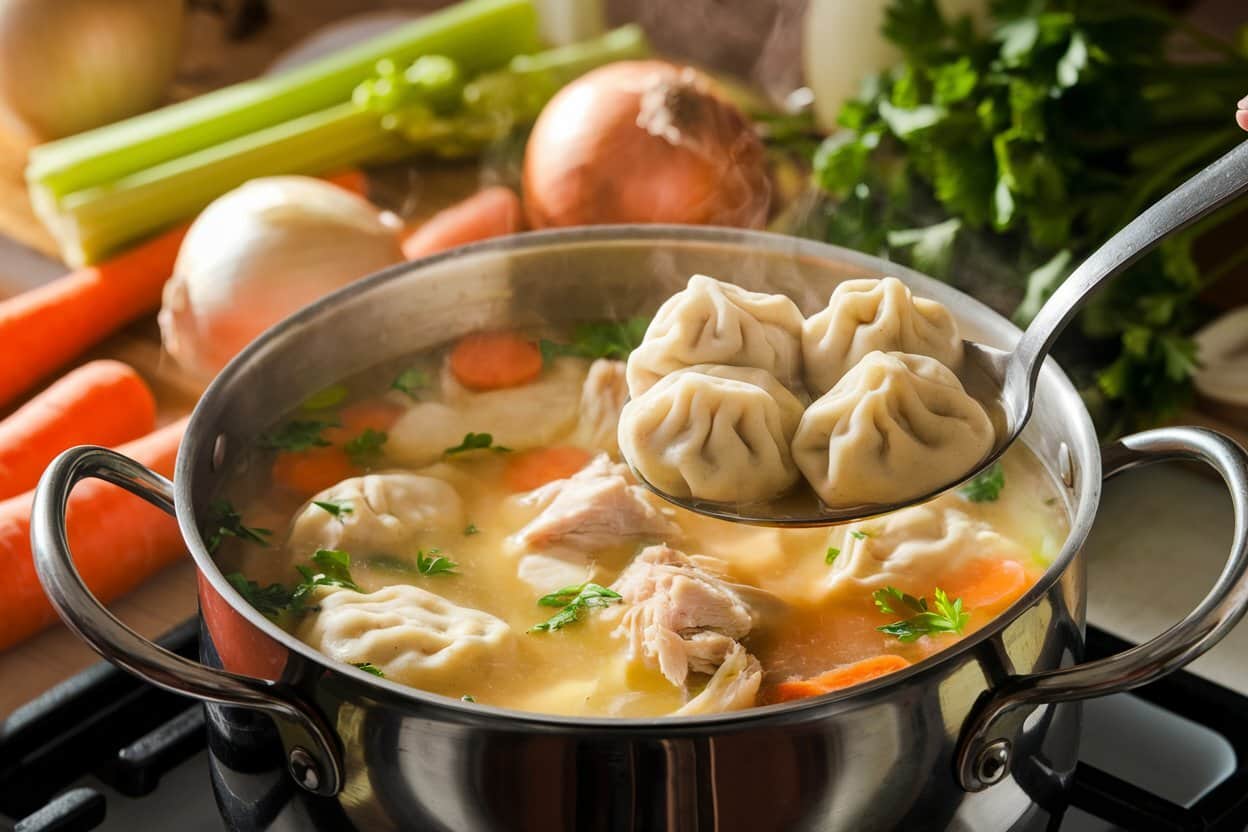
A steaming pot of soup with vegetables and dumplings being ladled. The soup includes sliced carrots, chunks of chicken, and parsley, with a ladle lifting dumplings from the broth. Ingredients like flour, eggs, and vegetables are scattered in the background on a wooden kitchen counter.
A hearty pot of homemade chicken and vegetable soup with dumplings, perfect for a cozy meal. © Ideogram

Tips for the Best Chicken Dumpling Soup

  • Homemade Broth: While store-bought broth is convenient, homemade chicken broth will elevate your soup. Simmer chicken bones with onions, carrots, and celery for a few hours to create a rich, flavorful base. You can freeze homemade broth for future use.
  • Use Chicken Thighs: Chicken thighs tend to have more flavor and stay moist during the cooking process, whereas chicken breasts can dry out. However, if you prefer leaner meat, chicken breasts are still an excellent option.
  • Tender Dumplings: For extra tender dumplings, use buttermilk in place of regular milk. The acidity in buttermilk helps to break down the gluten, resulting in a lighter, fluffier texture.
  • Flavor Variations: You can add extra herbs like rosemary or sage, or even mix in vegetables such as peas, corn, or potatoes for variety. You can also add some spice with a dab of cayenne pepper or hot sauce.
  • Make It Gluten-Free: For those with gluten sensitivities, A gluten-free flour combine can be used in place of the dumplings’ all-purpose flour. Make sure the broth you’re using is also gluten-free.

Also Read: Garlic Parmesan Chicken Pasta Delight | The Ultimate Guide

Storing and Reheating

Chicken dumpling soup stores well and can be refrigerated for up to 3 days. To reheat, simply warm it over low heat on the stove, stirring occasionally. If you plan to freeze the soup, it’s best to freeze the soup base without the dumplings, as dumplings may not retain their texture after thawing. You can prepare the dumplings fresh when you’re ready to serve the soup again.

Conclusion

Whether you’re looking to impress guests, create a wholesome family dinner, or simply treat yourself, chicken dumpling soup is a winning recipe. With its combination of tender chicken, fluffy dumplings, and a rich, aromatic broth, this dish is a guaranteed crowd-pleaser. It’s nutritious, easy to prepare, and brimming with homemade goodness.

So, next time you’re in the mood for something comforting, why not whip up a batch of chicken dumpling soup? It’s a perfect way to bring warmth and love into your kitchen.[/vc_column_text][/vc_column][/vc_row][vc_row][vc_column width=”1/1″][us_separator size=”small”][us_text text=”Frequently Asked Questions (FAQs)” link=”%7B%22url%22%3A%22%22%7D” tag=”h2″][vc_tta_accordion][vc_tta_section title=”Can I use store-bought dumplings for this recipe?” tab_link=”%7B%22url%22%3A%22%22%7D”][vc_column_text]Yes, you can use store-bought dumplings to save time, but making homemade dumplings is simple and adds a personal touch to the soup. The homemade version often tastes fresher and fluffier![/vc_column_text][/vc_tta_section][vc_tta_section title=”What type of chicken should I use?” tab_link=”%7B%22url%22%3A%22%22%7D”][vc_column_text]You can use either boneless, skinless chicken breasts or thighs. Chicken thighs tend to have more flavor and stay juicier, while breasts are leaner and cook faster. Both work well for this soup.[/vc_column_text][/vc_tta_section][vc_tta_section title=”Can I make this soup ahead of time?” tab_link=”%7B%22url%22%3A%22%22%7D”][vc_column_text]Yes, you can make the soup base ahead of time and store it in the refrigerator for up to 3 days. However, it’s best to add the dumplings fresh when you’re ready to serve, as they can lose texture if stored for too long.[/vc_column_text][/vc_tta_section][vc_tta_section title=”How do I store and reheat chicken dumpling soup?” tab_link=”%7B%22url%22%3A%22%22%7D”][vc_column_text]Store leftovers in an airtight container in the refrigerator for up to 3 days. Reheat on the stove over low heat, stirring occasionally. If freezing, store the soup without dumplings and add fresh dumplings when reheating.[/vc_column_text][/vc_tta_section][vc_tta_section title=”Can I freeze chicken dumpling soup?” tab_link=”%7B%22url%22%3A%22%22%7D”][vc_column_text]You can freeze the soup without the dumplings, as they don’t hold up well when frozen. To freeze, place the cooled soup in an airtight container and store for up to 3 months. When ready to serve, thaw, reheat, and add freshly made dumplings.[/vc_column_text][/vc_tta_section][/vc_tta_accordion][/vc_column][/vc_row]

Tags: , , , , , , , , , ,