Coffee lovers are constantly seeking new & exciting ways to enjoy their favorite brew. Among the many variations of coffee drinks, breve coffee stands out for its rich, creamy texture and indulgent flavour. Whether you’re a seasoned coffee enthusiast or just curious about this unique beverage, this guide will take you through everything you need to know about breve coffee—its origins, how it’s made, its nutritional content, and why it continues to be a beloved choice for coffee aficionados.
What is Breve Coffee?
Breve coffee, often called “breve,” is a luxurious variation of the classic café latte. The name “breve” comes from the Italian word for “short,” which refers to the drink’s richness and concentrated flavour. The main difference between a traditional latte and a breve coffee is the milk: while a latte is made with steamed milk, breve coffee is made with half-and-half (a mixture of milk and cream). This substitution gives breve coffee a thicker, creamier texture and a richer, more indulgent flavour.
Origins of Breve Coffee
The origins of breve coffee are unclear, but it is widely believed to have originated in the United States. The drink likely became popular in American coffee shops as a more decadent alternative to the traditional latte. Half-and-half, a common ingredient in American households, played a key role in the drink’s rise to fame.
How to Make a Perfect Breve Coffee
If you want to enjoy this indulgent treat at home, you’re in for a real treat! Here’s a step-by-step guide on how to make the perfect breve coffee with a twist of vanilla and caramel for an extra touch of sweetness.
Ingredients:
1 shot of espresso (2 shots for stronger flavour)
4-6 ounces of half-and-half
1 teaspoon of vanilla extract
Use 1 tablespoon of caramel sauce, plus extra for drizzling.
Optional: Whipped cream for topping
Optional: A pinch of ground cinnamon or cocoa powder for garnish
Equipment:
Espresso machine or coffee maker with an espresso setting
Milk frother or steam wand
Frothing pitcher or heat-proof container
Step-by-Step Instructions:
Prepare the Espresso: Brew shot of espresso using your espresso machine. If you prefer a stronger flavour, brew two shots. Set the espresso aside in your coffee cup.
Mix the Flavorings: In a small bowl, combine the caramel sauce and vanilla extract. Stir well until the caramel is completely dissolved to ensure even flavour distribution.
Steam the Half-and-Half: Pour the half-and-half into a frothing pitcher. Steam the half-and-half using the steam wand on your espresso machine until it reaches a temperature between 150°F & 160°F (65°C to 70°C).This will create a smooth, velvety foam. If you don’t have a steam wand, you can heat the half-and-half on the stove or microwave, then froth it with a handheld frother.
Combine and Stir: Add the vanilla-caramel mixture to the brewed espresso and stir until well combined.
Add the Steamed Half-and-Half: Slowly pour the steamed half-and-half into the espresso mixture. Use a spoon to hold back the foam, then top the coffee with the remaining foam to create a layered effect.
Garnish and Serve: Top your breve coffee with whipped cream for extra indulgence. Drizzle with additional caramel sauce and sprinkle pinch of cinnamon or cocoa powder for beautiful finish. Serve immediately and enjoy!
Why Choose Breve Coffee?
Breve coffee offers a distinct taste experience, differentiating it from other espresso-based drinks. Here’s why it’s a favourite choice for coffee lovers:
Rich and Creamy Texture: The use of half-and-half gives breve coffee a smooth, creamy texture that is thicker and richer than a traditional latte. This makes it a perfect choice for those who love a more indulgent coffee experience.
Richer Flavor: The natural sweetness and richness of the half-and-half enhance the espresso’s flavour, creating a fuller-bodied, more satisfying drink.
Less Bitterness: The creaminess of the half-and-half balances out the bitterness of the espresso, making breve coffee an excellent option for people who find traditional espresso drinks too harsh.
Versatility: Breve coffee can be customized with various syrups and flavours, such as vanilla, caramel, hazelnut, or even chocolate, allowing coffee drinkers to create a personalized, indulgent experience.
Breve Coffee vs. Latte: What’s the Difference?
Both breve coffee & lattes are made with espresso, but there are key differences between the two drinks:
Milk: latte is made with steamed milk, while breve uses steamed half-and-half, resulting in a creamier, thicker texture.
Flavour: While lattes let the espresso flavour shine through more, breve coffee has a richer, more indulgent flavour due to the creaminess of the half-and-half.
Calories: Because half-and-half is higher in fat and calories than regular milk, breve coffee is more indulgent and decadent than a traditional latte.
Nutritional Content of Breve Coffee
Since breve coffee uses half-and-half, it’s higher in calories and fat than other coffee drinks. Here’s a typical nutritional breakdown for a 12-ounce (355 ml) serving of breve coffee:
Nutrient
Amount per 12 Oz Serving
Calories
450-550 kcal
Total Fat
35-40 g
Saturated Fat
22-28 g
Cholesterol
90-120 mg
Carbohydrates
20-25 g
Sugars
18-22 g
Protein
7-10 g
Calcium
300-350 mg
Vitamin A
15-20% of RDI
Note: Nutritional content may vary depending on type of half-and-half caramel sauce and other flavourings used.
Health Considerations
While breve coffee is a delicious treat, it’s important to enjoy it in moderation due to its high fat and calorie content. Here are some tips for savouring your breve coffee without overdoing it:
Moderation is Key: Enjoy breve coffee as an occasional treat rather than a daily indulgence.
Opt for Smaller Portions: Choose an 8-ounce cup for a more moderate serving.
Healthier Alternatives: Consider using lower-fat or plant-based milk alternatives for a lighter version of breve coffee.
Conclusion
Breve coffee is a luxurious drink with a rich, creamy texture and a deep, satisfying flavour. While it may be higher in calories and fat than other coffee drinks, it can be an occasional treat for those who crave a more decadent coffee experience. Understanding its nutritional content and savouring it in moderation allows you to indulge in breve coffee without compromising your wellness goals.
Next time you’re looking for a rich, creamy, and full of flavour, treat yourself to a breve coffee—an indulgence that will make every sip feel like a moment of pure luxury.
[vc_row][vc_column][vc_column_text]In today’s health-conscious world, Vitamin Water has become popular among consumers seeking a refreshing alternative to sugary sodas. Marketed as a drink that not only hydrates but also provides essential vitamins, Vitamin Water is an ideal option. However, looking closer at the facts about vitamin water nutrition facts, you might be surprised by what you find. We’ll go into great detail about Vitamin Water’s nutritional makeup in this blog post, its potential health benefits, and the concerns associated with it.
What is Vitamin Water?
Vitamin Water is a flavored water beverage brand introduced by Glacéau, a subsidiary of The Coca-Cola Company. It was launched as a beverage that quenches thirst and supplies various vitamins and minerals. Over the years, Vitamin Water now comes in a wider choice of tastes and formulas, some of which are marketed as zero-calorie options or energy-boosting drinks.
However, the question remains: Is Vitamin Water a healthier option, or is it another sugary drink with a healthy halo? To answer this, we need to delve into the facts about vitamin water nutrition and understand what each bottle contains.
Breaking Down the Vitamin Water Nutrition Facts
Nutrient
Amount per Serving (20 FL Oz / 591 ml)
% Daily Value
Calories
120
–
Total Fat
0g
0%
Sodium
0mg
0%
Total Carbohydrates
32g
11%
Dietary Fiber
0g
0%
Total Sugars
32g
–
Added Sugars
32g
64%
Protein
0g
0%
Vitamin C
90mg
100%
Vitamin B3 (Niacin)
20mg
125%
Vitamin B5 (Pantothenic Acid)
10mg
200%
Vitamin B6
2mg
120%
Vitamin B12
6mcg
250%
Potassium
60mg
2%
Magnesium
20mg
5%
When examining the facts about vitamin water nutrition, It’s crucial to remember that the amount can change based on the particular flavor and kind of vitamin water. For the purpose of this analysis, we’ll focus on the standard 20 FL Oz (591 ml) bottle, which is the most common serving size.
Calories and Sugar Content
One of the first things you’ll notice on the Vitamin Water nutrition facts label is the calorie content. A typical 20 FL Oz bottle contains approximately 120 calories. The majority of these calories come from sugars, which is a significant aspect to consider.
Each bottle usually contains about 30-32 grams of sugar, equivalent to around 7-8 teaspoons. To put this in perspective, males should not consume more added sugar than Nine teaspoons (36 grams) of additional sugar each day. In comparison, women should limit their intake to 25 grams (6 teaspoons). This means that just one bottle of Vitamin Water can exceed or nearly meet the daily sugar limit, depending on your gender.
Vitamins and Minerals
Despite the high sugar content, Vitamin Water offers significant vitamins. One of its main selling points of the typical vitamins and minerals found in a standard Vitamin Water bottle:
Vitamin C: Typically, a bottle provides 100% of the daily suggested value of Vitamin C. This vitamin is necessary for iron absorption, skin health, and immune system function.
B Vitamins: Vitamin Water is usually fortified with several B vitamins, including B3 (Niacin), B5 (Pantothenic Acid), B6 (Pyridoxine), and B12 (Cobalamin). These vitamins are essential for the production of red blood cells, cognitive function, and energy metabolism.
Electrolytes: Some varieties of Vitamin Water include electrolytes like potassium and magnesium, essential for maintaining hydration, especially during or after exercise.
While these vitamins and minerals are beneficial, it’s important to remember that they are readily available from a balanced diet, often without added sugars.
Other Ingredients
In addition to the vitamins and minerals, the Vitamin Water nutrition facts label reveals other ingredients such as:
Crystalline Fructose and Cane Sugar: These are the primary sources of sugar in Vitamin Water. Corn is the source of the sweetener crystalline fructose, and cane sugar is a more natural sweetener.
Citric Acid: Used for taste and as a preservative, citric acid gives Vitamin Water its tangy taste.
Natural Flavors: These are flavoring agents derived from natural sources, often fruit extracts.
Color Additives: Vitamin Water may contain color additives to enhance its aesthetic appeal depending on the flavor.
Health Benefits of Vitamin Water
Refreshing vitamin water with a burst of citrus and berries for a revitalizing, healthy drink.
Vitamin Water offers some health benefits, given the vitamins and minerals it contains. However, these benefits must be weighed against the high sugar content and the overall nutritional profile.
Vitamin Supplementation
For individuals who have difficulty obtaining sufficient vitamins from their diet, Vitamin Water can be a convenient way to supplement their intake. This is particularly true for the B vitamins and Vitamin C, essential for energy production, immune function, and overall health.
Hydration with Electrolytes
Certain types of Vitamin Water, such as those labeled as “Energy” or “Recover,” contain added electrolytes like potassium and magnesium. These can help replenish lost electrolytes after intense physical activity, making Vitamin Water a potential option for post-workout hydration.
A Healthier Alternative to Soda?
When comparing the Vitamin Water nutrition facts to those of traditional sodas, it’s clear that Vitamin Water contains fewer calories and more nutrients. However, this doesn’t necessarily make it a “healthy” beverage. While it may be a slightly better choice than soda, the high sugar content still poses significant health risks.
Health Concerns and Risks
While Vitamin Water has some benefits, several health concerns are associated with its consumption, largely due to its sugar content.
High Sugar Content
As mentioned earlier, a standard bottle of Vitamin Water contains about 30-32 grams of sugar. Frequent intake of high-sugar beverages has been connected to a number of health problems, such as heart disease, type 2 diabetes, and obesity. The empty calories from sugar can also contribute to weight gain, as they add to your daily caloric intake without providing significant nutritional value beyond the added vitamins.
Misleading Marketing
Vitamin Water is often marketed as a healthy beverage, which can be misleading. The term “vitamin” in the name might lead consumers to believe that the drink is a healthful choice, but the high sugar content tells a different story. It’s important to read the Vitamin Water nutrition facts and understand that the vitamins and minerals provided can be easily obtained from whole foods without the added sugars.
Artificial Ingredients in Low-Calorie Versions
Vitamin Water Zero, the zero-calorie version of the drink, contains artificial sweeteners like erythritol and stevia. While these sweeteners are generally considered safe, The implications of these on long-term health are still up for dispute. Some people may experience digestive issues from consuming erythritol, and the impact of long-term consumption of artificial sweeteners is still being studied.
Comparing Vitamin Water to Other Beverages
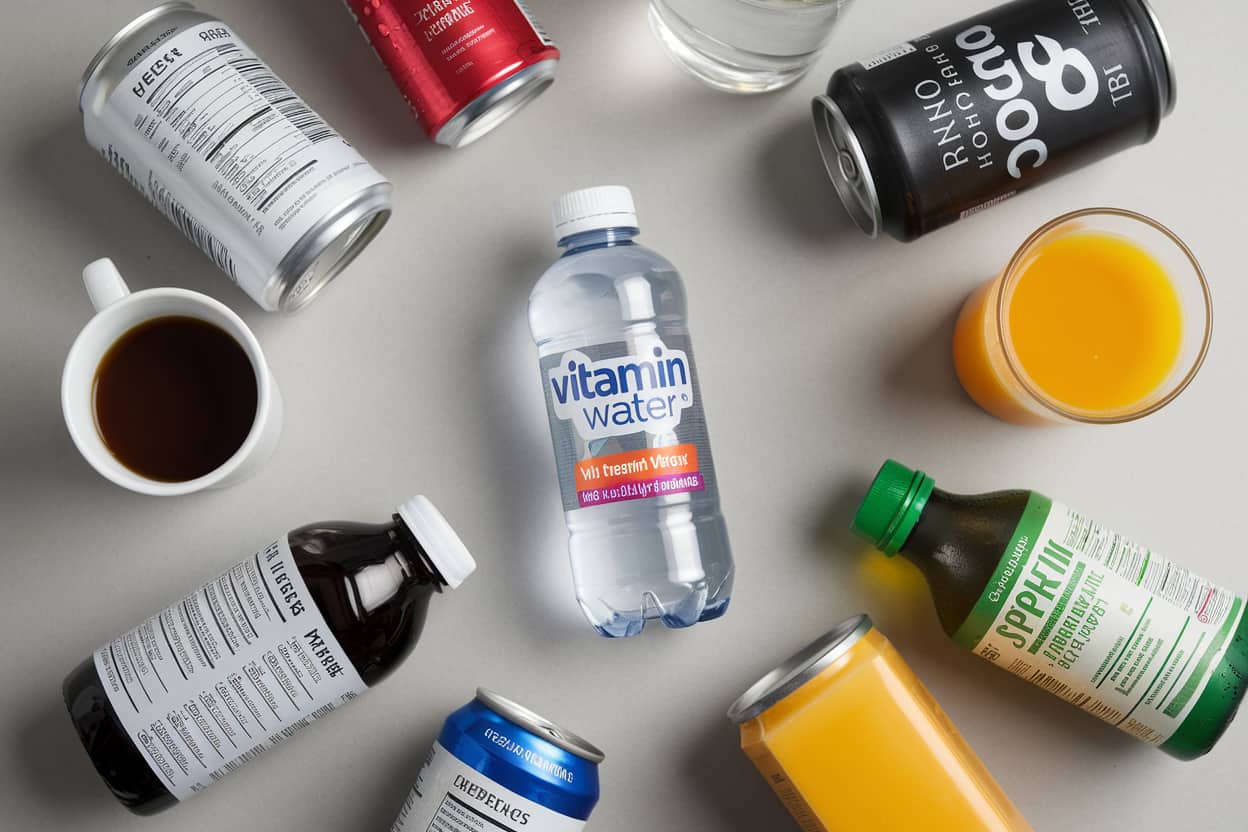
Comparing Vitamin Water to Other Beverages: A variety of drinks showcasing different nutritional choices.
Comparing vitamin water nutrition with that of other popular beverages can help one better understand the facts about vitamin water nutrition.
Vitamin Water vs Plain Water
For hydration, plain water is the best option. It contains no calories, sugars, or artificial ingredients. While Vitamin Water provides vitamins and electrolytes, these nutrients can easily be obtained from a balanced diet. For daily hydration, plain water remains the healthiest choice.
Vitamin Water vs Sports Drinks
Sports drinks like Gatorade are designed to replenish electrolytes lost during intense exercise. They often contain similar amounts of sugar as Vitamin Water but typically have higher levels of electrolytes like sodium and potassium. A sports drink might be more beneficial if you engage in prolonged or high-intensity exercise. However, the added sugars in sports drinks and Vitamin Water can be excessive for casual hydration.
Vitamin Water vs Sodas
Vitamin Water has an edge over sodas in terms of nutrient content. Sodas are typically loaded with sugar and offer no nutritional benefits. However, the high sugar content in Vitamin Water makes it an ideal choice, especially for those who want to reduce their sugar intake.
Tips for Consumers- Making Healthier Choices
If you enjoy Vitamin Water but are concerned about the sugar content, here are a few tips to help you make healthier choices:
Choose Vitamin Water Zero: If you’re looking to reduce sugar intake, opt for the zero-calorie version. While it contains artificial sweeteners, it eliminates the added sugars found in regular Vitamin Water.
Dilute with Water: You can dilute Vitamin Water with plain water to reduce the sugar content per serving while still enjoying the flavor and vitamins.
Limit Consumption: Treat Vitamin Water as an occasional drink rather than a daily hydration solution. This way, you can enjoy the benefits without overloading with sugar.
Make Your Own Infused Water: Create vitamin-infused water by using slices of fruits like lemon, cucumber, or berries to plain water. This provides a refreshing, low-calorie alternative with natural flavors.
Conclusion
Vitamin Water may seem like a health-conscious choice at first glance, but a closer look at the facts about Vitamin Water Nutrition reveals a more complex picture. While it does provide essential vitamins and can serve as a better alternative to sodas, its high sugar content makes it less than perfect for daily consumption.
For most people, the vitamins found in Vitamin Water can be easily obtained from a balanced diet without the added sugars. If you do choose to drink Vitamin Water, it’s best to do so in moderation and with a full understanding of its nutritional profile. Ultimately, plain water remains the best choice for hydration, with the occasional Vitamin Water serving as a treat rather than a staple.[/vc_column_text][/vc_column][/vc_row][vc_row][vc_column width=”1/1″][us_separator size=”small”][us_text text=”Frequently Asked Questions (FAQs)” link=”%7B%22url%22%3A%22%22%7D” tag=”h2″][vc_tta_accordion][vc_tta_section title=”What is Vitamin Water?” tab_link=”%7B%22url%22%3A%22%22%7D”][vc_column_text]Vitamin Water is a flavored water beverage that is fortified with vitamins and minerals. It is designed to provide hydration while offering additional nutrients, often in the form of added vitamins such as B vitamins and vitamin C.[/vc_column_text][/vc_tta_section][vc_tta_section title=”How many calories are in a bottle of Vitamin Water?” tab_link=”%7B%22url%22%3A%22%22%7D”][vc_column_text]A standard 20 fl oz (591 ml) bottle of Vitamin Water contains approximately 120 calories.[/vc_column_text][/vc_tta_section][vc_tta_section title=”Does Vitamin Water contain sugar?” tab_link=”%7B%22url%22%3A%22%22%7D”][vc_column_text]Yes, Vitamin Water contains sugar. A 20 fl oz bottle typically contains around 32 grams of sugar, which includes both natural and added sugars.[/vc_column_text][/vc_tta_section][vc_tta_section title=”Are there any zero-calorie or sugar-free options for Vitamin Water?” tab_link=”%7B%22url%22%3A%22%22%7D”][vc_column_text]Yes, there are zero-calorie and sugar-free options available, such as Vitamin Water Zero, which uses artificial sweeteners instead of sugar.[/vc_column_text][/vc_tta_section][vc_tta_section title=”What vitamins are commonly found in Vitamin Water?” tab_link=”%7B%22url%22%3A%22%22%7D”][vc_column_text]Vitamin Water commonly includes vitamins such as Vitamin C, B vitamins (B3, B5, B6, and B12), and occasionally other nutrients like potassium and magnesium.[/vc_column_text][/vc_tta_section][vc_tta_section title=”Is Vitamin Water a healthy drink?” tab_link=”%7B%22url%22%3A%22%22%7D”][vc_column_text]While Vitamin Water does provide certain vitamins and minerals, it also contains sugar and calories, which can contribute to weight gain if consumed in excess. It’s important to read the label and consider Vitamin Water as part of a balanced diet.[/vc_column_text][/vc_tta_section][vc_tta_section title=”Can Vitamin Water help with hydration?” tab_link=”%7B%22url%22%3A%22%22%7D”][vc_column_text]Yes, Vitamin Water can help with hydration as it provides fluids. However, it should not replace plain water, especially for those monitoring their sugar intake.[/vc_column_text][/vc_tta_section][vc_tta_section title=”Is there any fiber in Vitamin Water?” tab_link=”%7B%22url%22%3A%22%22%7D”][vc_column_text]No, Vitamin Water does not contain dietary fiber. It is primarily a source of hydration and vitamins, not fiber.[/vc_column_text][/vc_tta_section][vc_tta_section title=”How does Vitamin Water compare to sports drinks?” tab_link=”%7B%22url%22%3A%22%22%7D”][vc_column_text]Vitamin Water and sports drinks both provide hydration and some nutrients, but sports drinks typically contain electrolytes like sodium and potassium, which are designed to replenish what is lost through sweat during exercise. Vitamin Water focuses more on vitamins and has varying amounts of sugar depending on the product line.[/vc_column_text][/vc_tta_section][vc_tta_section title=”Who should drink Vitamin Water?” tab_link=”%7B%22url%22%3A%22%22%7D”][vc_column_text]Vitamin Water may be suitable for individuals looking to add some vitamins to their diet or those who prefer flavored beverages. However, people with specific dietary needs or those managing their sugar intake should consume it in moderation or opt for sugar-free versions.[/vc_column_text][/vc_tta_section][vc_tta_section title=”Section”][/vc_tta_section][/vc_tta_accordion][/vc_column][/vc_row]
[vc_row][vc_column][vc_column_text]Bologna, known for its rich history and vibrant culture, is equally famous for its great food. “Bologna food” is a catchall phrase that applies to many dishes and ingredients from the city’s deep culinary background. From filling pasta dishes to internationally known cured meats, Bologna food will tease the taste buds of every person who loves Italian cuisine.
Bologna Food History
The history of Bologna food is as rich and complex as the city itself. This strategic positioning as a medieval trading hub in Italy allowed Bologna to infuse tastes and techniques from other parts of the peninsula. This melting pot created the base for developing a culinary tradition—local ingredients and time-honored cooking techniques blended to create dishes that are at once comforting and sophisticated.
Bologna food origin
The origination of food in Bologna can be traced back to its Roman roots, where rich lands spawned early agriculture. Medieval trade brought varied spices and ingredients that enriched local gastronomy. This was further refined with the Renaissance’s sophisticated and delicate dishes and ingredients that improved the nutritional habits of the city and its surroundings, building the famous food culture of Bologna.
What’s the difference between bologna and baloney?
Aspect
Bologna
Baloney
Origin
Italian city of Bologna
Americanized pronunciation of “bologna”
Usage
Refers to the Italian-style cured meat product, often enjoyed as deli meat
Refers to the processed, often less expensive version commonly found in U.S. supermarkets
Appearance
Typically served as a traditional Italian sausage, sliced thinly for sandwiches or dishes
Pre-sliced deli meat, usually characterized by its smooth texture and mild flavor
Connotation
Denotes a more authentic and traditional Italian sausage
Can imply a lower-quality or industrially processed product
While both terms refer to a similar product, “bologna” tends to denote the traditional Italian sausage, whereas “baloney” is more commonly used in the U.S. to describe the processed lunch meat variant.
Bologna Food Recipes
Bologna Sandwich
Ingredients
Instructions
– 2 slices of bread
– 4-6 slices of Bologna
– 1-2 slices of cheese
– Lettuce leaves
– Tomato slices
– Pickles (optional)
– Mayonnaise or mustard
1. Spread mayonnaise or mustard on one side of each bread slice.
2. Layer the Bologna slices evenly over one slice of bread.
3. Add cheese, lettuce, tomato slices, and pickles.
4. Top with the second slice of bread.
5. Cut in half and serve.
Bologna Pasta Salad
Ingredients
Instructions
– 2 cups cooked pasta
– 1 cup diced Bologna
– 1/2 cup diced bell peppers
– 1/2 cup sliced black olives
– 1/2 cup shredded cheese
– 1/4 cup chopped fresh parsley
– 1/4 cup Italian dressing
1. Combine cooked pasta, diced Bologna, bell peppers, olives, cheese, and parsley in a large bowl.
2. Pour Italian dressing over the mixture and toss to coat evenly.
3. Chill in the refrigerator for at least 30 minutes before serving.
Bologna and Cheese Roll-Ups
Ingredients
Instructions
– 8 slices of Bologna
– 4 slices of cheese
– 1 tablespoon Dijon mustard (optional)
– Toothpicks
1. Place a slice of cheese on each Bologna slice.
2. Roll up each Bologna slice tightly with the cheese inside.
3. Secure with a toothpick.
4. If desired, spread Dijon mustard on the inside of the Bologna before rolling.
5. Serve as an appetizer or snack.
1. Heat vegetable oil in a large skillet or wok over medium-high heat.
2. Add onions and garlic, and sauté until fragrant.
3. Add bell peppers and broccoli, and stir-fry until vegetables are tender-crisp.
4. Add sliced Bologna and cook until heated through.
5. Stir in soy sauce and hoisin sauce, and cook for an additional 2-3 minutes.
6. Serve over rice or noodles.
Tagliatelle al Ragù, commonly known as Bolognese sauce, maybe the most famous dish associated with Bologna food. This iconic Italian pasta dish calls for tagliatelle—a pasta characterized by ribbon-like ribbons, quite ideal for carrying rich, meaty sauces. The ragù combines the finest quality minced beef and pork, slow-cooked with onions, carrots, and celery, right down to a tangy tomato and red wine base.
The very long cooking time allows the melding of flavors into a profoundly savory and aromatic sauce. This means that the dish is traditionally finished with a generous sprinkle of Parmigiano-Reggiano cheese to add a sharp, nutty flavor that offsets the richness of the ragù. In a nutshell, Tagliatelle al Ragù identifies the heart of Bolognese cuisine, bringing out the city’s dedication to creating comforting, flavorful dishes.
Lasagna alla Bolognese is another classic dish that puts forward the complexity and richness of Bologna food. This lasagna features layers of wide flat pasta sheets, ragù sauce, and creamy béchamel sauce, with grated Parmesan cheese on the top. The ragù sauce, rich with minced meat, onions, and tomatoes, is slow-cooked to develop a deep flavor that perfuses the lasagna. There is also béchamel—a smooth, velvety white sauce—that balances the richness of the ragù, lending it creaminess.
As the lasagna cooks, various layers bubble to the top, becoming a vibrant golden color, and it is a dish that would be most pleasing for special events or loved family gatherings. The judgment in representing the Bolognese culinary tradition is correct in that the simple ingredients combined in such a complex dish are characteristic of the tradition’s taste.
Another typical food heritage from Bolognese cuisine is Tortellini in Brodo; this dish reflects the subtlest but tastier eating. It is a traditional dish with small pasta forms in a little loop, filled with a mixture of different meats like pork and ham, and served in clear and specially flavored broth. The broth is prepared in a long process of simmering the beef or chicken bones flavored additionally by aromatic herbs and vegetables, from which the richness and saltness of the base stem.
These tortellini are well-designed to keep this savory filling inside, and the meal itself is often taken as a warming opening food during the colder seasons of the year or essential celebrations. This blending of tender pasta and the aromatic broth creates a balance so that the flavors come together harmoniously, reflecting the city’s tradition of using finer ingredients and taking time to prepare.
These are larger siblings of tortellini, usually filled with ricotta cheese mixed with spinach. Contrary to the tiny ones that are largely served in broth, the tortelloni are more liberally accompanied by a light sauce or even just sautéed with butter and sage. The addition of ricotta cheese made a slightly tangy creamy flavor, attaining notes of freshness and earthiness from the spinach.
Tortelloni can be dressed with many sauces- from the most classic to the most straightforward melted butter to a light tomato sauce. Tortelloni serves more than any other first course to highlight delicately flavorful fillings—lighter Bolognese fare in a vegetarian option that will satisfy and delight.
Mortadella di Bologna is a renowned cured meat of Italy, separated from Bologna food. This large and cylindrical sausage is made of finely ground pork spiced and studded inside with small dice of pork fat. The result brings smoothness, a distinct texture, and a slightly sweet, savory taste.
It’s usually sliced thin and served in various ways—sandwiches and Charcuterie. Its rich, full, aromatic taste is suitable for everyday and formal dining. Mortadella di Bologna represents a sort of badge for Carracci’s gastronomical inheritance, resulting from an enormous classic from Italian cured meats.
Crescentine (Tigelle)
Crescentine (Tigelle): savory Italian flatbreads perfect for stacking with your favorite fillings.
Crescentine, or Tigelle, are small, round bread rolls and one of the typical features of Bolognese cuisine. This bread is typically baked in a special cast-iron pan that promotes a crispy exterior and a soft, airy interior. These crescents are usually served warm, accompanied by various accompaniments, including cured meats, cheeses, and spreads.
This is all-purpose, and perfectly suitable bread for informal parties; it really makes a beautiful snack and even an appetizer. The simple but great flavor of Crescentine highlights a Bolognese tradition for fresh and suitable materials to make highly satisfactory and good food.
A type of flatbread born in Emilia-Romagna, piadina is distinguished by the versatility and simplicity of its preparation. It is a rolled-out thin dough cooked on a dry griddle until crispy and slightly charred. Piadina is usually filled with various fillings, including ham, cheese, arugula, and tomatoes, then folded or rolled into a sandwich.
The piadina is portable and an utterly contextual bread; it is a favorite street food in Bologna because it is quick and delightful to indulge in while savoring the traditional flavors. Simple but flavored, it mirrors the city’s love of food that fits everybody’s taste and whelm.
Bollito Misto is a classic Italian dish in which mixed meats—beef, pork, and sometimes chicken or veal—are simmered together to make flavorful beef broth. These meats are poached with vegetables and herbs to tender, tasty bits, often served with the most diverse sauces, like horseradish or green sauce. Mostly, the dish is cherished at special occasions and festive meetings.
The tender meats combined with the tasty sauces make Bollito Misto quite a meal and very satisfying, as well as part of the vibrant culinary heritage of Bologna.
A breaded and fried cutlet of veal to which ham and melted cheese have been added and baked until golden brown. This dish could be matched by the crunch of breaded veal with good ham and cheese; it’s hard to resist for a pleaser. Cotoletta alla Bolognese is a dish versatile enough to be usually accompanied by either a vegetable serving or a fresh salad; therefore, it can well serve as a light meal by itself or be part of a heavy meal. This dish shows the heritage of this town by cooking something flavored and fair with humble ingredients.
Anolini is the term for the small pasta stuffed in the same way as tortellini but with various fillings. Traditionally, they are filled and prepared with a combination of meats and cheeses and cooked in enriched broth or even in some sauce. The pasta is delicate, meant to balance the flavors most gently, and soon becomes a customary dish on festive occasions.
Anolini expresses the Bolognese commitment to preserving traditional recipes and methods, a win-glimpse into a city’s culinary heritage—the association of soft pasta with a tasty filling rendered this dish the most famous in Bolognese cuisine.
Cotechino con Lenticchie is typically associated with New Year’s Eve. It comprises cotechino, the large pork sausage simmered with lentils. The lentils symbolize prosperity and good luck in the New Year, while the cotechino provides a rich, meaty taste.
This luscious mix is palatable and full of meaning, which is why it is included in the festive courses. This is the epitome of the Bolognese way, infusing rich and decadent ingredients in the making of a particular course that stirs feelings.
Salame di Felino is a famous preserved sausage made in Emilia-Romagna territory, and its name is taken from Felino town. This salame is made from a coarsely ground pork base, spiced with aromatic spices, and then dry-aged until it develops its deep, umami flavor.
In this way, the Salame di Felino is a prime example of highly praised Bolognese food, focusing on the much-celebrated ability of the city to deliver exquisite charcuterie items. It has texture and flavor are considered a precious part of Bolognese gastronomy. This salami is another of the boons from Bologna’s bounty of Charcuterie.
The gnocchi Fritto is small square pieces of deep-fried dough until golden brown outside and puffed soft inside. This is a popular snack, ordinarily warm, and served with other charcuterie bites of cold cuts of meats, cheese, and many spreads. The light and airy texture of the gnocco fritto allows it to be accompanied by an overwhelming majority of savory foods accompaniments, thus making it popular and suitable for all foods. Simplicity in preparation describes the Bolognese way of making nutrient-palatable and delicious foods, combining high-quality, readily available inputs and low efforts during meal preparation.
Friggione is a slow-cooked mixture of onions and tomatoes that characterizes a traditional recipe of Bolognese. It’s meant as a garnish or as an accompaniment to other dishes. Caramelizing the onions gives the onions a very intense, sweet taste and marries this with the tomatoes to proffer a luscious, savory sauce. The mixture is then allowed to simmer to a low heat.
Hence, the flavors have time to blend and not overpower each other, resulting in an aromatic, simple, and strong-flavored dish typical of Bolognese cooking. Friggione is an excellent example of the city’s slow, meticulous cooking style, which allows the natural tastes of the ingredients to shine.
Zampone
Zampone: Italian pork masterpiece with tender, flavorful meat in every bite.
Zampone is a classic dish of Bologna and is made with cooked and stuffed lining of a pig’s leg. Inside the skin is ground pork, pork fat, and seasonings, and finally cooks gradually until it turns into a dark, rich taste. Zampone is more commonly consumed on festive occasions and served with lentils or other accompaniments.
Its delicious, tender meat and spiced filling form a unique and unforgettable dish typical in Bolognese cuisine. In this dish, one can see the city’s great care in preserving traditional recipes—a way to unveil how rich its culinary heritage is.
The pasticcio di carne, going for a very beefy pie, is a staple among all Bolognese recipes. This rich beef stew is baked in a light, flaky crust—tender pieces of savory meat cooked in a seasoned, spicy sauce. The pastry gives a crispy texture to the rich filling, making this a satiating, almost decadent dish. A few local people would mainly have Pasticcio di Carne as a primo piatto, typical of a city tradition of strongly flavored and rustic dishes showcasing the best local produce.
Bologna food menu
Category
Dish
Description
Antipasti (Starters)
Mortadella di Bologna
A finely ground pork sausage with small cubes of pork fat, seasoned with spices.
Antipasti (Starters)
Crostini with Lardo
Toasted bread topped with seasoned pork fat.
Primi (First Courses)
Tagliatelle al Ragù
Ribbon-like pasta served with a rich meat sauce made from minced beef and pork, tomatoes, and wine.
Primi (First Courses)
Tortellini in Brodo
Small, stuffed pasta served in a savory broth.
Primi (First Courses)
Lasagna alla Bolognese
Layered pasta with ragù, béchamel sauce, and Parmesan cheese.
Secondi (Main Courses)
Cotoletta alla Bolognese
Breaded veal cutlet topped with a rich Bolognese sauce and melted cheese.
Secondi (Main Courses)
Arrosto di Maiale
Roasted pork, often served with seasonal vegetables.
Contorni (Side Dishes)
Purea di Patate
Creamy mashed potatoes.
Contorni (Side Dishes)
Verdure Grigliate
Grilled seasonal vegetables.
Dolci (Desserts)
Torta di Riso
Rice cake flavored with lemon and vanilla.
Dolci (Desserts)
Zuppa Inglese
Italian trifle made with layers of sponge cake, custard, and liqueur.
Formaggi (Cheeses)
Parmigiano-Reggiano
A hard, aged cheese with a nutty flavor, often grated over dishes.
Nutrition Facts of Bologna Food
Bologna Food is a type of processed meat, often used in sandwiches and other dishes. Its nutritional content can vary depending on the brand and specific formulation, but here are general nutrition facts for a standard 2-ounce (56 grams) serving of Bologna:
Nutrient
Amount per 2 oz (56 g)
% Daily Value (DV)
Calories
150
8%
Total Fat
12 g
18%
– Saturated Fat
4 g
20%
– Trans Fat
0 g
–
Cholesterol
30 mg
10%
Sodium
480 mg
21%
Total Carbohydrates
1 g
0%
– Dietary Fiber
0 g
0%
– Sugars
1 g
–
Protein
6 g
12%
Vitamin D
0 IU
0%
Calcium
8 mg
1%
Iron
0.8 mg
4%
Key Points
Calories: A moderate amount of calories, contributing to daily energy intake.
Total Fat: High in fat, especially saturated fat, which should be consumed in moderation.
Cholesterol: Contains cholesterol, which can impact heart health if consumed excessively.
Sodium: High in sodium, which can contribute to high blood pressure if eaten in large quantities.
Protein: Provides a good source of protein, essential for muscle repair and growth.
Carbohydrates: Very low in carbohydrates, including fiber and sugars.
Note: The values can vary by brand, so it’s always a good idea to check the specific nutrition label of the Bologna you purchase.
What type of food is Bologna?
Bologna is famous for its savory Italian food, which is characterized by fresh, high-quality ingredients and prepared using traditional techniques. Some typical foods of the Bologna region include:
Meat-Based Dishes: Meat is the primary ingredient in Bolognese dishes, especially the most famous ones, such as tagliatelle al ragù. This dish is more famously known outside of Italy as Bolognese sauce, a long-cooked meat sauce containing ground beef and pork.
Stuffed Pastas: Tortellini and tortelloni are the two traditional types of stuffed pasta. Usually, meat fills them, cheese, or vegetables and served in broth or light sauces.
Cured Meats: Mortadella di Bologna is a symbol of cured sausage made from finely ground pork, spiced with spices and small cubes of fat.
Rich Sauces and Bakes: Lasagna alla Bolognese and other pasta bakes are very popular. They feature layers of pasta, meat sauce, béchamel, and cheese.
Bologna’s history and geography are deeply rooted in its cuisine, which is similar to a flavorful and satisfying dining experience.
Which meat is Bologna?
Bologna is the name of a cooked luncheon meat made from pork. Specifically, it refers to sausages made of finely ground or even minced pork meat, optionally mixed with pork fat and a myriad of seasonings. The mixture is then stuffed in a casing and cooked or cured. Normally, it is a smooth, cylindrical sausage with typical cooked sausage flavor and texture. It is delicious when thinly sliced as part of sandwiches or charcuterie boards.
What is so special about Bologna?
Bologna, sometimes known as Mortadella di Bologna, is special for various reasons.
Historical Significance: Bearing the name of the city from which this style of sausage first originated, Bologna, Italy, this product has a history of many centuries, with its undeclared origin dating back to at least Roman times.
Special Ingredients: Traditional Bologna comprises finely crushed pork and pork fat, spiced uniquely by a seasoning blend. Based on some recipes, pistachios are added, which provide even a further unique taste to the meat.
Safe Status: The European Union has awarded Mortadella di Bologna a PGI (Protected Geographical Indication); therefore, the branding of Bologna products is only allowed if the meat is traditionally made in Bologna.
Handcraft: The making of Bologna is a very delicate process. The meat mixture is slowly and caringly salted, spiced, and then put into casings. Slow cooking or curing takes place to develop the typically smooth texture and rich taste.
Culinary Versatility: Bologna is versatile and used in many recipes, from sandwiches to Charcuterie. It can also be used in salads and pasta recipes. Since the flavor can range from mild to savory, it has become a favorite among most people to use in all these culinary recipes.
These make Bologna one of the grandest and most distinctive products ever offered by Italian and global cuisine.
Key Components of Bologna Food
The very soul of Bologna food lies in the high basic quality of its components:
Parmigiano-Reggiano: Equally important in the Bologna cuisine is this hard cheese with nutty and umami flavors, notably used in Tagliatelle al Ragù and Lasagna alla Bolognese.
Pancetta: Cured pork belly gives a smoky saltiness to much of the food, from ragù to stew.
Balsamic Vinegar: Original Balsamic Vinegar from Modena, in particular, has a sweet and tart taste that goes perfectly against many savory dishes and has a variety of uses in cooking.
Conclusion
Bologna food is a living tapestry of a city’s taste, product, and food traditions committed to quality and authenticity. From the famous Tagliatelle al Ragù to the little-known Friggione, each dish sampled here says much about Bologna’s food culture and tradition of guarding old recipes. Exploring the food of Bologna means getting to the meat, or should I say the vast chunk, of the city’s culinary history. Therefore, it is one place a true food lover in the Italian tradition really can’t miss.[/vc_column_text][/vc_column][/vc_row][vc_row][vc_column width=”1/1″][us_separator][vc_column_text]
Frequently Asked Questions (FAQ)
[/vc_column_text][us_separator][vc_tta_accordion][vc_tta_section title=”Is it bologna or baloney? ” tab_link=”%7B%22url%22%3A%22%22%7D”][vc_column_text]“Bologna” refers to the Italian city known for its cuisine, while “baloney” is a term for a type of processed meat or slang for nonsense.[/vc_column_text][/vc_tta_section][vc_tta_section title=”Why is it called bologna? ” tab_link=”%7B%22url%22%3A%22%22%7D”][vc_column_text]The term “Bologna” refers to the city in Italy where the sausage originated. The name is derived from the Italian city Bologna, known for its rich culinary traditions.[/vc_column_text][/vc_tta_section][vc_tta_section title=”Which meat is bologna food?” tab_link=”%7B%22url%22%3A%22%22%7D”][vc_column_text]Bologna food, or mortadella, is a type of Italian cured meat made from finely ground pork. It includes fat cubes and often seasoned with spices and herbs.[/vc_column_text][/vc_tta_section][vc_tta_section title=”What do you eat with bologna?” tab_link=”%7B%22url%22%3A%22%22%7D”][vc_column_text]Bologna pairs well with fresh bread or rolls, often enjoyed as a sandwich. It also complements pasta dishes, salads, and charcuterie boards.[/vc_column_text][/vc_tta_section][vc_tta_section title=”What foods are famous in Bologna? ” tab_link=”%7B%22url%22%3A%22%22%7D”][vc_column_text]Bologna is renowned for its rich cuisine, especially tagliatelle al ragù (often called Bolognese sauce) and tortellini. The city is also famous for its cured meats, such as mortadella.[/vc_column_text][/vc_tta_section][vc_tta_section title=”Is bologna food good to eat? ” tab_link=”%7B%22url%22%3A%22%22%7D”][vc_column_text]Yes, Bologna’s food is widely praised for its rich, authentic flavors and high quality. The city’s culinary traditions, such as tagliatelle al ragù and mortadella, are celebrated for their deliciousness and depth.[/vc_column_text][/vc_tta_section][/vc_tta_accordion][/vc_column][/vc_row]
[vc_row][vc_column][vc_column_text]When you’re short on time but still want a meal that fits your Macro Friendly Fast Food options can be surprisingly friendly. Grilled chicken sandwiches (hold the mayo) from places like Chick-fil-A or McDonald’s are high in protein and lower in fat. Chipotle’s burrito bowls can also be customized with lean protein, veggies, and light on the cheese or sour cream, making them Macro Friendly Fast Food Subway’s salads with double meat and lots of veggies are another quick option that aligns with macro goals. Just be mindful of portion sizes and added dressings!
Understanding Macros: The Building Blocks of Nutrition
Macronutrients, often referred to simply as “macros,” are the essential nutrients that your body needs in large amounts to function properly. These include proteins, carbohydrates, and fat. Each of these macronutrients play a crucial role in your overall health:
Proteins are vital for building or repairing tissues and play a role in producing enzymes and hormones.
Carbohydrates provide the body with energy and are primary fuel source for your brain and muscle.
Fat are essential for hormone production, nutrient absorption, and organ protection.
The Concept of Macro Friendly Fast Food
Macro Friendly Fast Food refers to meals specifically designed or chosen to provide a balanced amount of these macronutrients. Those who track their macros aim to consume right proportions of proteins, carbs, and fats to support their health and fitness goals.
Macro Friendly Fast Food applies this principle to the fast food industry, offering quick, convenient, and nutritionally balanced meals. This could mean a meal high in protein, moderate in healthy fats, and complex carbohydrates—all within a fast food setting.
The Appeal of Macro Friendly Fast Food
Macro Friendly Fast Food appeals to busy people who want to maintain their nutritional goals. Whether you’re a fitness enthusiast, trying to lose weight, or wanting to eat healthier, macro-friendly fast food allows you to make quick, convenient choices without derailing your diet. This type of fast food is designed to help you stay on track, offering meals that simultaneously satisfy hunger and nutritional needs.
The Rise of Health-Conscious Fast Food
Changing Consumer Preferences
In recent years, there has been a significant shift in consumer behavior towards healthier eating. More people are becoming aware of impact of their diet on their overall health and are looking for ways to make better food choices. This shift is evident in growing popularity of organic foods, plant-based diets, and Macro Friendly Fast Food.
Consumers are still looking for more than fast food that is merely quick and tasty; they want meals that are also nutritious. This has led to a growing demand for macro-friendly fast food options that cater to the needs of health-conscious individuals.
The Role of Social Media and Fitness Culture
Social media has played pivotal role in rise of macro-friendly fast food. Fitness influencers, nutritionists, and dietitians often share content about tracking macros and how they can help achieve specific fitness goals. This has increased awareness and interest in Macro Friendly Fast Food eating among a broader audience.
As a result, many fast food chains have adapted by offering meals tailored to specific macronutrient needs. Some even provide detailed nutritional information on their menus, allowing customers to make informed food choices.
The Industry’s Response: Healthier Fast Food Options
Recognizing this trend, the fast food industry has started to embrace the concept of macro-friendly fast food. Many fast food chains now offer healthier option low in unhealthy fats and sugars and higher in protein and complex carbs. Some even offer customization options, allowing customers to tailor their meals to meet their macro goals.
For example, a macro-friendly fast food menu might include options like grilled chicken wraps, salads with lean protein, or whole grain bowls with balanced portions of carbs, proteins, and fats. These option cater to a wide range of dietary needs, from low-carb to high-protein diets, making it easier for people to stick to their nutritional goals while enjoying the convenience of fast food.
The Future of Macro Friendly Fast Food
The trend towards Macro Friendly Fast Food shows no signs of slowing down. As more people become educated about the importance of nutrition and macros’ role in a healthy diet, the demand for these types of fast food options will likely continue growing.
In the future, we can expect to see even more innovation in this space, with new products, menus, and restaurants dedicated entirely to macro-friendly fast food. This represents a significant shift in the fast food industry, one that prioritizes health and nutrition alongside convenience and taste.
Macro Friendly Fast Food Options
Popular Fast Food Chains with Macro Friendly Fast Food Choices
As consumers become more health-conscious, many fast food chains have introduced macro-friendly options. These meals are designed to be convenient, nutritionally balanced, and supportive of various health goals. Here are some popular chains with macro-friendly choices:
Chipotle: Chipotle is a favorite for those looking to customize their meals. A burrito bowl with grilled chicken, brown rice, black beans, and fajita veggies can provide a balanced combination of protein, carbohydrates, and healthy fats. Adding guacamole further boosts the healthy fat content.
Subway: Subway’s customizable menu makes it easy to create macro-friendly meals. Opt for lean protein options like turkey or chicken breast, add plenty of vegetables, and choose whole-grain bread. For a lower-carb option, try a salad instead of a sandwich.
Starbucks: Starbucks offers more than just coffee; their protein boxes are great for a quick, balanced meal. Options like the Chicken & Quinoa Protein Bowl or the Egg & Cheese Protein Box provide a good mix of protein, fiber, and healthy fats.
Panera Bread: Panera Bread is known for fresh ingredients and healthier options. For example, the Mediterranean Grain Bowl with Chicken offers a balanced meal with protein, fiber, and healthy fats. Their salads can also be customized to fit your macros.
McDonald’s: While not typically associated with healthy eating, McDonald’s does have macro-friendly options if you customize your order. The Artisan Grilled Chicken Sandwich or a salad with grilled chicken can be a good choice, especially if you opt for apple slices instead of fries.
Customizing Your Order: Customizing your fast food order is critical to ensuring it fits your macro goals. Here are some strategies to help you stay on track:
Prioritize Protein: Choose a protein-rich option such as grilled chicken, lean beef, or plant-based proteins like beans or tofu. Protein is important for muscle maintenance and satiety, making it a cornerstone of any macro-friendly meal.
Be Smart with Carbs: Carbohydrates are essential for energy, but it’s easy to overconsume them in fast food settings. Opt for complex carbs like brown rice, whole grain bread, or quinoa. You can also reduce carbs by choosing a salad or a bowl instead of a sandwich or wrap.
Incorporate Healthy Fats: Fast food often contains unhealthy fats, but you can make better choices by adding healthy fat like avocado, nuts, or seeds. Avoid fried foods and opt for items that are grilled or baked. Request dressings and sauces on the side to control fat intake.
Mind Your Portions: Fast food portion are often larger than necessary. Consider ordering a smaller size or sharing meal to keep portions in check. You can also ask for half the amount of certain ingredients, such as cheese or sauce, to better fit your macro targets.
Hidden Gems: Lesser-Known Macro Friendly Fast Food Restaurants
While popular chains are starting to offer more Macro Friendly Fast Food options, lesser-known restaurants also cater specifically to this dietary approach. These hidden gems are worth seeking out if you’re serious about sticking to your macros:
Freshii: Freshii is a health-focused chain that offers a wide variety of bowls, salads, and wraps that can be customized to fit your macros. Their menu features plenty of fresh vegetables, lean proteins, and whole grains.
Snap Kitchen: Snap Kitchen offers pre-prepared meals designed with specific dietary goals, including macro balance. Their meals are labeled with macronutrient information, making choosing options that fit your needs easy.
Everytable: Everytable is a unique concept that offers healthy, affordable meals priced according to the neighborhood. Its menu comprises macro-friendly options such as grain bowls, salads with lean proteins, and plenty of vegetables.
Muscle Maker Grill: This chain focuses on healthy eating and offers a menu of macro-friendly options. Their dishes are high in protein, low in fat, and designed to support fitness goals, making them an excellent choice for those serious about their macros.
Meal Planning for a Busy Lifestyle
Meal Prepping vs. Eating Out: Which is Better?
Regarding sticking to a macro-friendly diet, meal prepping and eating out have pros and cons, especially for those with busy lifestyles. Understanding benefits and drawbacks of each can help you decide which approach works best for you.
Benefits of Meal Prepping
Control Over Ingredients: Meal prepping gives you complete control over ingredients, ensuring your meals are macro-friendly. You can measure your protein, carbs, and fats precisely, making sticking to your nutritional goals easier.
Consistency: By preparing meals in advance, you reduce temptation to make unhealthy food choices when hungry and pressed for time. Having ready-to-eat, macro-friendly meals on hand helps maintain consistency in your diet.
Cost-Effective: Cooking in bulk can save money compared to eating out frequently. You can buy ingredient in larger quantities and reduce waste, making meal-prepping a more economical option in the long run.
Benefits of Eating Out
Convenience: Eating out, especially at restaurants that offer macro-friendly options, saves time and effort. For those with hectic schedules, this can be a more feasible way to stay on track without the time commitment of meal prepping.
Variety: Eating out allows you to enjoy wider variety of foods and flavors, which can prevent diet fatigue. Many fast food and restaurant chain now offer customized, macro-friendly meals catering to different dietary preferences.
Social Flexibility: Eating out provides social benefits, allowing you to enjoy meals with friends and family without compromising your diet. Many restaurants now make it easier to stick to your macros by providing detailed nutritional information.
Balancing Both Approaches
For many people, meal prepping and eating out work best. You might meal prep for most of the week and then treat yourself to a macro-friendly restaurant meal when you’re short on time or craving something different. The key is to find a balance that fits your lifestyle and supports your nutritional goals.
Quick Macro Friendly Fast Food Recipes to Try at Home
For those days when you’re home and need a quick, balanced meal, having a few go-to macro-friendly recipes can be a lifesaver. These recipes are designed to be easy to prepare, nutritionally balanced, and delicious:
Instructions: Combine grilled chicken, quinoa, broccoli, and cherry tomatoes in a bowl. Top with sliced avocado and a drizzle of olive oil. This bowl is high in protein, with healthy fats from avocado and complex carbs from the quinoa.
Turkey and Sweet Potato Skillet
Ingredients: Ground turkey, diced sweet potatoes, bell peppers, onions, and spinach.
Instructions: Sauté ground turkey in a skillet until browned. Add diced sweet potatoes, bell peppers, and onions. Cook until vegetable are tender, then stir in spinach until wilted. This dish is an excellent source lean protein, fiber, and complex carbs.
Greek Yogurt Parfait
Ingredients: Non-fat Greek yogurt, mixed berries, granola, and honey.
Instructions: Layer Greek yogurt, mixed berries, and granola in a glass. Drizzle with honey as sweetness. This parfait is a quick, high-protein breakfast or snack with a good balance of carbs and fats.
Veggie Omelette
Ingredients: Egg whites or whole eggs, spinach, mushrooms, bell peppers, and feta cheese.
Instructions: Egg whites and pour into heated skillet.
Add spinach, mushrooms and bell peppers.
Cook until the eggs are set, then sprinkle with feta cheese.
This omelet is high in protein and packed with vegetables, making it a nutrient-dense meal.
Salmon and Brown Rice
Ingredients: Salmon fillet, brown rice, asparagus, and lemon.
Instructions: Bake or grill salmon until cooked through. Serve with cooked brown rice and steamed asparagus, garnished with a slice of lemon. This meal provides an outstanding balance of protein, healthy fats, and complex carbohydrates.
Top 5 Grab-and-Go Macro Meals
Having grab-and-go Macro Friendly Fast Foods is essential for those days when you’re constantly moving. These meals are portable, balanced, and perfect for a busy lifestyle:
Protein Bars
Protein bars are the quick and easy way to get your macros in on the go. Look for bars high in protein, moderate in carbs, and low in sugar. They’re perfect for a post-workout snack or a quick breakfast.
Pre-Packaged Salad Kits
Many grocery stores offer pre-packaged salad kits that include lean protein, veggies, and a small amount of dressing. These kits are a convenient way to enjoy a balanced meal without needing preparation.
Hard-Boiled Eggs and Fruit
A couple of hard-boiled eggs paired with an apple or a handful of berries make for a simple, macro-friendly snack. Eggs provide protein and healthy fats, while fruit offers natural carbohydrates.
Greek Yogurt with Nuts
Single-serving Greek yogurt cups and a small bag of mixed nuts make for a great on-the-go meal. This combination offers good balance of protein, fats, and carbs and is easy to pack in your bag.
Pre-Made Protein Shakes
Pre-made protein shakes are ideal for quick meal replacements. Choose shakes high protein and low in sugar, and pair them with piece of fruit.
Navigating Social Situations
Staying Macro-Friendly While Dining Out with Friends
Eating out with friends can be one of the most challenging situations when sticking to your macro goals. However, with a bit of planning and wise decision-making, you can enjoy a meal without derailing your diet.
Research the Menu Ahead of Time
Before heading out to a restaurant, look at the menu online for a few minutes. Many restaurants provide nutritional information, making finding dishes that align with your macros easier. Look for meals with lean proteins, whole grains, and plenty of vegetables. If the menu needs to provide nutritional details, aim for simple dishes like grilled meats, salads, and steamed veggies.
Customize Your Order
Feel free to customize your meal to fit your dietary needs. Ask for dressings and sauces on the side, request grilled instead of fried options, and swap out starchy sides like fries for a salad or steamed vegetables. Most restaurants are happy accommodating special requests, so don’t hesitate to ask.
Practice Portion Control
Restaurant portions are often larger than necessary, so consider splitting a dish with a friend or taking half of your meal home for later. You can also order a smaller appetizer or a side salad as your main meal to help control portions while still enjoying the dining experience.
How to Handle Office Lunches and Social Gatherings
Navigating office lunches and social gatherings can be tricky, especially when the food options are only sometimes macro-friendly. However, you can stay on track with a few strategies without feeling left out.
Bring Your Meal
One of the best ways to ensure you stay on track is to bring your macro-friendly meal. Prepare something that you enjoy, and that fits your macros so less healthy options do not tempt you. If getting your food isn’t an option, eat a small, balanced meal before the event to avoid overindulging.
Make Smart Choices
If you’re eating food provided at the event, try to make the healthiest choices available. Look for lean proteins like good chicken and turkey. Choose whole grain options, and load up on vegetables. Avoid dishes heavy on sauces or fried foods, which can add unnecessary fats and carbs.
Stay Hydrated and Mindful
Drink plenty of water throughout the event, which can help keep you feeling full and prevent overeating. Practice mindful eating by savoring your food and paying attention to hunger cues rather than eating out of social obligation or stress.
Tips for Traveling and Sticking to Your Macros
Traveling presents its challenges when it comes to sticking to a macro-friendly diet. Whether on a road trip or flying to a new destination, these tips can help you stay on track.
Pack Macro Friendly Fast Food Snacks
Before you hit the road or board your flight, pack Macro Friendly Fast Food like protein bars, nuts, dried fruit, or pre-made protein shakes. Having these on hand can prevent you from reaching for less healthy options when hunger strikes.
Choose Macro Friendly Fast Food Options on the Go
When eating out while traveling, look for restaurants or fast-food chains that offer customizable, macro-friendly meals. Opt for grilled instead of fried. Salads with lean proteins or grain bowls can also be great choices when you’re on the go.
Stay Active and Hydrated
Traveling often involves extended periods of sitting, whether in a car, plane, or train. Make an effort to stay active by taking breaks to walk or stretch. Staying hydrated is also crucial; drink plenty of water to keep your metabolism active and to help control hunger.
Plan Ahead
If you’re staying at a hotel, consider booking a room with a mini-fridge or kitchenette to store healthy snacks or prepare simple meals. Look for near-by grocery stores where you can pick up fresh produce, lean proteins, and other macro-friendly items.
Success Stories and Testimonials
Real-Life Examples of Macro-Friendly Transformations
One of the most powerful ways to inspire others to follow a Macro Friendly Fast Food is by sharing real-life success stories. These transformations showcase how individuals have achieved their health and fitness goals by carefully managing their macronutrient intake. Here are a few examples:
Jane’s Journey to Better Health
Jane, a busy working mom, struggled with her weight for years. After discovering macro-friendly eating, she started tracking her protein, carbs, and fats. By sticking to her macros and incorporating more balanced meals, Jane lost 30 pounds over a year and gained a new sense of confidence. She now enjoys more energy, better sleep, and a healthier relationship with food.
Mike’s Muscle-Building Success
Mike had been working out consistently as a fitness enthusiast but needed to see the desired muscle gains. After learning about macro-friendly eating, he began focusing on getting enough protein and balancing his carbs and fats to fuel his workouts. Over the next six months, Mike added 15 pounds of lean muscle and significantly improved his strength. He credits his success to understanding and applying the principles of macronutrient balance.
Macro Friendly Fast Food
Sarah’s Sustainable Weight Loss
Sarah had tried countless diets over the years but always found herself regaining the weight. She finally found a sustainable way to lose and keep weight off when she switched to a Macro Friendly Fast Food approach. By tracking her macros and enjoying various foods without deprivation, Sarah lost 50 pounds in a year. She now maintains her weight while enjoying her favorite foods in moderation.
Interviews with Fitness Influencers Who Swear by Macros
Hearing from fitness influencers who have successfully integrated macros into their lifestyle can provide additional motivation and insight. These influencers often share their personal experiences, tips, and advice on how to make macro-friendly eating work for you.
Interview with Alex, a Certified Personal Trainer
Alex, a certified personal trainer and fitness influencer, shares how tracking macros transformed his approach to nutrition. In the interview, Alex discusses how he used macros to tailor his diet for different fitness goals, whether cutting, bulking, or maintaining. He offers practical advice on how to stay consistent with macro tracking, even with a busy schedule, and highlights the importance of flexibility and balance. Chat with Emma, a Fitness Model and Nutrition Coach
Emma, a fitness model and nutrition coach, explains how a Macro Friendly Fast Food helped her achieve and maintain a lean physique. In her interview, Emma talks about the challenges she faced with restrictive diets and how adopting a macro-based approach allowed her to enjoy a wider variety of foods while still reaching her goals. She also shares her favorite Macro Friendly Fast Food meals and tips for staying motivated.
Q&A with Jordan, a Bodybuilder and Macro Advocate
Jordan, a competitive bodybuilder, credits much of his success to understanding and manipulating his macros. In this Q&A, Jordan discusses how he adjusts his macronutrient intake during different training phases, such as pre-competition cutting and off-season bulking. He also offers insights into the mental aspect of macro tracking and how it has helped him maintain discipline in his diet.
Community Spotlight: Sharing Reader Success Stories
The success of a Macro Friendly Fast Food lifestyle isn’t limited to fitness influencers or celebrities. Every day, people can achieve incredible results by following the principles of macronutrient balance. This section highlights stories from readers who have embraced a macro-friendly approach and seen positive changes in their health and fitness.
Reader Spotlight: Lisa’s Transformation
Lisa, a reader from Texas, shares her story of how tracking macros helped her lose 40 pounds and overcome her unhealthy relationship with food. Lisa explains how she discovered the blog, started tracking her macros, and gradually transformed her diet. She now enjoys more energy, better health, and the confidence that comes with achieving her goals.
Reader Spotlight: John’s Journey to Fitness
John, a reader from California, was new to fitness and nutrition when he stumbled upon the concept of Macro Friendly Fast Food. With the help of the blog’s resources, John began tracking his macros and working out regularly. Over the next year, he lost 25 pounds of fat, gained muscle, and significantly improved his overall fitness. John’s story is a testament to the power of consistency and the effectiveness of a macro-friendly approach.
Emily, a reader from New York, shares how a Macro Friendly Fast Food diet helped her maintain her weight after years of yo-yo dieting. Emily found that she could enjoy her favorite foods without guilt by focusing on balanced meals and flexible dieting. Her story highlights the importance of sustainability and the long-term benefits of a macro-focused approach.
Conclusion
Embracing a Macro Friendly Fast Food lifestyle can enhance both your health and convenience. By choosing wisely at fast food chains, balancing meal prepping with eating out, and making intelligent choices in social situations. Whether traveling or navigating daily life, practical strategies and inspiration from real success stories can guide you. Stay adaptable and consistent, and enjoy the journey toward a healthier you.[/vc_column_text][us_separator size=”small”][/vc_column][/vc_row][vc_row][vc_column width=”1/1″][us_text text=”Frequently Asked Questions (FAQS)” link=”%7B%22url%22%3A%22%22%7D” tag=”h2″][us_separator size=”small”][/vc_column][/vc_row][vc_row][vc_column width=”1/1″][vc_tta_accordion][vc_tta_section title=”Can You Eat Fast Food if It Fits Your Macros?” tab_link=”%7B%22url%22%3A%22%22%7D”][us_text text=”Yes, you can eat fast food if it fits within your macronutrient goals, following the “If It Fits Your Macros“ (IIFYM) approach. This method allows flexibility in your diet, meaning you can include fast food as long as it meets your daily targets for protein, carbohydrates, and fats. However, while it’s possible to hit your macros with fast food, it’s important to also consider the overall nutritional value, as many fast food options may lack essential vitamins, minerals, and fiber.” link=”%7B%22url%22%3A%22%22%7D”][/vc_tta_section][vc_tta_section title=”What Foods Are Macro-Friendly?” tab_link=”%7B%22url%22%3A%22%22%7D”][us_text text=”Macro-friendly foods are those that help you easily meet your specific macronutrient targets. For protein, options like chicken breast, lean beef, Greek yogurt, eggs, and tofu are ideal. Carbohydrate-rich choices include oats, brown rice, sweet potatoes, and whole-grain bread, while healthy fats can be found in avocados, nuts, seeds, and olive oil. These foods are generally nutrient-dense and support a balanced diet.” link=”%7B%22url%22%3A%22%22%7D”][/vc_tta_section][vc_tta_section title=”What Is the Healthiest Fast Food?” tab_link=”%7B%22url%22%3A%22%22%7D”][us_text text=”The healthiest fast food options are typically those that are low in calories, saturated fats, and added sugars while still providing good nutritional value. Grilled chicken sandwiches, salad with lean protein, and items that include whole grains and vegetables are generally better choices. Additionally, customizing your order, such as opting for grilled instead of fried items and holding off on high-calorie dressings and sauces, can make your fast food meal healthier.” link=”%7B%22url%22%3A%22%22%7D”][/vc_tta_section][vc_tta_section title=”What Is the Best Macro Ratio for Food?” tab_link=”%7B%22url%22%3A%22%22%7D”][us_text text=”The best macro ratio for food varies depending on individual goal, such as weight loss, muscle gain, or maintenance. A common starting point for many is a balanced ratio of 40% carbohydrates, 30% protein, and 30% fat, but this can be adjusted based on personal needs and activity levels. It’s important to tailor your macro ratio to align with our specific health and fitness goals.” link=”%7B%22url%22%3A%22%22%7D”][/vc_tta_section][/vc_tta_accordion][/vc_column][/vc_row]
You are wondering how to make frozen French fries in air fryer. If you love crispy, golden fries but want a healthier and more convenient cooking method, an air fryer is the perfect solution. This innovative kitchen appliance uses hot air to achieve the same crispy feel as deep-frying but with significantly less oil. Whether you’re craving a quick snack or a side dish for a meal, mastering the art of making frozen French fries in an air fryer can transform your cooking routine. This guide will walk you through everything you need to know to achieve perfectly crispy fries every time.
Types of Fries
Thin Fries are cut into slender, uniform strips and are among the most commonly found frozen fries. Due to their tiny size, they cook quickly, achieving a crispy exterior & a tender interior. In an air fryer, thin fries typically need about 12 to 15 minutes at 400°F (200°C).
Regular Fries are slightly thicker than thin fries, offering a balanced texture that combines a crispy exterior with a softer, airy interior. They take longer to cook than thin fries, generally requiring 15 to 20 minutes at 400°F (200°C) in an air fryer.
Crinkle-cut fries feature a distinctive wavy pattern that increases their surface area, making them extra crispy. The crinkles help these fries hold onto seasonings better, and they usually cook in about 15 to 20 minutes at 400°F (200°C) in an air fryer.
Steak Fries are thick-cut and provide a hearty bite. They are larger and more substantial than regular fries. They are designed to be crispy on the outside while remaining soft and fluffy inside. Cooking time for steak fries in an air fryer is typically between 20 and 25 minutes at 400°F (200°C).
Curly Fries come with a spiral shape and are often seasoned, which adds a flavorful twist to traditional fries. Their unique shape helps them achieve a crispy texture and hold seasoning well. Curly fries usually require 15 to 20 minutes of cooking at 400°F (200°C) in an air fryer.
Waffle Fries have a grid-like pattern that provides a distinctive texture and increases their surface area. This pattern allows them to hold up well to dips and seasonings. In an air fryer, waffle fries typically cook for 15 to 20 minutes at 400°F (200°C).
Jacket Fries are characterized by their thick-cut style and skin-on texture, giving them a rustic, hearty feel. They are crisp on the outside with a robust and tender interior. Jacket fries generally need 20 to 25 minutes of cooking time at 400°F (200°C) in an air fryer.
Ingredients
While frozen French fries are delicious, adding additional ingredients can elevate their flavor. Here’s how to enhance your fries with some simple yet effective additions:
Oil Spray: To achieve that perfectly crispy texture, consider using a non-stick oil spray or a small amount of oil. This step helps the fries achieve a golden-brown exterior and prevents them from sticking to the air fryer basket. While this is optional, a light oil coating can significantly enhance your fries’ crispiness.
Seasonings: Add various seasonings to elevate their flavor profile once your fries are cooked. Here are some popular options:
Salt is the classic and indispensable seasoning for French fries. It enhances the natural taste of the fries, making them more enjoyable and flavorful.
Garlic Powder: For a savory & aromatic twist, garlic powder is a great addition. It infuses the fries with a rich, garlicky flavor that complements their crispy texture.
Paprika: If you enjoy a hint of smokiness, paprika is an excellent choice. This seasoning adds depth and a mild smoky flavor, which pairs well with the crispiness of the fries.
Parmesan Cheese: For a cheesy, umami boost, sprinkle some Parmesan cheese on your fries. The cheese melts slightly, creating a delightful, savory coating that enhances the overall taste.
Chili Powder: If you like a bit of heat, chili powder can include a spicy kick to your fries. This seasoning brings a vibrant, warming flavor that contrasts nicely with the fries’ crispiness.
By incorporating these ingredients, you can customize your frozen French fries to suit your tastes, making them even more delicious and satisfying.
Preparing Frozen French Fries
Preheat the Air Fryer
Preheating the air fryer is a Important step to ensure even cooking. It allows the air fryer to reach the optimal temperature before adding fries.
Set the Temperature: Preheat your air fryer to 400°F (200°C). This temperature is ideal for Reaching a crispy texture.
Time: Allow the air fryer to preheat for 3-5 minutes. Refer to your air fryer’s manual for specific preheating instructions if needed.
Prepare the Air Fryer Basket
To prevent the fries from sticking and to ensure an even crispiness, prepare the air fryer basket:
Coat the Basket: Lightly coat the basket with a non-stick oil spray. If you don’t have spray, use a small amount of oil, but be cautious not to overdo it.
Avoid Excess Oil: Excess oil can cause the fries to become greasy. A light coating is sufficient to enhance crispiness without adding unnecessary fat.
Cooking Frozen French Fries
Basic Cooking Instructions
Add the Fries: Place the frozen French fries in the air fryer basket. Make sure not to crammed the basket to allow proper air circulation. If necessary, cook the fries in batches.
Set the Temperature and Time: Cook the fries at 400°F (200°C). The cook time will vary based on the type of fries and their thickness:
Shake the Basket: Shake the basket midway through the cooking process to ensure even cooking. This step helps the fries achieve a uniform crispiness.
Check for Crispiness: After the first cooking time, check the fries for the desired level of crispiness. If they requried more time, continue cooking for 2-3 minutes.
Cooking Times and Temperatures
Different types of fries will require different cooking times. Here’s a general guide:
Thin Fries: Cook for 12-15 minutes at 400°F (200°C).
Regular Fries: Cook for 15-20 minutes at 400°F (200°C).
Thick Cut Fries: Cook for 20-25 minutes at 400°F (200°C).
Modify the cooking time depending on your air fryer’s performance and the thickness of the fries.
Shaking and Tossing
Shaking or tossing the fries midway through cooking is crucial for even crispiness. This helps redistribute the fries and ensures that every piece gets the same heat and air circulation.
Seasoning and Serving
Seasoning Frozen French Fries
Once the fries are cooked, season them to enhance their flavor. Popular seasoning options include:
Salt: A fundamental and essential seasoning.
Garlic Powder and Parmesan: Mix for a savory, cheesy flavor.
Paprika and Chili Powder: Combine for a smoky and spicy kick.
Add seasonings immediately after cooking while the fries are hot so the flavors adhere better.
Serving Suggestions
French fries can be enjoyed with a variety of dips and meals:
Ketchup: A classic and beloved condiment.
Ranch Dressing: For a creamy and tangy option.
Aioli or Garlic Sauce: For a gourmet touch with a rich flavor.
Pairing with Meals
French fries make a great side dish for many meals:
Burgers: A traditional pairing with any burger.
Chicken Tenders: Complements the crispy texture of chicken.
Steak: Provides a crunchy contrast to a juicy steak.
Tips for Perfect French Fries
Avoid Overcrowding
Overcrowding the air fryer basket can lead to uneven cooking and soggy fries. To achieve the best results, cook fries in a single layer or batches if needed. Ensuring enough space allows the hot air to circulate freely around each fry, giving it an even, crispy texture.
Adjust for Thickness
Thicker fries require a longer cooking time than thinner ones. Monitor the fries closely and adjust the cooking time based on their thickness. If you’re cooking different types of fries in one batch, consider separating them by thickness to ensure they cook evenly.
Preheat the Air Fryer
Always preheat your air fryer before adding the fries. Preheating ensures that the air fryer reaches the optimal temperature for cooking, which helps achieve a consistent and crispy texture. This step can make a discernible difference in the final result.
Shake or Toss Regularly
Shaking or tossing the fries halfway through the cooking process is crucial for even cooking. This helps redistribute the fries in the basket, ensuring all pieces are exposed to the hot air and become uniformly crispy. It also prevents them from sticking together.
Use the Right Temperature
Cooking at the right temperature is critical to achieving crispy fries without burning them. Generally, 400°F (200°C) is ideal for most frozen fries. However, adjust the temperature if your air fryer cooks faster or slower than average. Regularly check the fries to find the perfect temperature for your specific model.
Avoid Excess Oil
While a light oil coating can enhance crispiness, too much oil can make fries greasy. Use a non-stick oil spray or minimal oil to achieve the desired texture without adding unnecessary fat. Excess oil can also cause smoke and affect the taste of the fries.
Experiment with Seasonings
Customize your fries by experimenting with different seasonings. Fresh herbs, spices, and cheese can add unique flavors. Try seasoning the fries immediately after cooking while they are still hot so the seasonings adhere better and enhance the taste.
Consider Batch Cooking
Consider cooking fries in batches rather than overloading the basket for larger quantities. This ensures that each batch is cooked evenly and reaches the desired level of crispiness. It may take longer, but the result will be worth the effort.
Clean the Air Fryer Regularly
Regular cleaning of your air fryer is important for maintaining its execution and ensuring the fries taste fresh. Follow the manufacturer’s instructions for cleaning to prevent grease buildup and keep the air fryer’s efficiency.
Troubleshooting Common Issues
Soggy Fries
Soggy fries can result from:
Overcrowding: Ensure enough space in the basket for air to circulate.
Insufficient Cooking Time: Cook the fries for a bit longer if they need to be crispy enough.
Uneven Cooking
If the fries are not evenly distributed in the basket, uneven cooking may occur. Shake or toss the fries midway through the cooking process to ensure even cooking.
Burnt Fries
Burnt fries may be due to the following:
Too High Temperature: If fries are burning, reduce the temperature slightly.
Overcooking: Check the fries frequently and adjust the cooking time as needed.
Health Benefits of Air Frying
Lower Fat Content
Air frying uses significantly less oil compared to traditional deep frying, resulting in foods that are lower in fat and calories. This makes air frying a healthier choice for enjoying crispy foods without the added fat, contributing to better cardiovascular health.
Reduced Acrylamide Formation
Air frying reduces acrylamide formation by operating at lower temperatures and using less oil. Compared to deep frying, this method can lower acrylamide levels in foods by up to 90%, helping to minimize potential health risks associated with this compound.
Less Mess and Cleanup
Air frying produces minimal oil splatter, resulting in a cleaner cooking environment. The air fryer basket is typically non-stick and easy to clean, making cooking more convenient and reducing the time spent on cleanup.
Conclusion
Frozen French fries in an air fryer are a simple, quick, and healthier way to enjoy this classic treat. By following the steps & tips outlined in this guide, you can achieve crispy, golden fries with minimal effort. Experiment with different seasonings & serving ideas to find your favorite way to enjoy fries. With an air fryer, you can enjoy completely cooked fries any time without the hassle and extra calories.