Salmon is widely regarded for its rich taste, flaky texture, and powerful nutritional profile. But one question often lingers in kitchens and restaurants: Can you eat salmon skin? The short and confident answer is yes. Salmon skin is not only edible but also highly nutritious—if sourced and prepared correctly. This article will guide you through benefits, precautions, and best cooking practices, helping you decide whether to keep the skin on your next fillet.
Is It Safe to Eat Salmon Skin?
Can you eat salmon skin safely? Yes—but with some caveats. The skin of salmon contains more concentrated levels of omega-3 fatty acids, essential vitamins, & minerals than the flesh itself. However, the safety of the salmon depends heavily on the quality and origin of the salmon.
Wild-caught salmon (especially Alaskan, Sockeye, Coho, and Chinook) generally has cleaner, lower-toxin skin and is considered the safest to consume.
Farmed salmon, especially from poorly regulated sources, may contain higher environmental contaminants like PCBs and dioxins that accumulate in the fatty skin layer.
So, yes, you can eat salmon skin, but to minimise health risks, choose wild-caught and responsibly sourced options.
Nutritional Benefits of Eating Salmon Skin
When you ask if you can eat salmon skin for its nutritional value, the answer becomes even more compelling. The skin is a powerhouse of nutrients that support many vital bodily functions.
🔹 Omega-3 Fatty Acids
Salmon skin is densely packed with EPA and DHA, two long-chain omega-3 fatty acids linked to:
Improved cardiovascular health
Reduced inflammation
Enhanced brain function
Joint support
These fatty acids are fat-soluble, and the skin retains a significant portion—often more than the flesh.
🔹 Collagen and Protein
Salmon skin is rich natural source of collagen, a protein vital for:
Skin elasticity
Hair and nail strength
Joint and tendon health
It also contributes high-quality protein that aids in muscle repair and satiety, making it an excellent choice for fitness-focused diets.
🔹 Essential Micronutrients
Nutrients found in salmon skin include:
Vitamin D – strengthens bones and supports immune function
B Vitamins – help convert food into energy and maintain cognitive health
Selenium – acts as a potent antioxidant that protects against cellular damage
Potential Risks of Eating Salmon Skin
Although you can eat salmon skin, there are potential concerns you should be aware of:
Toxins and Heavy Metals: Contaminants like polychlorinated biphenyls (PCBs) and dioxins may be more concentrated in the skin due to their fat content. These risks are higher in farmed salmon.
Allergies and Sensitivities: People with fish allergies may also react to compounds in the skin. If you’re unsure, try a small portion first.
Cooking Hygiene: Consuming raw or undercooked salmon skin that isn’t sushi-grade could expose you to parasites or bacteria. Always ensure thorough cooking unless certified safe.
How to Cook Salmon Skin for Maximum Flavor and Texture
Can you eat salmon skin and enjoy it? Absolutely—when it’s cooked the right way. Here are four popular methods to get that golden, crispy skin that adds crunch and flavour to your meal:
1. Pan-Searing (Crispy Skin Perfection)
Heat a pan over medium-high heat with olive oil or ghee.
Place the salmon skin-side down and press gently with a spatula.
Cook for 4–5 minutes until golden & crisp; flip and cook for two more minutes.
2. Grilling (Smoky and Flavorful)
Preheat your grill & oil the grates to prevent sticking.
Place the fish skin-side down and grill for 6–8 minutes.
Let the skin crisp up before flipping.
3. Baking (Health-Conscious Choice)
Preheat the oven to 400°F (200°C).
Season the salmon and place it on a lined baking sheet, skin-side down.
Bake for 12–15 minutes until the skin is dry and crisp.
4. Air-frying (Crispy with Less Oil)
Set your air fryer to 375°F (190°C).
Place the salmon skin-side up and cook for 8–10 minutes for crunchy results.
Expert Tips for Enjoying Salmon Skin
Describe the skin before cooking for a cleaner bite.
Use high-heat oils like avocado or ghee to prevent sticking and enhance crispness.
For a gourmet snack, try making salmon skin chips—cut off the skin, season it, and bake or air-fry until crisp.
Final Thoughts
So, can you eat salmon skin without worry? Yes—and doing so provides an abundance of health benefits along with culinary enjoyment. Whether you’re looking to boost your omega-3 intake, improve skin health through collagen, or enhance the flavour and texture of your dish, salmon skin is a worthy addition to your plate. Just be mindful of where your fish comes from, how it’s cooked, and your dietary needs.
Tuscan Chicken Pasta, a creamy, hearty dish infused with rich flavors, has become a go-to meal for pasta lovers worldwide. Combining tender chicken, sun-dried tomatoes, fresh spinach, and a decadent cream sauce, this dish offers a warm embrace for the senses. Whether you’re looking for a satisfying dinner for family or a romantic meal for two, Tuscan Chicken Pasta checks all the boxes—flavorful, comforting, and surprisingly straightforward to prepare.
The Essence of Tuscan Chicken Pasta
Tuscan Chicken Pasta draws inspiration from the rustic flavors of the Tuscany region in Italy. The dish is known for its vibrant combination of fresh herbs, olive oil, and sun-dried tomatoes—ingredients that embody the essence of Tuscan cuisine. While there are many variations, the most common features include pan-seared chicken breasts, a creamy garlic sauce, sun-dried tomatoes, and spinach, all complemented by a generous amount of Parmesan cheese.
Why Tuscan Chicken Pasta Works So Well
Creamy Sauce with Bold Flavors: The creamy sauce made from heavy cream, Parmesan cheese, and chicken broth strikes the perfect balance of richness and depth. The addition of sun-dried tomatoes provides a tangy sweetness, while the spinach adds color and a mild earthiness that pairs perfectly with the sauce’s creaminess.
Versatility: One of the best things about Tuscan Chicken Pasta is its versatility. You can alter ingredients based on your preferences. For instance, you can swap the spinach for kale, use a different type of pasta, or even add extra protein like bacon or mushrooms. The base recipe is a fantastic canvas for experimentation.
Quick and Easy to Make: Despite its luxurious taste, this dish comes together quickly—typically in under 30 minutes. The chicken is cooked to golden perfection, and the sauce comes together effortlessly, making it ideal for busy weeknights or special occasions.
How to Make Tuscan Chicken Pasta
If you’re ready to experience the magic of Tuscan Chicken Pasta, here’s a simple recipe to get you started.
Ingredients:
1 lb boneless, skinless chicken breasts
2 tablespoons olive oil
Salt and pepper to taste
3 cloves garlic, minced
1 cup sun-dried tomatoes (julienned)
2 cups fresh spinach
1 cup heavy cream
1 cup chicken broth
1 cup grated Parmesan cheese
1 pound of your favorite pasta (penne, fettuccine, or rigatoni work well)
Fresh basil or parsley for garnish
Instructions:
Cook Chicken: Season chicken breasts with salt & pepper. Heat olive oil in skillet over medium-high heat. Sear chicken on both sides until golden & cooked, about 6-7 minutes per side. Once done, remove the chicken from skillet & set it aside.
Prepare the Sauce: Add a little more olive oil, if needed, in the same skillet. Sauté the garlic until fragrant, about 1 minute. Add sun-dried tomatoes & cook for 2 minutes. Pour in chicken broth, scraping up browned bits from bottom of the pan.
Add Cream and Spinach: Stir in the heavy cream and Parmesan cheese, allowing the sauce to thicken. Add spinach & cook when it wilted about 3 minutes.
Combine with Pasta: Cook the pasta according to the package instructions. Once the pasta is ready, drain & add it to the skillet with the sauce. Toss everything together until the pasta is well-coated.
Finish the Dish: Slice the cooked chicken into strips and add it to the skillet. Stir to combine and heat everything through. Garnish with fresh basil or parsley and extra Parmesan cheese if desired.
Serve and Enjoy: Plate your Tuscan Chicken Pasta and serve immediately. It’s best enjoyed with garlic bread or a simple green salad.
Tips for the Perfect Tuscan Chicken Pasta
Cook the Chicken Properly: The chicken should be seared to a golden brown but not overcooked. Overcooking can lead to dry chicken, so keep an eye on it and check the internal temperature—it should reach 165°F (74°C).
Use Fresh Ingredients: Fresh spinach and sun-dried tomatoes will enhance the flavor & texture of the dish. Use fresh Parmesan cheese instead of pre-grated cheese for a more vibrant color and richer flavor.
Customize the Pasta: Feel free to use any pasta you like. Short pasta shapes like penne or rigatoni will hold the creamy sauce well, while long pasta like fettuccine provides an elegant touch.
Make It Spicy: If you enjoy little heat, add pinch of red pepper flakes to sauce for an extra kick.
Why You’ll Love Tuscan Chicken Pasta
Tuscan Chicken Pasta isn’t just about the flavors—it’s about the experience. It combines warmth and comfort with sophistication, making it perfect for everything from a casual dinner to a festive celebration. Whether it’s a cozy weeknight meal or a dish to impress a date, this recipe will win hearts (and stomachs) every time.
Its creamy texture, savory ingredients, and easy preparation make it an excellent addition to your recipe repertoire. Plus, Tuscan Chicken Pasta’s flexibility means that you can make it your own, adding extra vegetables, adjusting seasoning, or playing with the pasta choice. One thing’s for sure: once you try it, this dish will quickly become favorite in your culinary collection.
Tuscan Chicken Pasta is the perfect balance of indulgence and simplicity—guaranteed to make every meal feel like an occasion. This dish will undoubtedly impress whether you cook for yourself, your family, or a loved one.
When the winter chill sets in, there’s nothing better than a hearty, comforting dish to warm you up. If you’re in the mood for a creamy, flavorful meal that will satisfy everyone at the table, look no further than this Garlic Parmesan Chicken Pasta. This dish perfectly fuses rich Parmesan cheese, savory garlic, and tender chicken—ideal for cozying up after a long day.
What Makes Garlic Parmesan Chicken Pasta So Special?
Garlic Parmesan Chicken Pasta offers a delightful combination of creamy, savory flavors that are rich yet balanced. The garlic-infused cream sauce is the heart of the dish, providing a comforting, velvety texture that clings perfectly to the pasta. The Parmesan cheese adds a nutty, umami depth, while the chicken ensures the dish is filling and satisfying.
This dish is even better because it can be easily made in one pot, saving time on cleanup without sacrificing flavor. Whether you’re cooking for busy weeknight dinner or preparing for a special family gathering, this pasta will never disappoint.
The Key Ingredients
Chicken: Tender, juicy chicken breasts or thighs provide protein and texture to the dish. For quicker prep, you can use boneless, skinless chicken.
Garlic: Fresh garlic is sautéed to release its aromatic flavor, forming the base for the creamy sauce.
Parmesan: Freshly grated Parmesan adds a sharp, nutty flavor that enhances the sauce’s richness.
Cream: Heavy cream creates that luscious, velvety sauce that pairs perfectly with the pasta.
Pasta: A sturdy pasta like penne or rotini works best, as it can hold the sauce without getting soggy.
Step-by-Step Recipe: Creamy Garlic Parmesan Chicken Pasta
Ingredients:
2 chicken breasts, cubed
4 cloves garlic, minced
1 cup heavy cream
1 cup grated Parmesan cheese
1 lb pasta (penne, fusilli, or rotini)
2 tablespoons olive oil
Salt and pepper to taste
Fresh parsley for garnish
Instructions:
Cook the Pasta: Bring pot of salted water to boil. Cook pasta according to instructions till al dente. Drain & set aside.
Cook Chicken: Heat olive oil in large skillet over medium-high heat. Season chicken cubes with salt & pepper, cook until golden brown & cooked through about 6-8 minutes. Remove chicken from the skillet & set aside.
Prepare the Garlic Parmesan Sauce: In the same skillet, add the minced garlic and sauté for 1-2 minutes until fragrant. Be careful not to burn the garlic. Pour in heavy cream, stirring to combine. Let it simmer for 3-5 minutes, allowing it to thicken slightly.
Add Parmesan and Chicken: Stir in the grated cheese, allowing it to melt into cream. Add cooked chicken back into skillet and mix well. Taste and adjust seasoning with salt & pepper.
Combine with Pasta: Add cooked pasta to skillet, tossing everything together until pasta is well-coated with the creamy garlic Parmesan sauce. Garnish with fresh parsley for pop of color.
Serve and Enjoy: Serve your creamy garlic Parmesan chicken pasta warm with a side salad or some crusty bread for dipping.
Tips to Elevate Your Garlic Parmesan Chicken Pasta
Add Veggies: While the classic recipe is delicious, you can boost its nutritional value by add on vegetables spinach, broccoli, or peas. These will not only add color but also complement creamy sauce perfectly.
Customize the Chicken: If you prefer a different chicken cut, try using thighs for a juicier bite or even grilled chicken for a smoky flavor.
Make it Spicy: For bit of heat, add pinch of red pepper flakes to sauce. This adds a subtle kick without overpowering the dish.
Cheese Variations: While Parmesan is the star, mix in other cheeses, such as Asiago or mozzarella, for a richer flavor profile.
Use Fresh Garlic: This dish has a fragrant, savory base. Avoid using garlic powder, as it won’t provide the same depth of flavor.
Why You’ll Love This Garlic Parmesan Chicken Pasta
Quick & Easy: This recipe is ready in under 30 minutes, making it the perfect option for busy weeknights when you still want a flavorful, satisfying meal.
Creamy Comfort: The rich, creamy sauce makes this dish a comfort food classic that everyone will love, even picky eaters!
Whether you make it for a family dinner or serve it at a cozy winter gathering, Garlic Parmesan Chicken Pasta will surely be a hit. It’s easy to prepare, versatile, and comforting—a perfect dish to enjoy all season long.
As you enjoy this flavorful dish, get creative and experiment with different add-ins or seasonings. The creamy garlic Parmesan sauce is a base that allows for endless variations, so feel free to adapt it to your tastes. Happy cooking!
Few cuts of beef rival the versatility and richness of the chuck roast when it comes to hearty, flavorful meals. Commonly referred to as pot roast or chuck roll, this budget-friendly cut is a favorite among home cooks and professional chefs. Whether you’re slow-cooking it to tender perfection or experimenting with bold flavors, Chuck Roast Recipes offer endless possibilities for satisfying dishes.
What is Chuck Roast?
Chuck roast comes from the back shoulder of the steer, a long section of meat located between the ribs and backbone. This large, marbled cut typically weighs around 20 pounds and is prized for its rich flavor and tender texture when cooked properly. Its affordability and adaptability make it a staple for comforting family meals and impressive dinner party dishes.
The Difference Between Chuck Roast and Clod Roast
While the chuck roast is known for its marbling, the clod roast—its leaner counterpart—comes from the outer shoulder. Clod roast is tougher due to its muscle composition and is often used for stews or ground beef. Both cuts shine in recipes that call for slow cooking, but chuck roast is especially well-suited for dishes requiring a balance of tenderness and flavor.
Key Comparison:
Feature
Chuck Roast
Clod Roast
Location
Back shoulder
Outer shoulder
Texture
Marbled, tender
Lean, tougher
Ideal Cooking Method
Braising, slow cooking
Stewing, braising
Price Per Pound
$6.21 (average)
$4.49 (average)
How to Cook Chuck Roast
Cooking chuck roast low & slow is the key to unlocking its tender, juicy potential. Below are some tried-and-true methods:
Slow Cooker Chuck Roast Recipe
Combine chuck roast with onions, carrots, potatoes, and beef broth in a slow cooker.
Add seasoning like garlic, rosemary, thyme, and a splash of red wine.
Cook on low for 8-10 hours until meat falls apart.
Oven-Braised Chuck Roast
Sear the roast in a Dutch oven with olive oil to lock in the flavors.
Add broth, tomatoes, and herbs before covering and cooking at 325°F for 3-4 hours.
Serve with mashed potatoes for classic comfort meal.
Tender Chuck Roast Variations
Try a chuck roast recipe inspired by international flavors for a unique twist. Add soy sauce, ginger, & sesame oil to an Asian-inspired dish, or use chipotle peppers for a smoky, southwestern flair.
Why Choose Chuck Roast?
Chuck roast recipes are ideal for budget-conscious cooks who don’t want to compromise on flavor. Its marbling ensures a juicy result, while its versatility allows for countless meal ideas, from hearty pot roasts to shredded beef tacos.
Tips for Maximum Tenderness:
Always sear the roast before slow cooking to enhance its flavor.
Permit roast to rest for 15 minutes before slicing to help retain its juices.
Use meat thermometer to ensure internal temperature reaches at least 190°F for shreddable tenderness.
Best Chuck Roast Recipes for Every Occasion
If you’re searching for crowd-pleasing dishes, these chuck roast recipes are must-tries:
Classic Pot Roast: Simmered with root vegetables for a comforting meal.
Italian Beef Sandwiches: Shredded chuck roast with Italian spices and peppers.
Beef Stroganoff: Tender chuck roast chunks in a creamy mushroom sauce.
Conclusion
Whether cooking for a weeknight dinner or a special gathering, chuck roast recipes are a foolproof way to deliver big flavors on a budget. From slow-cooker classics to innovative international dishes, the possibilities are endless. Embrace the versatility of this affordable cut, and let your culinary creativity shine!
[vc_row][vc_column][vc_column_text]Sourdough bread has captured the hearts of many with its rich flavor and chewy texture, but what happens to the sourdough discard that accumulates while maintaining your starter? Rather than tossing this valuable ingredient, consider its potential! Sourdough discard recipes is a versatile component that can be seamlessly incorporated into a variety of delicious recipes, enriching your dishes with a subtle tang and depth of flavor that is uniquely its own.
In this post, we’ll explore ten creative ways to use sourdough discard, transforming it into delightful meals and snacks that will not only reduce waste but also elevate your culinary creations. From breakfast favorites to satisfying desserts, each recipe showcases the incredible versatility of sourdough discard. So roll up your sleeves and get ready to make the most of your sourdough journey—your taste buds will thank you!
Sourdough Discard Pancakes
Start your day off on a delicious note with sourdough discard pancakes! These fluffy treats incorporate the tangy flavor of sourdough, making them a delightful twist on the classic breakfast favorite. The fermentation from the discard not only adds a unique taste but also enhances the texture, resulting in pancakes that are both light and airy. Whether topped with fresh fruit, maple syrup, or a dollop of yogurt, these pancakes are sure to become a breakfast staple in your home. Plus, they’re a fantastic way to make use of that sourdough discard you might otherwise throw away.
Whip up these fluffy pancakes that bring a delightful tang from the sourdough discard, making your breakfast extra special and deliciously unique.
Ingredients:
1 cup sourdough discard
1 cup flour
1 tablespoon sugar
1 teaspoon baking powder
1/2 teaspoon baking soda
1 egg
1 cup milk
2 tablespoons melted butter
Instructions:
Mix the remaining sourdough, flour, sugar, baking soda, baking powder, egg, milk, and melted butter together in a large bowl until just blended.
Let the batter rest for 5-10 minutes.
For each pancake, pour about 1/4 cup of batter onto a griddle that is medium-heat.
Cook until surface bubbles appear, then turn and continue cooking until golden brown.
Pro Tip: For extra fluffy pancakes, allow the batter to rest before cooking.
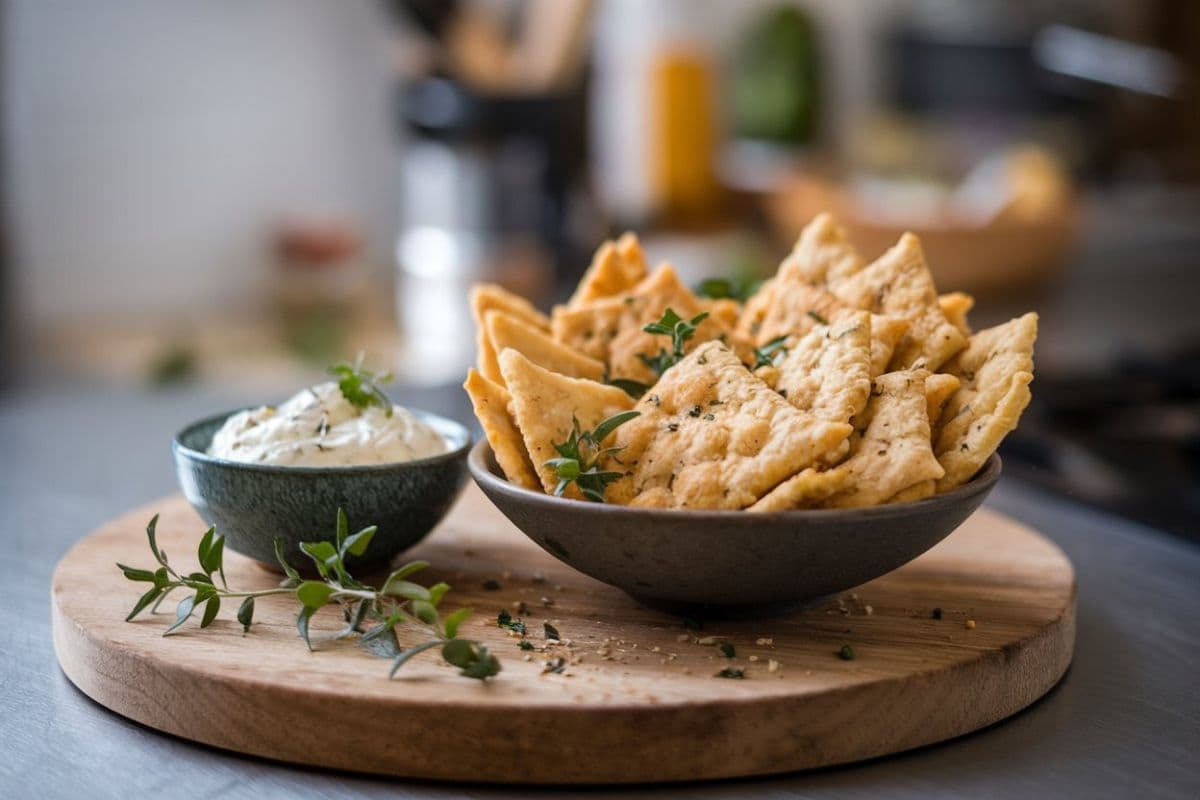
Crispy Sourdough Discard Crackers
Elevate your snacking game with crispy sourdough discard crackers! These delightful bites are not only easy to make but also provide a delicious canvas for your favorite toppings and dips. The sourdough discard lends a subtle tang that perfectly complements the crunchy texture, making them an addictive addition to any cheese platter or appetizer spread. With endless possibilities for seasoning, from herbs to spices, these crackers are a customizable treat that’s perfect for entertaining or enjoying on your own. Say goodbye to store-bought snacks and hello to homemade goodness.
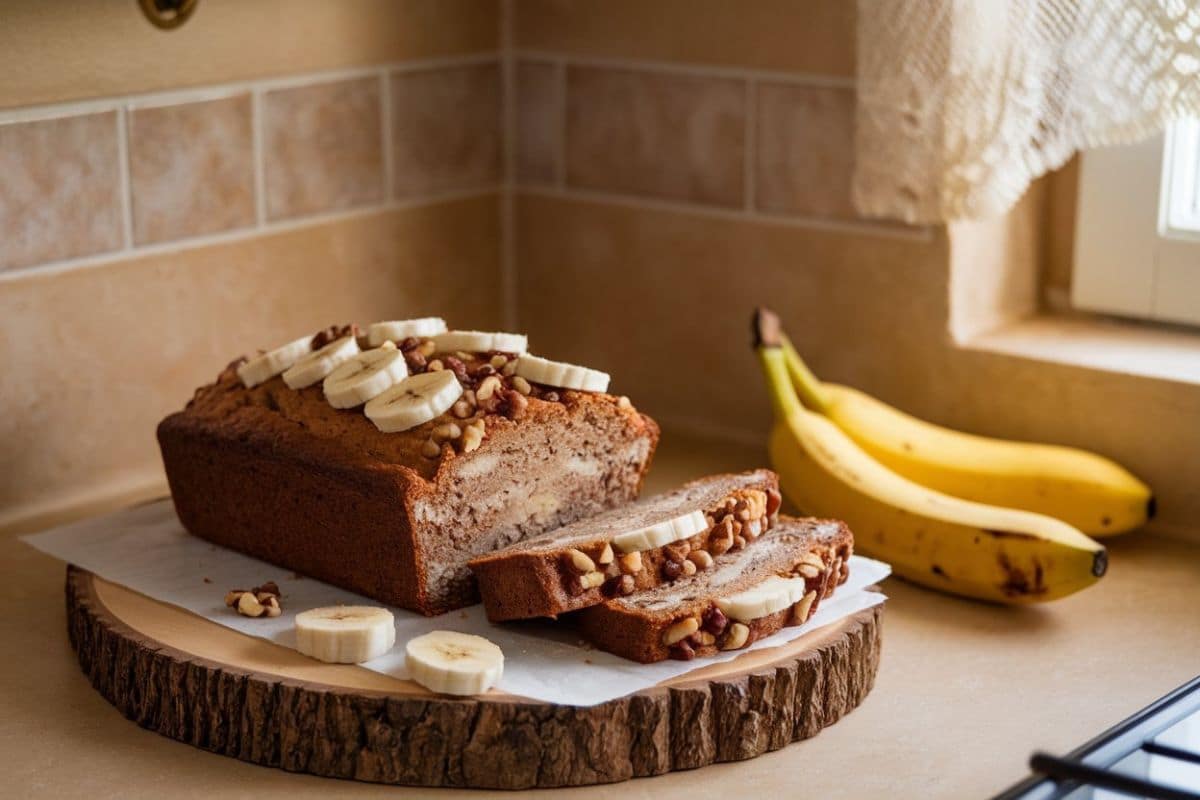
Indulge in the comforting flavor of sourdough, discard banana bread, a delightful fusion of classic banana bread and the unique tang of sourdough. Overripe bananas are ideal for using up in this dish, transforming them into a moist and flavorful loaf that your family will adore. The taste depth is enhanced by the sourdough waste, creating a rich, tender crumb that’s simply irresistible. Whether enjoyed for breakfast, as an afternoon snack, or as a sweet dessert, this banana bread is sure to become a beloved favorite. Plus, it’s a great way to reduce waste while enjoying a homemade treat.
Overripe bananas can be turned into a tasty, moist bread, enhanced by the unique tang of sourdough discard for a comforting treat.
Ingredients:
1 cup sourdough discard
3 ripe bananas, mashed
1/2 cup sugar
1/3 cup melted butter
1 egg
1 teaspoon vanilla extract
1 teaspoon baking soda
1/2 teaspoon salt
1 1/2 cups flour
Instructions:
Oil a loaf pan and preheat the oven to 350°F (175°C).
Mash the bananas, add the sugar, melted butter, egg, vanilla, and sourdough to a basin.
Mix the flour, baking soda, and salt in another basin.
Mix the dry and wet components together until they are well blended.
After filling the loaf pan, bake it for 50 to 60 minutes.
Pro Tip: Add chocolate chips or walnuts for a delightful twist!
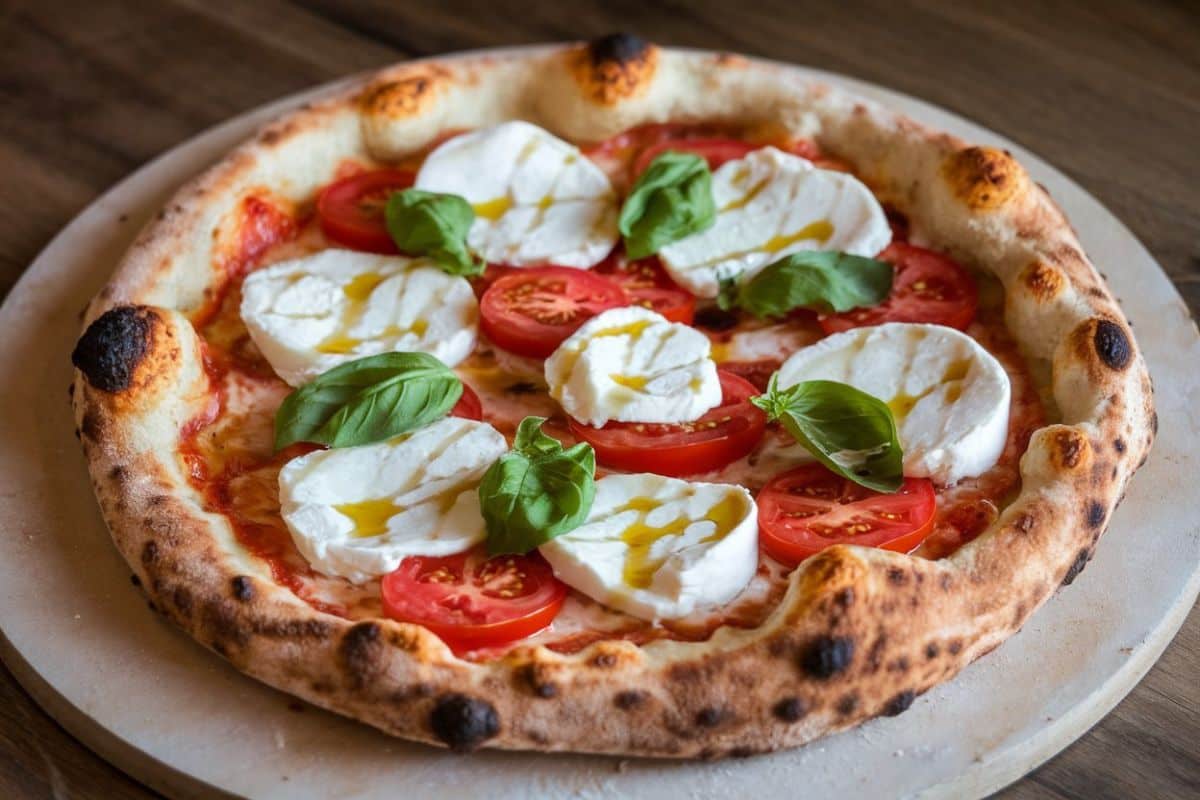
Sourdough Discard Pizza Crust
Transform your pizza night with a sourdough discard pizza crust that adds a delightful twist to your favorite pies. The natural fermentation in the sourdough gives the crust a unique flavor and texture, resulting in a crispy exterior and a chewy, airy interior. You can quickly prepare a great homemade pizza with this simple recipe, using whatever toppings you love. Whether you’re a fan of classic pepperoni or adventurous gourmet combinations, Impress your loved ones and up your pizza skills with this sourdough crust. Get ready to savor the difference.
Create a unique pizza crust with a perfect blend of crispy edges and chewy texture, all thanks to the sourdough discard.
Ingredients:
1 cup sourdough discard
1 cup flour
1 tablespoon olive oil
1 teaspoon salt
1/2 teaspoon baking powder
Instructions:
Set the oven warmth to 475°F (245°C).
The sourdough waste, flour, olive oil, baking powder, and salt should all be combined in a mixing basin until a dough forms.
To get the necessary thickness, roll out the dough on a surface dusted with flour.
Put on a baking pan and give it a five-minute prebake.
Take out of the oven, top with your preferred ingredients, and bake for a further ten to fifteen minutes.
Pro Tip: Pre-bake the crust for a crispier base.
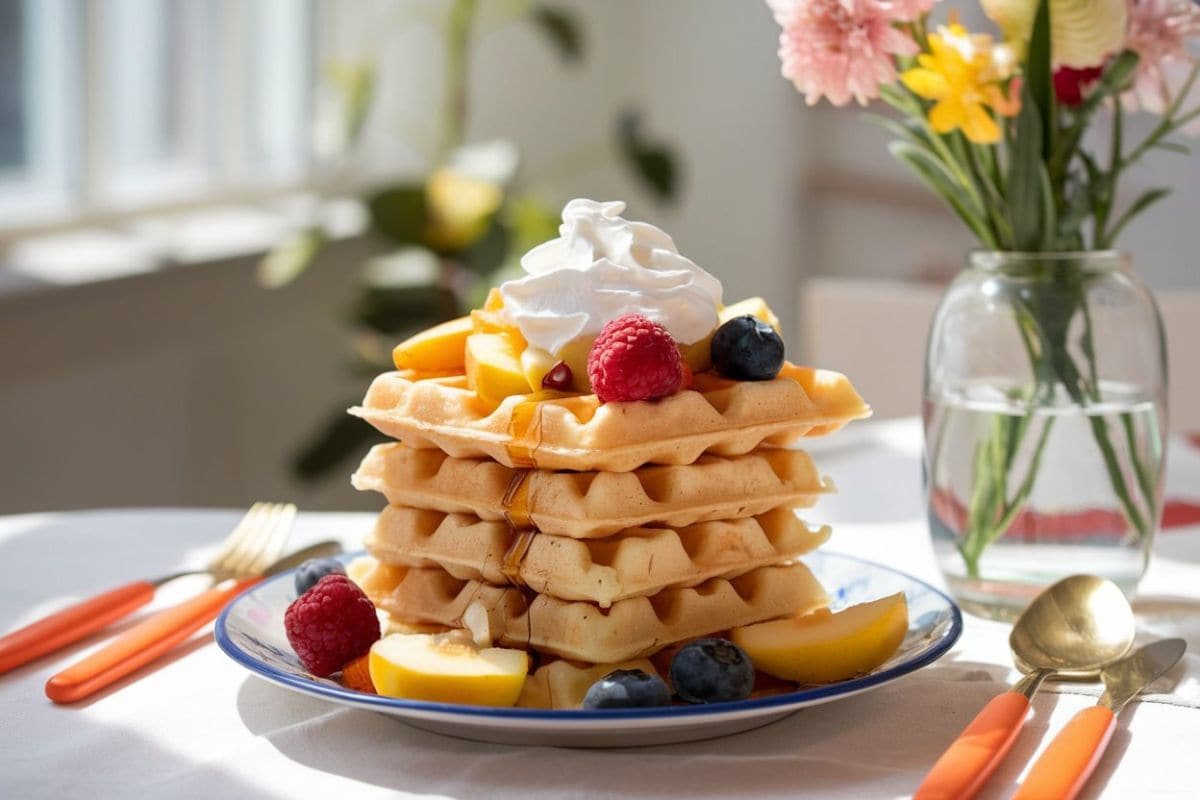
Sourdough Discard Waffles
Treat yourself to a delightful breakfast experience with sourdough discard waffles that are both crispy on the outside and fluffy on the inside. This recipe takes the tangy goodness of sourdough and transforms it into a decadent treat that pairs perfectly with fresh fruit, syrup, or whipped cream. The fermentation from the sourdough discard adds complexity to the flavor, making each bite truly memorable. Ideal for leisurely weekend mornings or quick weekday breakfasts, these waffles are a fun and flavorful way to use up your sourdough discard. Enjoy a taste of homemade comfort.
Treat your sweet craving to a decadent and indulgent sourdough discard chocolate cake that blends the greatest features of both worlds: the traditional charm of chocolate and the unique tang of sourdough. This cake has an amazing flavor and moisture content, with a hint of depth that only sourdough can provide. Perfect for celebrations, family gatherings, or simply a treat for yourself, this chocolate cake is sure to impress everyone who tastes it. With simple directions, you can prepare this delightful dessert in no time. Prepare for a chocolate experience that’s both familiar and refreshingly unique.
Bake a rich and moist chocolate cake that surprises with its depth of flavor, thanks to the addition of sourdough discard.
Ingredients:
1 cup sourdough discard
1 cup sugar
1/2 cup unsweetened cocoa powder
1/2 cup butter, melted
2 eggs
1 teaspoon vanilla extract
1 cup flour
1 teaspoon baking soda
1/2 teaspoon salt
Instructions:
Preheat the oven to 350°F (175°C) and grease a cake pan.
In a bowl, mix the melted butter, sugar, eggs, and vanilla until well combined.
Stir in the sourdough, discard and mix until smooth.
In another bowl, whisk together the flour, cocoa powder, baking soda, and salt.
Combine the wet and dry ingredients and mix until just combined. Pour into the prepared cake pan.
To ensure a clean toothpick, bake for 30 to 35 minutes.
Pro Tip: Enhance the chocolate flavor with a pinch of instant coffee granules.
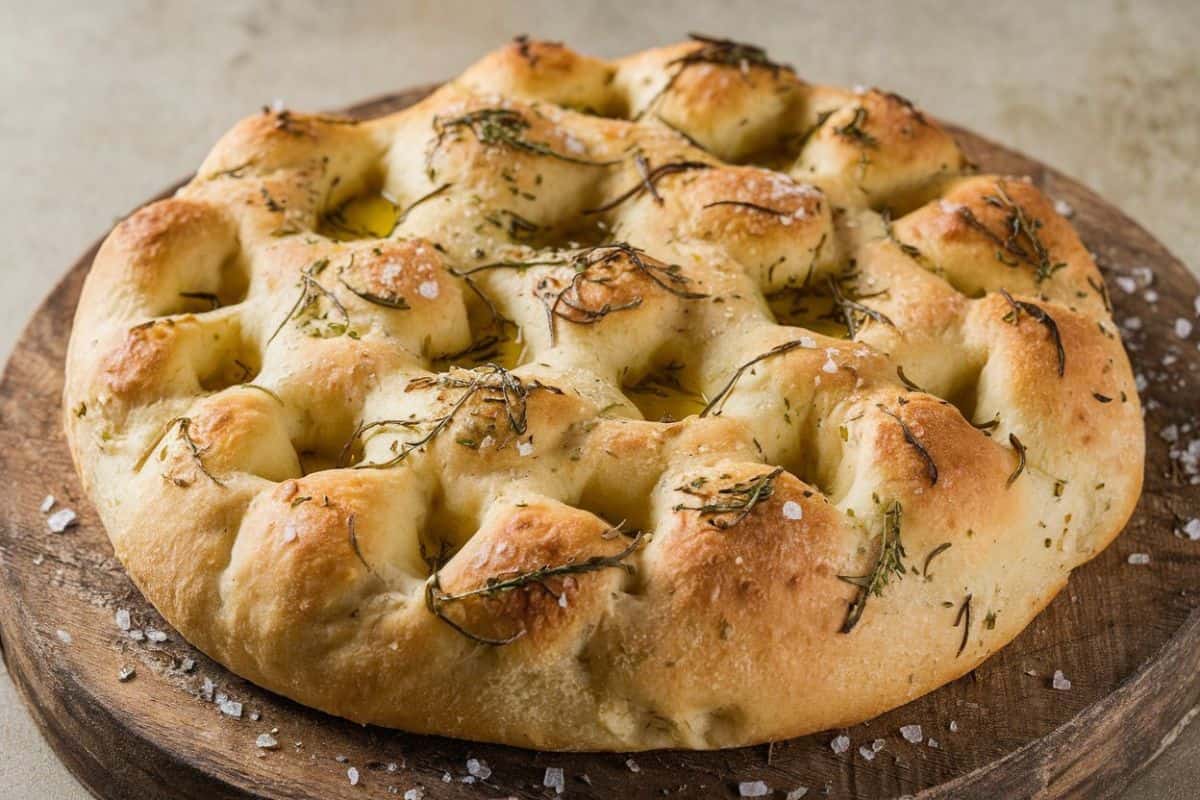
Sourdough Discard Focaccia Bread
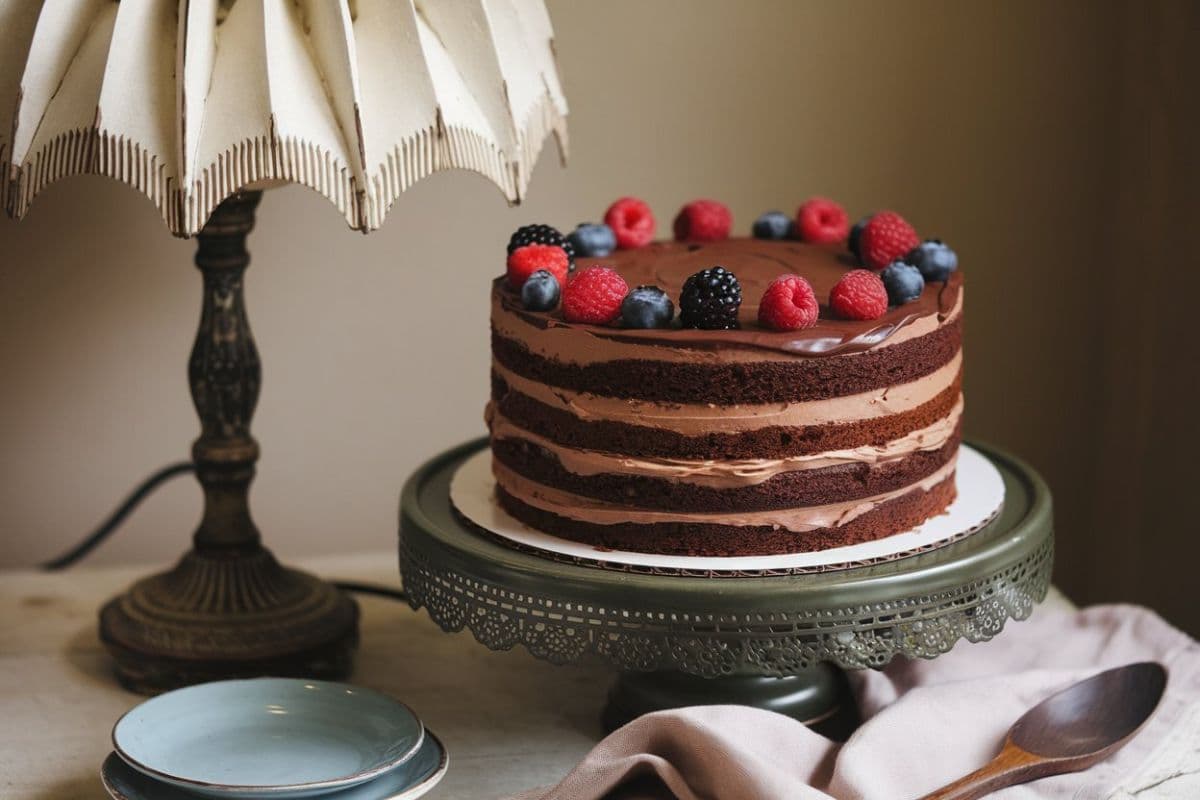
This decadent and rich sourdough discard chocolate cake will satisfy your sweet craving by fusing the traditional appeal of chocolate with the distinct flavor of sourdough. This cake has an amazing flavor and moisture content, with a hint of depth that only sourdough can provide. Perfect for celebrations, family gatherings, or simply a treat for yourself, this chocolate cake is sure to impress everyone who tastes it. With simple directions, you can prepare this delightful dessert in no time. Prepare for a chocolate experience that’s both familiar and refreshingly unique.
Make this beautifully dimpled focaccia that’s elevated by the tangy notes of sourdough discard, perfect for any occasion.
Ingredients:
1 cup sourdough discard
2 cups flour
1 teaspoon salt
1/4 cup olive oil
Fresh rosemary and sea salt for topping
Instructions:
In a bowl, combine the sourdough discard, flour, salt, and 2 tablespoons of olive oil. Mix until a dough forms.
Knead the dough for a few minutes until smooth, then let it rise for 1-2 hours.
Preheat the oven to 425°F (220°C) and drizzle olive oil on a baking sheet.
Spread the dough onto the baking sheet and dimple the surface with your fingers. Drizzle with remaining olive oil, sprinkle with rosemary and sea salt.
Bake for 20-25 minutes until golden brown.
Pro Tip: Drizzle with extra olive oil before serving for extra flavor.
Sourdough Discard Muffins
Start your day right with fluffy and flavorful sourdough discard muffins that are sure to become a breakfast favorite! These muffins combine the delightful tang of sourdough with your choice of add-ins, such as fruits, nuts, or chocolate chips, creating a deliciously versatile treat. Not only does the sourdough refuse improve the flavor but also contributes to a tender crumb that melts in your mouth. Perfect as a snack or for hectic mornings throughout the day, these muffins are quick to get ready and guarantee that everyone will be requesting more. Embrace the delicious possibilities of sourdough discard with this delightful recipe.
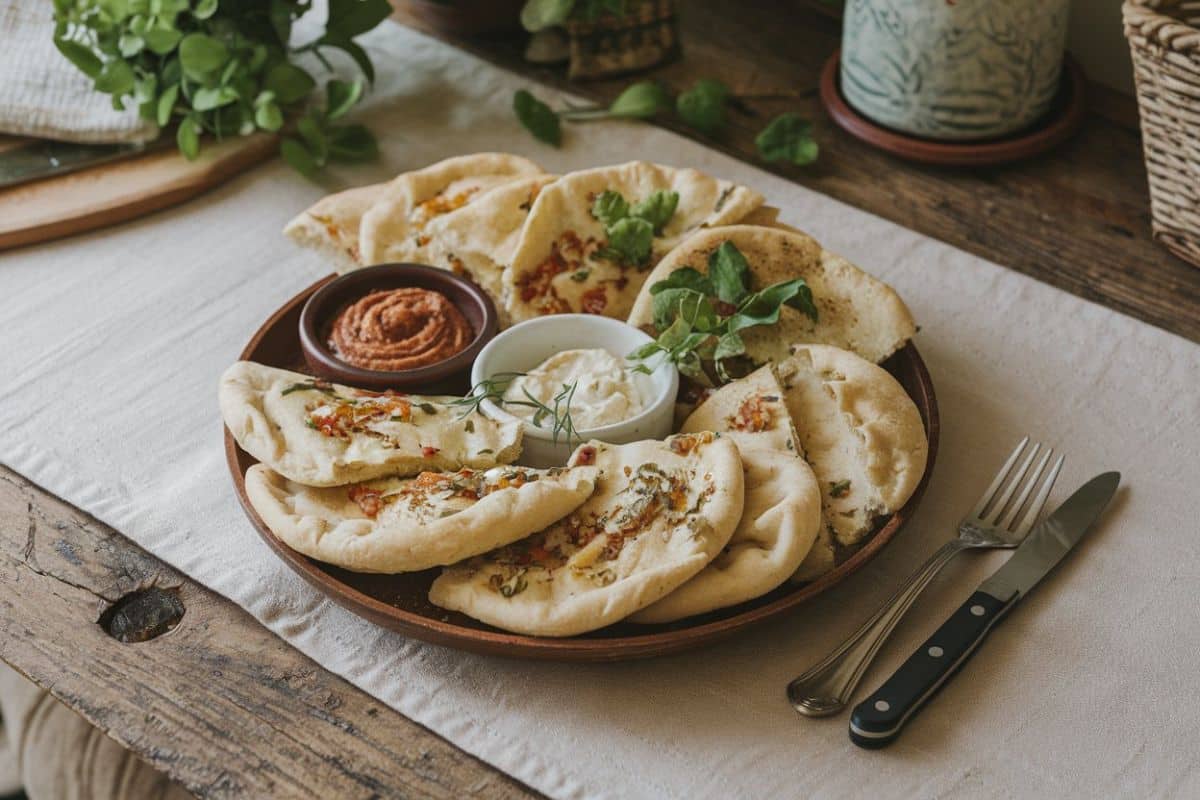
Enjoy the simplicity and flavor of homemade sourdough discard flatbread, a versatile addition to any meal. This quick and easy recipe results in soft, chewy flatbreads that are perfect for wraps, sandwiches, or served alongside dips and spreads. The addition of sourdough discard enhances the flavor profile, giving the flatbread a delightful tang. Whether you’re making a quick lunch or planning a dinner spread, these flatbreads are sure to impress. With very little work and only a few components, you can enjoy fresh, warm flatbread that’s a perfect complement to your favorite dishes.
Quickly whip up this soft and chewy flatbread, a versatile companion for any meal, enhanced by the tang of sourdough discard.
Ingredients:
1 cup sourdough discard
1 cup flour
1/4 cup water
1 tablespoon olive oil
Salt to taste
Instructions:
In a bowl, mix the sourdough discard, flour, water, olive oil, and salt until a dough forms.
Divide the dough into small balls and roll them out into flatbreads.
Heat a skillet over medium heat and cook each flatbread for about 1-2 minutes on each side until golden.
Pro Tip: Add garlic or herbs to the dough for extra flavor.
Sourdough Discard Brownies
Indulge your sweet tooth with fudgy sourdough discard brownies that take your dessert game to the next level! These brownies are rich, chocolatey, and have a delightful hint of tang from the sourdough discard, which adds depth to the flavor. Perfect for chocolate lovers, they’re incredibly easy to make and can be whipped up in no time. Enjoyed warm or cold, with or without an ice cream scoop, these brownies are a delicious treat for any occasion. Plus, they’re a clever way to use your sourdough discard while satisfying your chocolate cravings.
Indulge in fudgy brownies that combine the richness of chocolate with a surprising hint of tang from sourdough discard for a unique dessert experience.
Ingredients:
1 cup sourdough discard
1/2 cup butter
1 cup sugar
2 eggs
1 teaspoon vanilla extract
1/2 cup cocoa powder
1 cup flour
1/2 teaspoon baking powder
1/4 teaspoon salt
Instructions:
Preheat the oven to 350°F (175°C) and grease a baking dish.
In a saucepan, melt the butter and stir in the sugar until combined.
Remove from heat and stir in the eggs and vanilla. Add the sourdough discard and mix well.
In a separate bowl, whisk together the cocoa powder, flour, baking powder, and salt.
Gradually add the dry ingredients to the wet mixture and stir until just combined. Pour into the prepared baking dish.
Bake for 20-25 minutes or until a toothpick comes out with moist crumbs.
Pro Tip: Sprinkle with sea salt before baking for a gourmet touch.
Conclusion
Sourdough discard is more than just a byproduct of maintaining your starter—it’s a versatile ingredient that can elevate your everyday recipes while helping you reduce kitchen waste. From fluffy pancakes to rich brownies and savory focaccia, these ten recipes showcase the unique tang and depth of flavor that sourdough discard can bring to your dishes.
We encourage you to get creative in the kitchen and explore new ways to incorporate sourdough discard recipes into your cooking. Whether you’re an experienced baker or a novice, these recipes are a great starting point for experimenting with sourdough discard. Have you tried any of these recipes, or do you have your own favorite ways to use discard? We’d love to hear about your experiences and see your delicious creations in the comments below.[/vc_column_text][/vc_column][/vc_row][vc_row][vc_column width=”1/1″][us_separator size=”small”][us_text text=”Frequently Asked Questions (FAQs)” link=”%7B%22url%22%3A%22%22%7D” tag=”h2″][vc_tta_accordion][vc_tta_section title=”What is sourdough discard?” tab_link=”%7B%22url%22%3A%22%22%7D”][vc_column_text]Sourdough discard is the portion of your sourdough starter that is removed when feeding the starter. Instead of throwing it away, you can use it in various recipes to reduce waste and add a subtle tang to your dishes.[/vc_column_text][/vc_tta_section][vc_tta_section title=”Can I use sourdough discard straight from the fridge?” tab_link=”%7B%22url%22%3A%22%22%7D”][vc_column_text]Yes, sourdough discard can be used directly from the fridge in most recipes. If your discard has been sitting for a while, it may have more tang, but it will still work perfectly in baked goods or other dishes.[/vc_column_text][/vc_tta_section][vc_tta_section title=”How long does sourdough discard last?” tab_link=”%7B%22url%22%3A%22%22%7D”][vc_column_text]Sourdough discard can last in the fridge for about 1-2 weeks. If you plan to store it longer, you can freeze it for several months and defrost it when ready to use in recipes.[/vc_column_text][/vc_tta_section][vc_tta_section title=”Is sourdough discard the same as active sourdough starter?” tab_link=”%7B%22url%22%3A%22%22%7D”][vc_column_text]No, sourdough discard is the portion of your starter that is removed before feeding. It is not as active as a fed starter and won’t be suitable for making bread that requires rising, but it’s perfect for quick breads, pancakes, and other recipes.[/vc_column_text][/vc_tta_section][vc_tta_section title=”What can I make with sourdough discard?” tab_link=”%7B%22url%22%3A%22%22%7D”][vc_column_text]You can make a wide variety of dishes with sourdough discard, such as pancakes, crackers, muffins, brownies, pizza crust, flatbread, and more! It’s a versatile ingredient that adds a unique tangy flavor to your cooking.[/vc_column_text][/vc_tta_section][/vc_tta_accordion][/vc_column][/vc_row]
[vc_row][vc_column][vc_column_text]Pasta, a cornerstone of Italian cuisine, has become a culinary icon across the globe. Its adaptability makes it perfect for nearly any meal, Whether it’s a gourmet dish or a straightforward weeknight supper. With a vast variety of pasta shapes and sizes, each is designed to hold different types of sauces, textures, and ingredients. From long, delicate strands to small, hearty tubes, every pasta type brings its own unique flair to the table.
Understanding the different types of pasta can elevate your cooking, helping you select the right pasta to match your sauces and ingredients. In this guide, we’ll explore various pasta types, their ideal pairings, and share a unique recipe for each that you can try at home.
Spaghetti
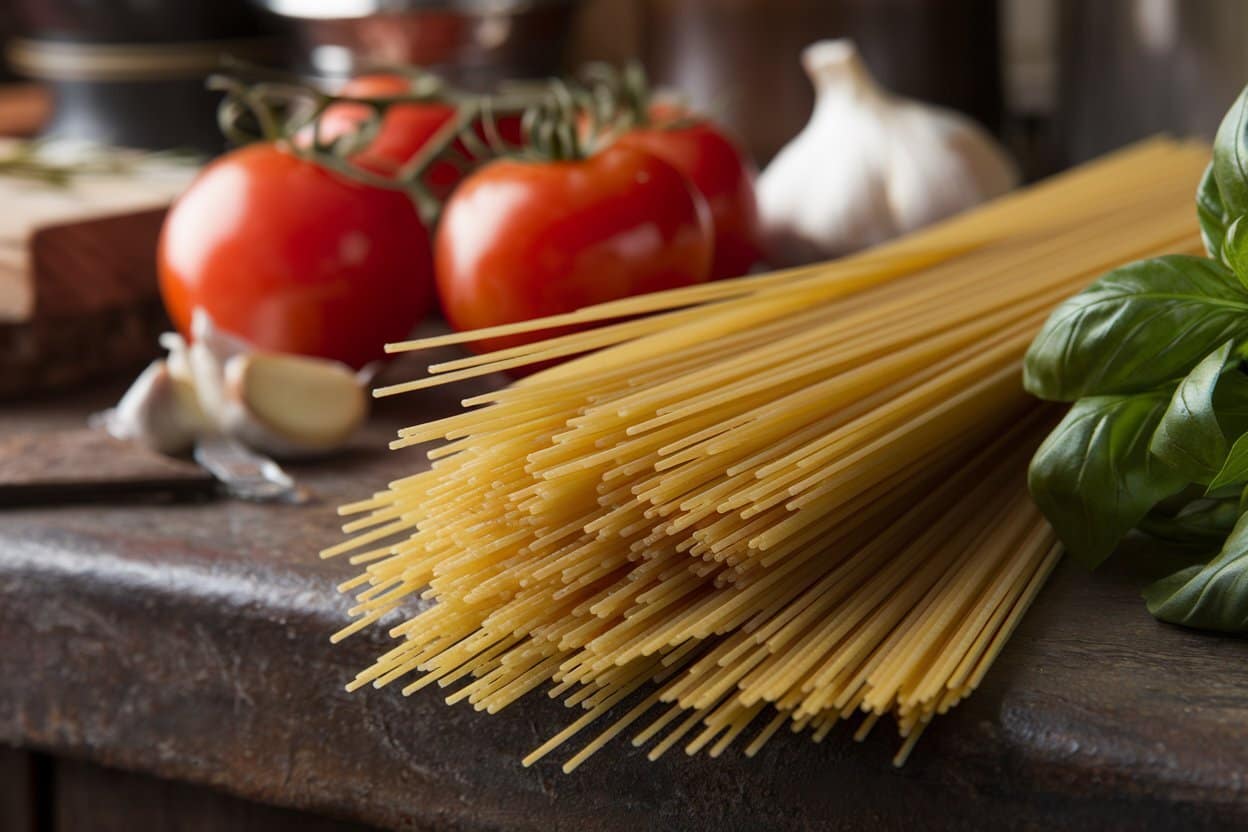
Uncooked spaghetti alongside fresh ingredients like tomatoes, garlic, and basil, representing the essentials for a delicious Italian pasta dish.
Spaghetti is one of the most famous pasta types, consisting of long, thin, and cylindrical strands. It’s the go-to pasta for many traditional Italian dishes and offers a pleasant balance between texture and flavor absorption. The smooth surface of spaghetti is perfect for sauces that cling lightly.
Best Uses
Spaghetti is perfect for light to medium-bodied sauces, such as tomato-based marinara, garlic and olive oil, or creamy carbonara. It’s also a great base for seafood dishes or simple vegetable pairings.
Unique Recipe
Spaghetti with Lemon Garlic Shrimp
Ingredients:
Spaghetti
Shrimp
Lemon zest and juice
Olive oil
Garlic, parsley, and red pepper flakes
Instructions:
Cook spaghetti until al dente. In a pan, sauté garlic and red pepper flakes in olive oil, then add shrimp and cook until pink. Toss the pasta in the shrimp mixture, and finish with lemon juice, zest, and parsley for a light, zesty dish.
Fettuccine
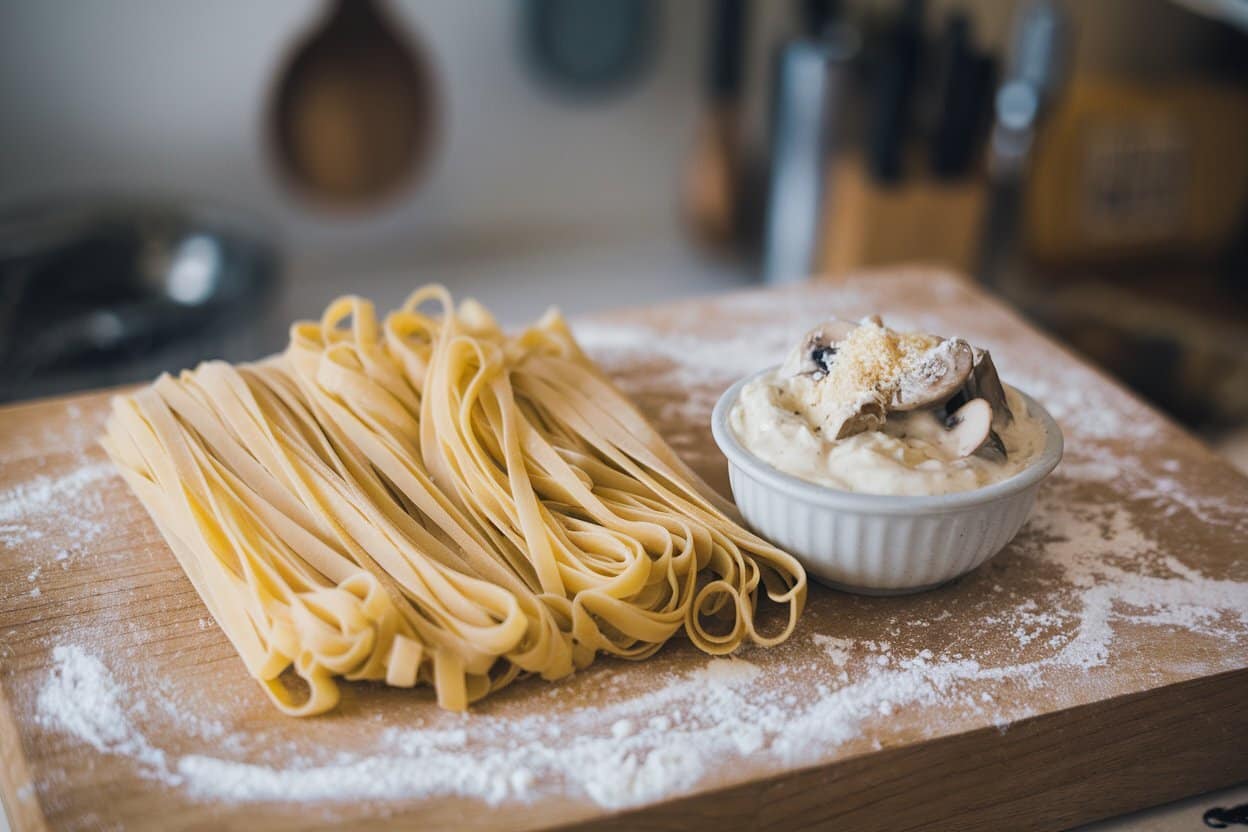
Fresh fettuccine pasta on a floured cutting board with a side of creamy mushroom sauce, ready to be cooked.
Fettuccine is a flat, ribbon-like pasta that’s slightly thicker than its cousin, tagliatelle. Its broad surface makes it ideal for soaking up creamy, rich sauces. Fettuccine is an indulgent pasta often used in heartier dishes due to its thickness.
Best Uses
Fettuccine pairs wonderfully with creamy sauces such as Alfredo, truffle, or mushroom-based sauces. Its thickness also makes it an excellent choice for ragùs or meat-based dishes.
Sauté mushrooms and garlic in butter until golden. Add cream and thyme, allowing the mixture to thicken slightly. Toss cooked fettuccine in the sauce, top with grated Parmesan, and served for a luxurious, earthy meal.
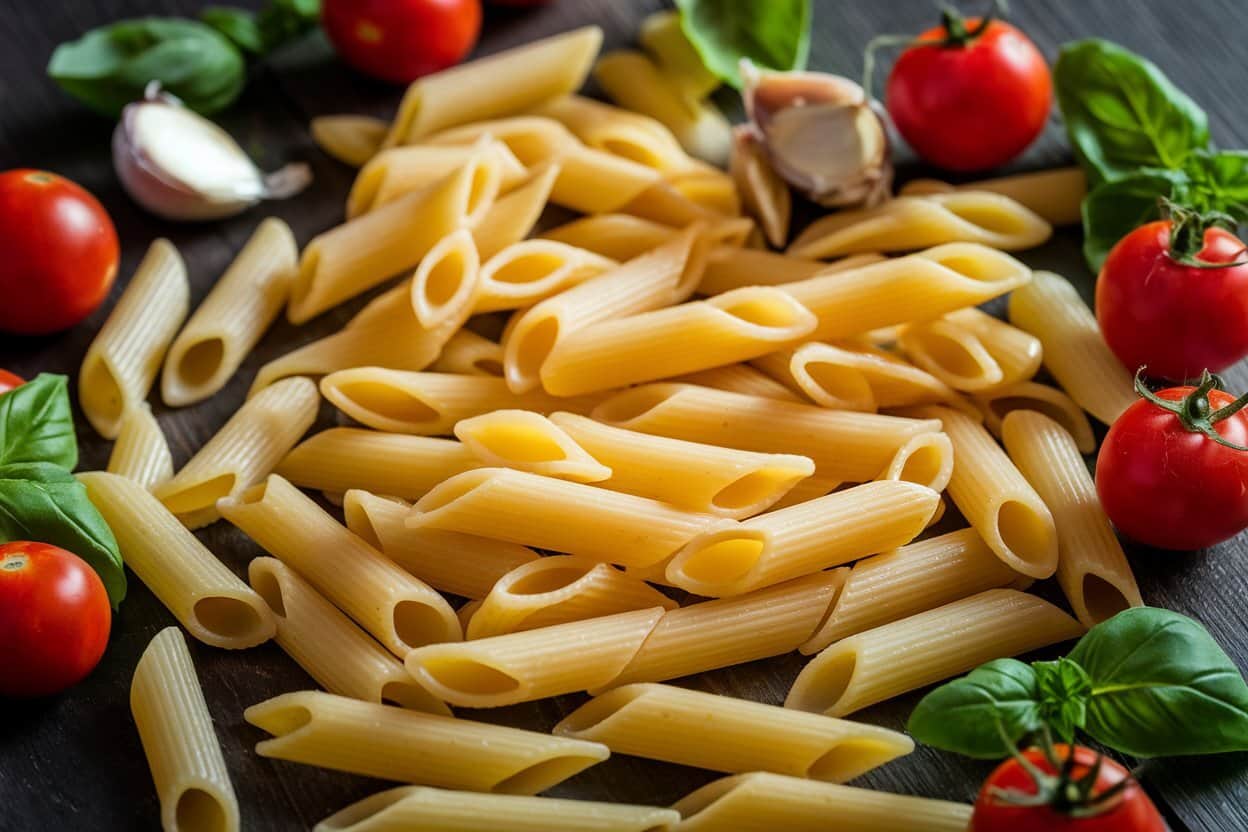
Fresh penne pasta with tomatoes, basil, and garlic – the perfect base for a delicious Italian dish.
Penne is a short, tube-shaped pasta with diagonal edges. Its ridges and hollow center make it perfect for grabbing onto thicker, chunkier sauces. The texture of penne ensures that it absorbs a generous amount of sauce in every bite, making each mouthful flavorful and rich.
Best Uses
Penne is great with hearty sauces like meat-based bolognese, arrabbiata, or even baked dishes such as penne al forno. The shape also works well in pasta salads.
Unique Recipe
Penne Arrabbiata
Ingredients:
Penne
Tomatoes (fresh or canned)
Garlic, chili flakes, and olive oil
Fresh basil
Instructions:
Add crushed tomatoes to olive oil and sauté garlic and chili flakes to make an arrabbiata sauce. Let it simmer until thickened. Toss in the cooked penne and finish with fresh basil for a spicy, tangy pasta dish.
Fusilli
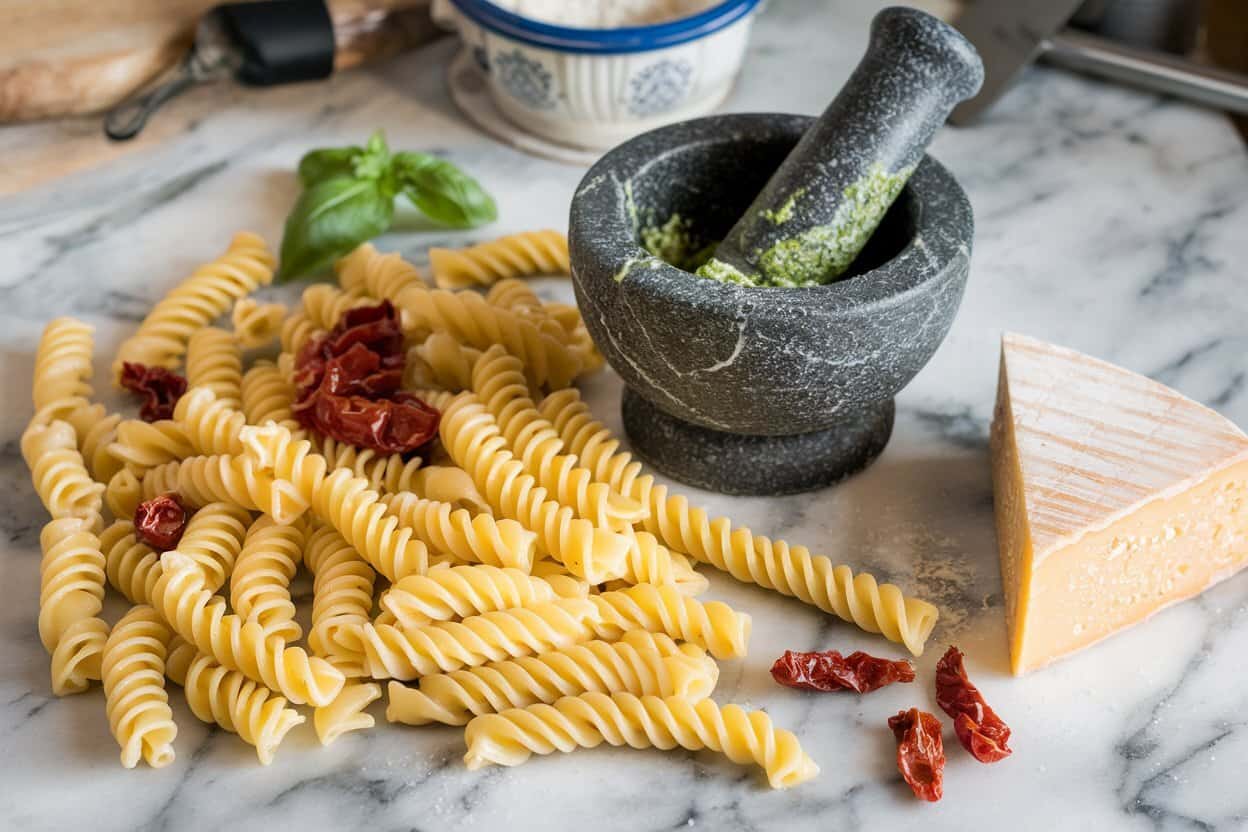
Fusilli pasta with sun-dried tomatoes, a block of cheese, and freshly made pesto in a mortar and pestle.
Fusilli is a spiral-shaped pasta that is designed to hold onto sauces in its twists and curls. This shape ensures that each piece of pasta catches plenty of sauce, making it ideal for rich or chunky sauces.
Best Uses
Fusilli is perfect for creamy sauces, like pesto, or for capturing vegetable-based sauces. It’s also a common choice for cold pasta salads due to its ability to maintain its shape and texture.
Unique Recipe
Fusilli with Basil Pesto and Sun-Dried Tomatoes
Ingredients:
Fusilli
Fresh basil pesto
Sun-dried tomatoes
Parmesan cheese and pine nuts
Instructions:
Toss cooked fusilli with a homemade basil pesto sauce, then add chopped sun-dried tomatoes for a burst of umami. For an additional crisp and flavorful layer, top with freshly grated Parmesan cheese and roasted pine nuts.
Rigatoni
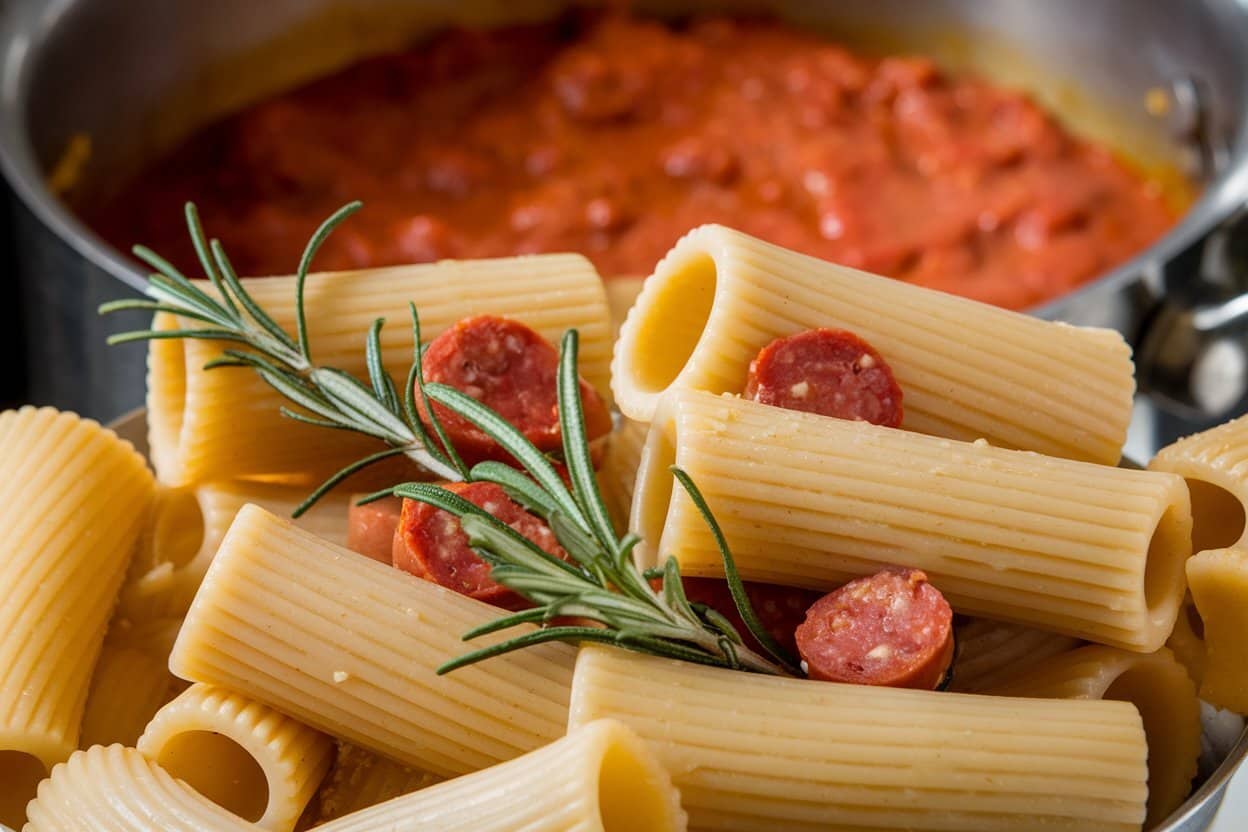
Rigatoni pasta served with savory sausage and fresh rosemary, paired with a rich tomato sauce.
Rigatoni is a large, rigid tube pasta that’s perfect for capturing thick, hearty sauces both inside and out. Its robust structure makes it a fantastic choice for baked dishes or ragù.
Best Uses
Rigatoni works well with chunky meat sauces or vegetable-loaded dishes. It’s also perfect for casseroles and baked pasta dishes, as the sauce coats the pasta thoroughly, ensuring every bite is flavorful.
Unique Recipe
Baked Rigatoni with Sausage and Ricotta
Ingredients:
Rigatoni
Italian sausage (crumbled)
Ricotta and mozzarella cheese
Tomato sauce and garlic
Instructions:
Brown sausage with garlic, then mix it into a rich tomato sauce. Toss with cooked rigatoni and dollops of ricotta, Arrange it with mozzarella in a baking dish, and bake until golden and bubbling.
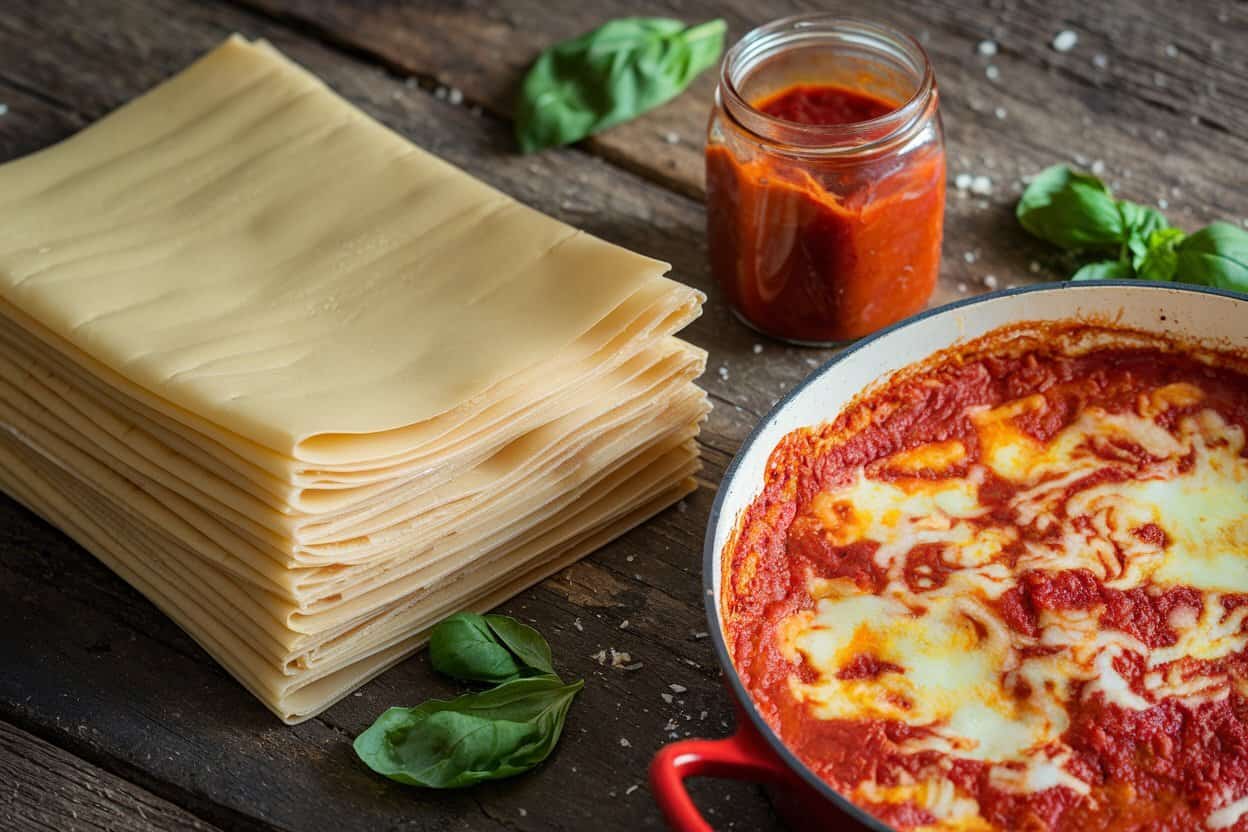
Uncooked lasagna sheets with homemade tomato sauce and freshly baked lasagna.
Lasagna sheets are wide and flat, traditionally used for layering in baked dishes. These pasta sheets are perfect for stacking sauces, cheese, meat, or vegetables into a hearty, multi-layered meal.
Best Uses
Lasagna is ideal for baked dishes, whether classic meat lasagna with béchamel and marinara, or vegetarian versions with roasted vegetables and cheese.
Unique Recipe
Classic Meat Lasagna
Ingredients:
Lasagna sheets
Ground beef
Tomato sauce and béchamel sauce
Mozzarella and Parmesan cheese
Instructions:
Layer cooked lasagna sheets with a rich meat sauce, béchamel, and mozzarella cheese. Repeat the layers and bake until the top is golden and bubbling. For a reassuring presentation, put some fresh parsley on top, crowd-pleasing dish.
Orecchiette
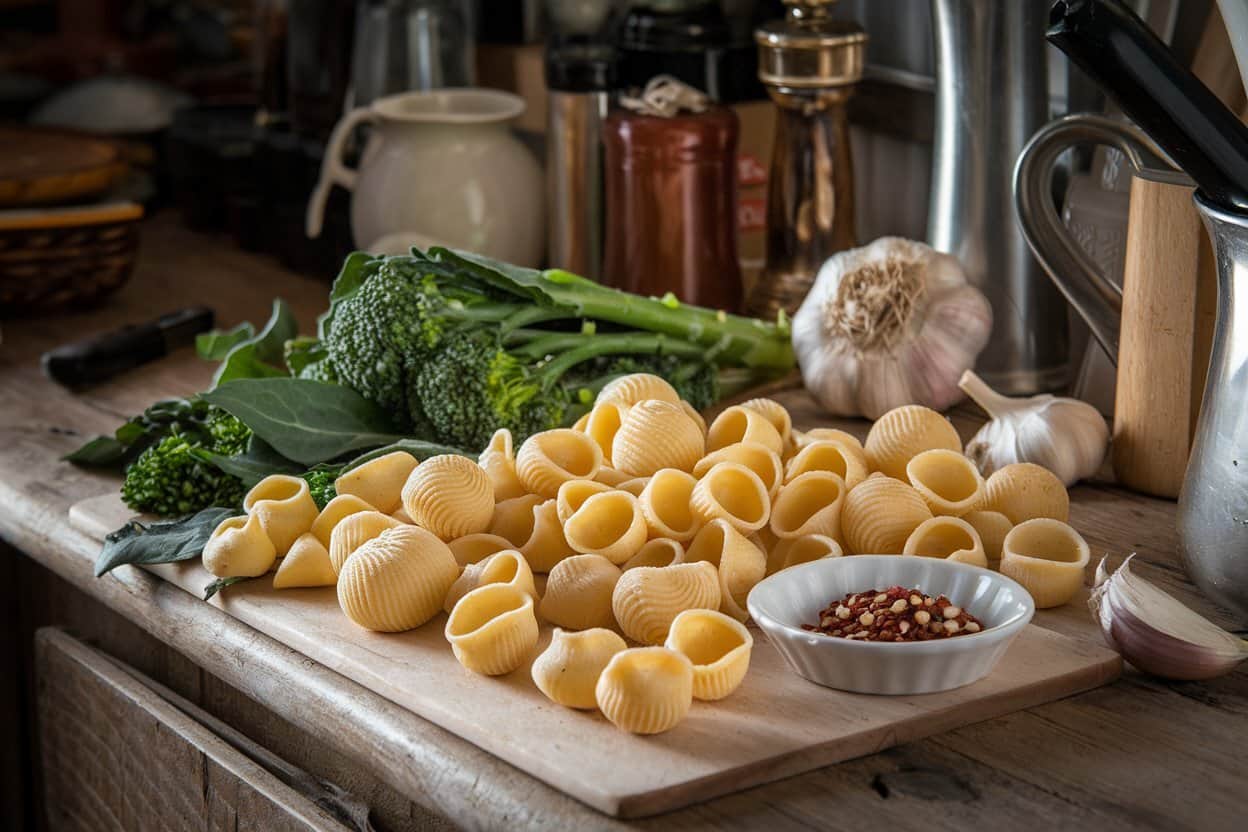
Orecchiette pasta with fresh broccoli, garlic, and red pepper flakes ready for cooking.
Orecchiette, meaning “little ears” in Italian, is a small, round, and slightly concave pasta. Its unique shape is ideal for catching sauces and small bits of meat or vegetables, making each bite flavorful.
Best Uses
Orecchiette is great for chunky sauces or sautéed vegetable dishes. It’s often used in southern Italian cuisine, particularly in combination with greens like broccoli rabe or sausage.
Unique Recipe
Orecchiette with Broccoli Rabe and Sausage
Ingredients:
Orecchiette
Italian sausage
Broccoli rabe
Garlic, olive oil, and chili flakes
Instructions:
Cook sausage until browned, then sauté garlic and chili flakes in olive oil. Add blanched broccoli rabe and toss with the cooked orecchiette for a flavorful, hearty dish with a balance of bitterness and savory sausage.
Tortellini
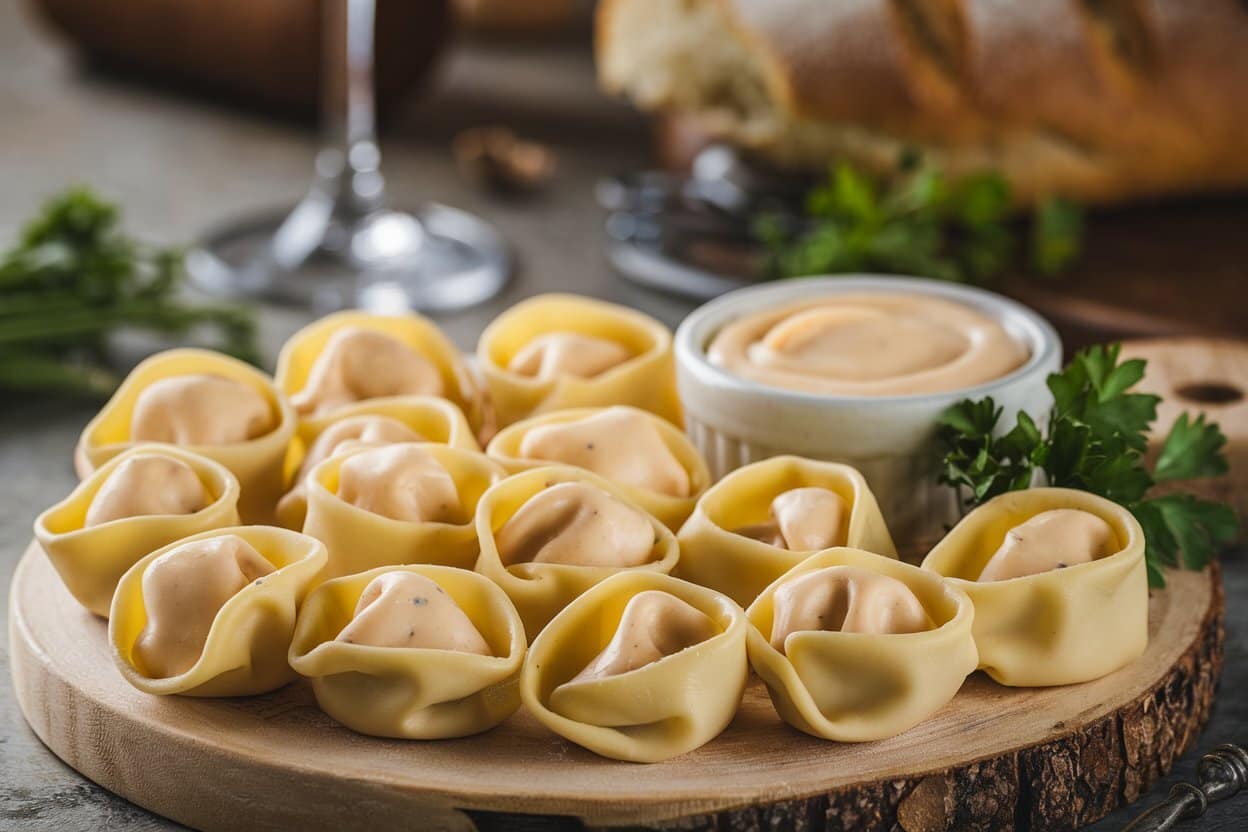
Tortellini pasta stuffed with a rich, creamy filling, served with a dipping sauce for a delicious appetizer.
Tortellini are small, ring-shaped pasta stuffed with cheese, meat, or vegetables. They are often enjoyed in soups or served with a light sauce that compliments their rich filling.
Best Uses
Tortellini is perfect for broths and creamy sauces. Its filling makes it hearty enough to be served with just a light drizzle of olive oil, or tossed in a creamy sauce.
Unique Recipe
Tortellini in Creamy Parmesan Sauce
Ingredients:
Cheese or meat-filled tortellini
Heavy cream
Parmesan cheese
Nutmeg and black pepper
Instructions:
Cook tortellini until al dente. In a saucepan, heat cream, nutmeg, and black pepper, then add Parmesan cheese and stir until melted. Toss the tortellini in the sauce and serve topped with extra cheese for a comforting, rich meal.
Farfalle (Bowtie Pasta)
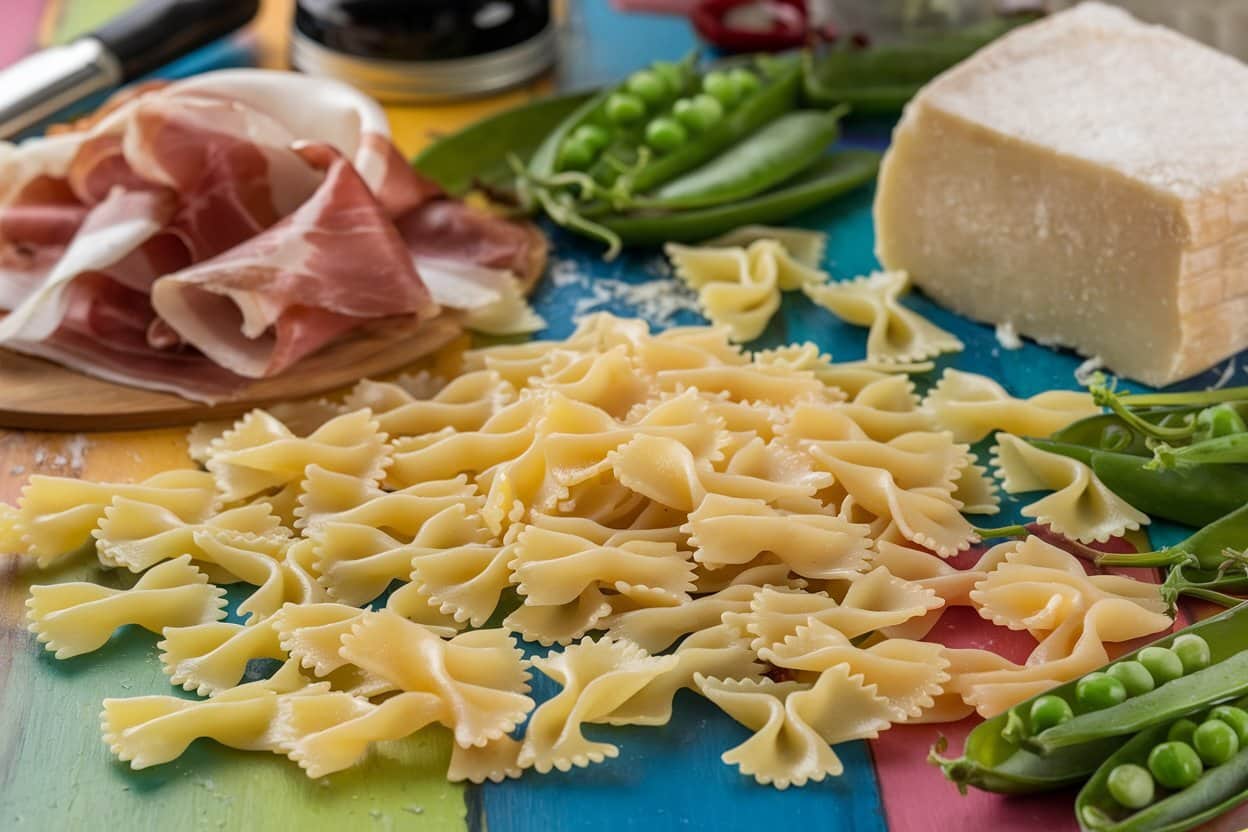
Farfalle pasta paired with fresh green peas, prosciutto, and Parmesan, ready to be turned into a delicious Italian meal.
Farfalle, also known as bowtie pasta, is shaped like small butterflies or bowties. Its unique shape makes it not only visually appealing but also practical for holding onto sauces.
Best Uses
Farfalle works well in both hot dishes with creamy or tomato-based sauces and cold pasta salads. It’s also a fun addition to kid-friendly meals.
Unique Recipe
Farfalle with Creamy Pea and Prosciutto
Ingredients:
Farfalle
Fresh peas
Prosciutto
Parmesan cheese and heavy cream
Instructions:
Cook farfalle and toss with a creamy sauce made from heavy cream and Parmesan. Add fresh peas and crispy prosciutto for a sweet and savory combination.
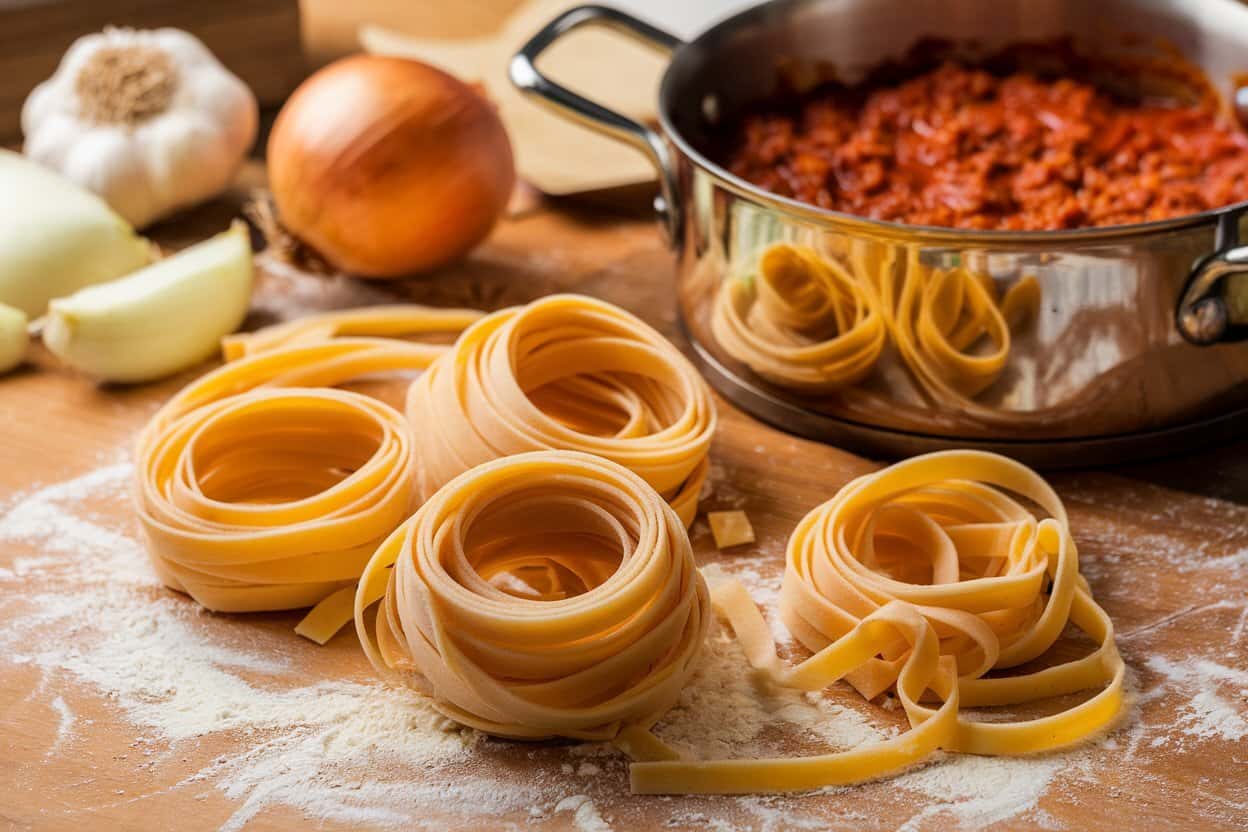
Homemade tagliatelle pasta ready to be cooked, served with a classic tomato sauce simmering in the background.
Tagliatelle is a long, flat ribbon pasta similar to fettuccine but often a bit thinner. This pasta is perfect for soaking up thick sauces, particularly ragù.
Best Uses
Tagliatelle is best paired with hearty sauces like bolognese, as its flat surface holds onto the sauce well.
Unique Recipe
Tagliatelle alla Bolognese
Ingredients:
Tagliatelle
Ground beef and pork
Tomato paste, onions, carrots, and celery
Red wine and milk
Instructions:
Sauté the ground meats with finely chopped onions, carrots, and celery. Add red wine, tomato paste, and a splash of milk for richness. Let it simmer for a few hours and serve with freshly cooked tagliatelle for a traditional Italian comfort food.
Conclusion
Exploring the many shapes and sizes of pasta opens up endless culinary possibilities. Whether you’re craving a creamy fettuccine dish or a hearty baked rigatoni, each type of pasta brings its unique qualities to the table. Experiment with these recipes and pasta shapes to discover your personal favorites, and enjoy the versatility and deliciousness that pasta has to offer.[/vc_column_text][/vc_column][/vc_row][vc_row][vc_column width=”1/1″][us_separator][us_text text=”Frequently Asked Questions (FAQs)” link=”%7B%22url%22%3A%22%22%7D” tag=”h2″][vc_tta_accordion title_size=”1.2rem” title_tag=”h3″][vc_tta_section title=”What are the different types of pasta?” tab_link=”%7B%22url%22%3A%22%22%7D”][vc_column_text]There are numerous types of pasta, including spaghetti, penne, fettuccine, farfalle, and lasagna, each with unique shapes and uses in various dishes.[/vc_column_text][/vc_tta_section][vc_tta_section title=”How do I choose the right pasta for a recipe?” tab_link=”%7B%22url%22%3A%22%22%7D”][vc_column_text]The choice of pasta depends on the sauce and ingredients. For heavier sauces, use thicker pasta like fettuccine, while lighter sauces pair well with thinner pasta like angel hair.[/vc_column_text][/vc_tta_section][vc_tta_section title=”Can I use whole wheat or gluten-free pasta in these recipes?” tab_link=”%7B%22url%22%3A%22%22%7D”][vc_column_text]Yes, you can substitute whole wheat or gluten-free pasta in most recipes. Just be mindful of the cooking times, as they may differ from traditional pasta.[/vc_column_text][/vc_tta_section][vc_tta_section title=”How do I cook pasta perfectly?” tab_link=”%7B%22url%22%3A%22%22%7D”][vc_column_text]Boil water with salt, add pasta, and cook according to package instructions until al dente. Remember to stir occasionally and reserve some pasta water before draining.[/vc_column_text][/vc_tta_section][vc_tta_section title=”What are some popular pasta dishes I can make?” tab_link=”%7B%22url%22%3A%22%22%7D”][vc_column_text]Popular dishes include spaghetti carbonara, penne arrabbiata, fettuccine Alfredo, and lasagna. Each has its own flavor profile and can be customized.[/vc_column_text][/vc_tta_section][vc_tta_section title=”Can I make pasta from scratch?” tab_link=”%7B%22url%22%3A%22%22%7D”][vc_column_text]Absolutely! Homemade pasta is made from flour, eggs, and water. There are various methods to roll and cut it into different shapes.[/vc_column_text][/vc_tta_section][vc_tta_section title=”How should I store leftover pasta?” tab_link=”%7B%22url%22%3A%22%22%7D”][/vc_tta_section][/vc_tta_accordion][/vc_column][/vc_row]
[vc_row][vc_column][vc_column_text]Craving something rich, flavorful, and guaranteed to impress? This creamy tuscan chicken pasta recipe is about to become your new favorite dinner. Imagine tender chicken, sautéed garlic, sun dried tomatoes, and fresh spinach all swirled together in a decadent, Parmesan-infused cream sauce. It’s like a warm hug in a bowl, bringing the irresistible flavors of Italy right into your kitchen without the need for a passport.
Perfect for weeknights and ready in about 30 minutes or a cozy weekend meal, this dish combines elegance with simplicity. Let’s dive in!
Why This Tuscan Chicken Pasta Will Be Your New Go To
Dinner in a Flash: It’s quick enough for busy weeknights, yet indulgent enough for special occasions.
Irresistibly Creamy: The luscious, velvety sauce hugs each bite of pasta, bursting with rich, savory flavors.
Easy to Customize: Want to make it lighter? Add more veggies? Or kick up the spice? No problem this recipe adapts to your needs.
Minimal Cleanup: A one-pan wonder that won’t leave your sink piled high with dishes.
The Ingredients You’ll Need- Simple but Flavorful
Simple yet flavorful ingredients for preparing Tuscan Chicken Pasta, featuring fresh chicken breasts, spinach, sun-dried tomatoes, and pasta.
What makes this dish stand out is how a few simple ingredients create something magical:
2 Chicken Breasts (boneless, skinless): Tender, juicy chicken forms the heart of the dish.
12 oz Pasta (penne, fettuccine, or rotini): Choose your favorite! I love using penne for that perfect sauce to pasta ratio.
1 cup Heavy Cream: For that silky, luxurious sauce we all dream of.
1 cup Parmesan Cheese (freshly grated): The secret ingredient for a deep, savory flavor.
½ cup Sun-Dried Tomatoes (in oil, drained): These add a punch of tangy, concentrated flavor that elevates the dish.
4 Garlic Cloves (minced): Because what’s an Italian dish without garlic?
2 cups Fresh Spinach: For a pop of color and nutrients.
1 cup Chicken Broth: Helps create the base of the creamy sauce.
2 tbsp Olive Oil: For perfectly charring the chicken to a golden brown.
Salt, Pepper & Red Pepper Flakes (optional): Adjust to taste seasoning is key.
Step by Step Guide to Tuscan Chicken Pasta Perfection
Let’s demonstrate how to prepare this delectable dinner in a few simple steps.
Cook the Pasta
Bring a pot of salted water to a boil and add the pasta. Cook according to the package instructions, stirring occasionally, until the pasta is al dente and cooked through. Once done, drain and set aside.
Pro Tip: Reserve about ½ cup of pasta water before draining to adjust the sauce consistency later if needed.
Sear the Chicken
While the pasta cooks, season your chicken breasts with salt and pepper. In a big skillet, warmth the olive oil over medium-high heat. Sear the chicken for 6-7 minutes on each side until beautifully golden and fully cooked. Once done, remove from the skillet, let it rest, then slice into thin strips.
Bonus Tip: Searing locks in the juices and adds a crispy, flavorful crust to the chicken.
Make the Dreamy Cream Sauce
Dreamy cream sauce in the making, perfect for pairing with pasta or your favorite dish.
In the same skillet (don’t wipe it out you want those flavor bits), add minced garlic and sauté for about a minute until fragrant. Include the chicken broth to the pan, stirring to unwind any burnt bits from the bottom, which will elevate the overall flavor of the dish.
Now, gradually add the heavy cream and bring it to a simmer. Stir in sun dried tomatoes and let the sauce simmer for about 3-4 minutes. You’ll notice it starts to thicken and get creamy.
Add Spinach and Parmesan
Add the fresh spinach and toss, stirring to wilt. Next, add in that freshly grated Parmesan cheese, stirring until it melts into the sauce, making it thick and irresistibly creamy.
Bring It All Together
Now for the exciting part combining all the elements! Include the cooked pasta to the skillet and gently toss it in the creamy sauce until everything is well coated. Then layer in those slices of perfectly cooked chicken. Toss until every bite of pasta is coated in the delicious sauce. If the sauce feels too thick, just splash in a little reserved pasta water until it’s just right.
Garnish and Serve
Add red pepper flakes, salt, and pepper for seasoning (if you like a bit of spice). Garnish with extra Parmesan and freshly chopped parsley for an extra burst of flavor. Serve immediately and watch as everyone swoons over this restaurant-quality meal.
Flawless Tuscan chicken pasta paired with a glass of white wine, perfect for an elegant dinner setting.
Insider Tips for a Flawless Tuscan Chicken Pasta
Don’t Skimp on the Garlic: Garlic adds an essential layer of flavor, so feel free to add more if you’re a garlic lover.
Adjust the Creaminess: If you’d rather have a thinner sauce, substitute half of the heavy cream with half-and-half or milk. It’ll still be delicious!
Pasta Water Magic: Keep some pasta water handy! It’s the key to loosening the sauce without diluting the flavors.
Add Extra Veggies: Want more greens? Add mushrooms, zucchini, or bell peppers for a heartier dish.
Make it Spicy: The perfect amount of spice is added with a dash of red pepper flakes to counterbalance the creamy richness.
Conclusion
This creamy tuscan chicken pasta hits all the right notes—rich, savory, and just a little indulgent. Whether you’re cooking for family, entertaining guests, or just treating yourself, this dish delivers restaurant-quality flavor with minimal effort. The combination of tender chicken, tangy sun-dried tomatoes, and spinach wrapped in a luscious Parmesan cream sauce will make everyone want to eat more.[/vc_column_text][/vc_column][/vc_row][vc_row][vc_column width=”1/1″][us_separator size=”small”][us_text text=”Frequently Asked Questions (FAQs)” link=”%7B%22url%22%3A%22%22%7D” tag=”h2″][vc_tta_accordion title_size=”1.2rem” title_tag=”h3″][vc_tta_section title=”Can I use a different type of pasta for this recipe?” tab_link=”%7B%22url%22%3A%22%22%7D”][vc_column_text]Yes, you can use any pasta you like! Penne, fettuccine, or even spaghetti work well. Just adjust the cooking time based on the type of pasta you choose.[/vc_column_text][/vc_tta_section][vc_tta_section title=”Can I substitute the heavy cream with a lighter option?” tab_link=”%7B%22url%22%3A%22%22%7D”][vc_column_text]If you prefer a lighter version, you can substitute heavy cream with half-and-half or whole milk. However, the sauce may be slightly less creamy and thick.[/vc_column_text][/vc_tta_section][vc_tta_section title=”Can I make this recipe ahead of time?” tab_link=”%7B%22url%22%3A%22%22%7D”][vc_column_text]Yes, you can make it ahead! Store the pasta and sauce separately in the fridge for up to 2-3 days. When reheating, add a splash of water or milk to help revive the creaminess of the sauce.[/vc_column_text][/vc_tta_section][vc_tta_section title=”What vegetables can I add to this dish?” tab_link=”%7B%22url%22%3A%22%22%7D”][vc_column_text]You can add spinach, sun-dried tomatoes, or even mushrooms to enhance the flavors. Fresh spinach wilts quickly, so add it towards the end of cooking.[/vc_column_text][/vc_tta_section][vc_tta_section title=”How can I make this dish gluten-free?” tab_link=”%7B%22url%22%3A%22%22%7D”][vc_column_text]To make it gluten-free, simply use gluten-free pasta. Ensure that any other ingredients like chicken broth or seasoning are also gluten-free.[/vc_column_text][/vc_tta_section][/vc_tta_accordion][/vc_column][/vc_row]
[vc_row][vc_column][vc_column_text]In the world of weeknight dinners, there’s nothing quite as satisfying as a hearty, creamy dish that comes together quickly and effortlessly. That’s exactly where garlic parmesan chicken pasta shines. This recipe delivers on all fronts—rich in flavor, easy to make, and packed with protein. Whether you’re cooking for family, friends, or just treating yourself, this meal will easily become a favorite on your menu.
Why You’ll Love This Dish
This meal is the ideal balance of savory, creamy, and cheesy goodness. The garlic and Parmesan provide a robust flavor that compliments the tender chicken and pasta. The best part? It’s quick to prepare, making it the perfect option for hectic weeknights when you want to prepare a handmade meal without devoting a lot of time to the kitchen.
The combination of fresh garlic and Parmesan cheese adds a rich, aromatic base to the dish, while the creamy sauce brings everything together in a velvety finish. The chicken provides a hearty, satisfying bite, and the pasta soaks up every bit of that delicious sauce. It’s a complete meal that you can serve in under 30 minutes.
Here’s a simple and delicious recipe for garlic parmesan chicken pasta:
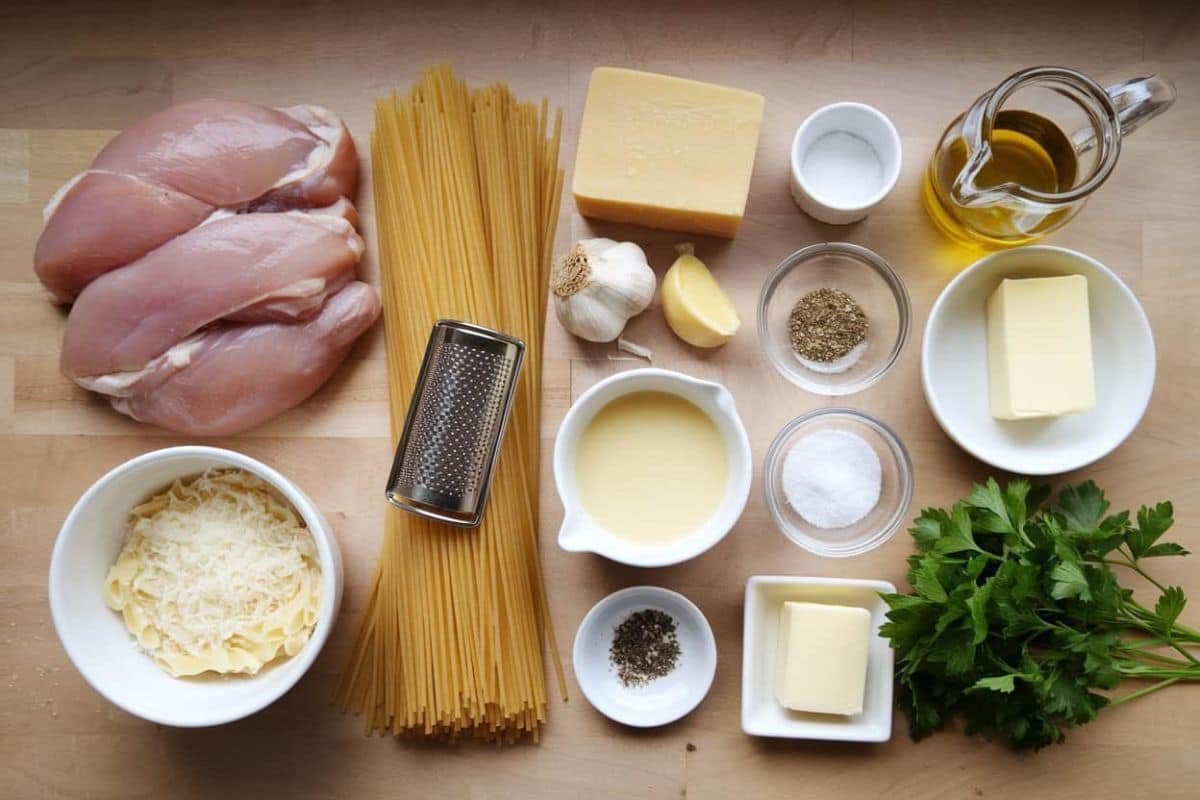
A beautifully arranged flat lay of the essential ingredients for making Garlic Parmesan Chicken Pasta – from fresh chicken breasts to Parmesan cheese, garlic, and herbs.
Ingredients:
2 chicken breasts, skinned and boneless (cubed)
8 oz pasta (penne, fettuccine, or your choice)
4 cloves garlic (minced)
1 cup heavy cream
1 cup grated Parmesan cheese
1 tablespoon olive oil
1 tablespoon butter
1 teaspoon Italian seasoning
Salt and pepper to taste
Fresh parsley (chopped, for garnish)
Red pepper flakes (optional for a little heat)
Ingredients Breakdown
To make garlic parmesan chicken pasta, you’ll need some simple ingredients that you probably already have in your pantry and fridge:
Chicken Breasts: The protein star of this dish. Chicken is tender and absorbs the sauce wonderfully.
Garlic: Fresh garlic is key here, offering that bold and delicious flavor that pairs beautifully with Parmesan cheese.
Parmesan Cheese: The hero ingredient, it gives the sauce a rich and nutty flavor that compliments the creaminess of the sauce.
Heavy Cream: This makes the sauce luxuriously creamy and adds to the richness of the dish.
Pasta: You can use any pasta you like—penne, fettuccine, or even bowtie pasta. Each variety gives the dish its own texture.
Italian Seasoning: A mixture of dried herbs, such as oregano, thyme, and basil adds an extra layer of flavor to the chicken.
Olive Oil and Butter: These fats provide the base for browning the chicken and making the sauce extra flavorful.
Salt and Pepper: Simple but essential for bringing all the flavors together.
Fresh Parsley: To brighten the dish and give it some color and freshness.
How to Make Garlic Parmesan Chicken Pasta
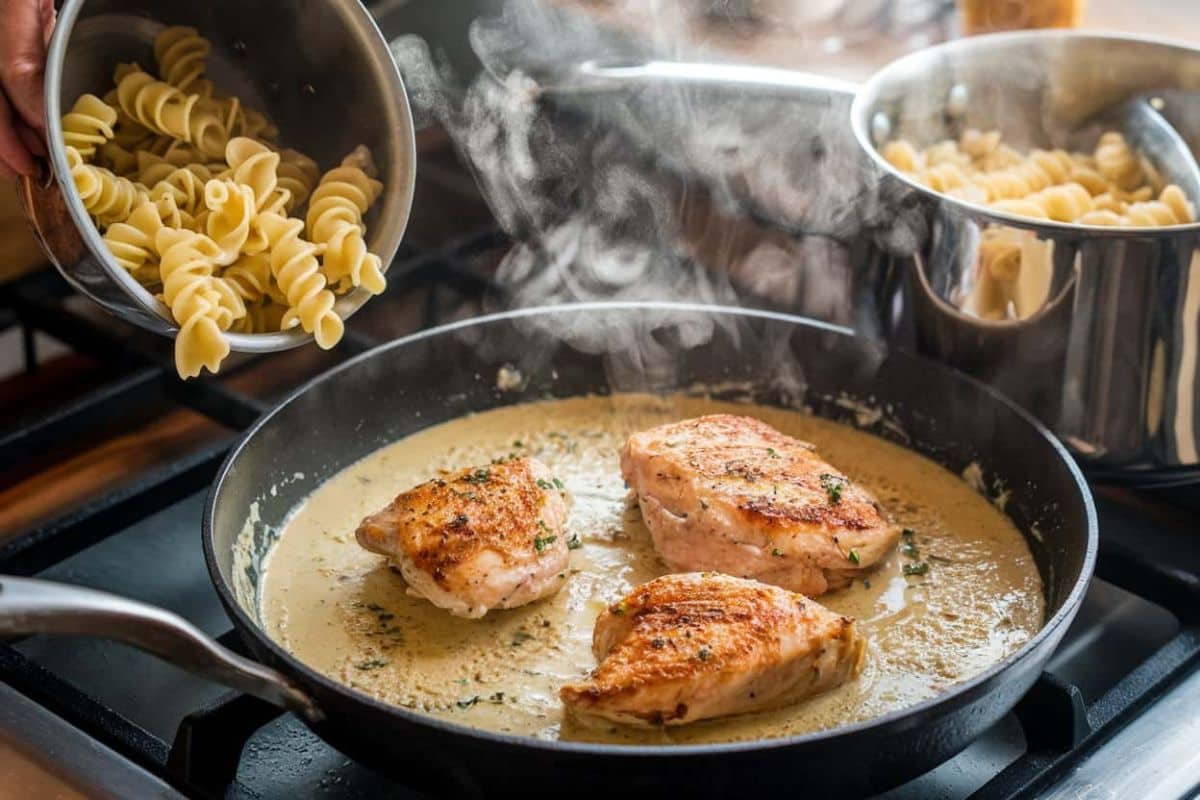
Creamy Garlic Parmesan Chicken Pasta being prepared on the stove with succulent chicken breasts and rotini pasta.
There are a few easy stages in this recipe, and in no time, you’ll have a delicious meal ready to serve.
Cook the Pasta:
Begin by boiling your pasta as directed on the packet. Don’t forget to add a generous amount of salt to the water, as this enhances the flavor of the pasta. Once cooked, drain it and set it aside.
Sear the Chicken:
While the pasta is cooking, season your chicken cubes with salt, pepper, and Italian seasoning. Heat a large skillet with melted butter and olive oil over medium heat. After adding the chicken, sauté it for 6 to 8 minutes, or until it is cooked through and golden brown. When finished, take the chicken out of the skillet and place it somewhere else.
Prepare the Sauce:
Within the same frying pan, add the chopped garlic and reduce the heat. Cook, stirring occasionally, until aromatic, about 1 minute; do not let it burn. After adding the heavy cream, thoroughly blend. After letting the cream simmer for a few minutes, gradually stir in the Parmesan cheese. Continue to stir up until the sauce thickens and turns creamy, melting the cheese.
Combine and Serve:
Add the cooked chicken back into the skillet and toss to rub it in the sauce. Then, add the drained pasta and toss everything together until each bite is covered in that luscious garlic-Parmesan sauce. Serve hot, garnished with more Parmesan cheese if desired and fresh parsley.
Tips for the Perfect Garlic Parmesan Chicken Pasta
Don’t overcook the chicken: Overcooking chicken can make it dry and tough. Make sure to cook it until just done to keep it juicy and tender.
Use freshly grated Parmesan: Freshly grated Parmesan cheese melts better and has a more intense flavor compared to pre-shredded cheese.
Control the heat: When making the garlic sauce, be sure to lower the heat so the garlic doesn’t burn. Burnt garlic can turn bitter and affect the overall taste of the dish.
Pasta options: While you can use any pasta, short pasta like penne or fusilli tends to hold the sauce better and is easier to eat with the chicken pieces.
Why This Dish Is Perfect for Busy Weeknights
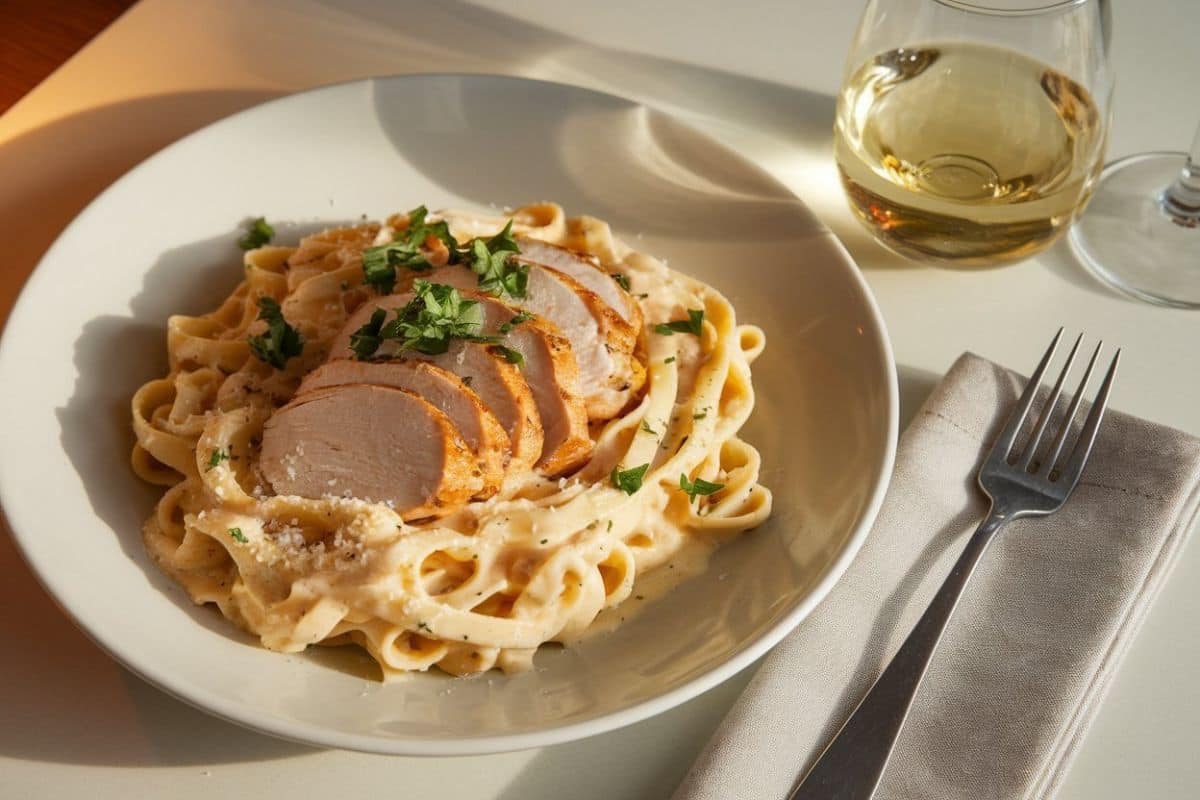
A perfectly plated serving of Garlic Parmesan Chicken Pasta – creamy, delicious, and topped with seared chicken slices and fresh parsley. Ideal for a cozy evening meal.
One of the best things about garlic parmesan chicken pasta is how quickly it comes together. In under 30 minutes, you have a complete meal that feels gourmet but requires minimal effort. It’s also a great option for meal prep. Just prepare a big quantity and refrigerate any leftovers for up to three days. The flavors actually intensify as the dish sits, making it a delicious option for lunch or dinner the next day.
Pairing Suggestions
For a complete meal, you can pair garlic parmesan chicken pasta with a light side salad or garlic bread. A crisp Caesar salad adds a refreshing contrast to the rich pasta, while any remaining sauce on your plate can be soaked up by the garlic bread. For drinks, a glass of chilled white wine like Chardonnay or Sauvignon Blanc complements the creamy, garlicky flavors perfectly.
Conclusion
If you’re looking for a delicious, comforting dish that’s easy to make, garlic parmesan chicken pasta is the answer. Its creamy garlic Parmesan sauce, tender chicken, and perfectly cooked pasta come together in a harmony of flavors that are sure to impress. Best of all, it’s a meal that’s ready in a flash, making it ideal for any busy night of the week. Give it a try, and it just might become a staple in your household.[/vc_column_text][/vc_column][/vc_row][vc_row][vc_column width=”1/1″][us_separator size=”small”][us_text text=”Frequently Asked Questions (FAQ)” link=”%7B%22url%22%3A%22%22%7D” tag=”h2″][vc_tta_accordion][vc_tta_section title=”Can I use a different type of pasta for this recipe?” tab_link=”%7B%22url%22%3A%22%22%7D”][vc_column_text]Yes! You can use any pasta you prefer, such as fettuccine, penne, or even whole wheat pasta. The recipe is versatile and works well with most types of pasta.[/vc_column_text][/vc_tta_section][vc_tta_section title=”Can I substitute the chicken with another protein?” tab_link=”%7B%22url%22%3A%22%22%7D”][vc_column_text]Absolutely! You can use shrimp, turkey, or even tofu as a substitute for chicken in this dish. Just adjust the cooking time accordingly for your chosen protein.[/vc_column_text][/vc_tta_section][vc_tta_section title=”Can I make this dish ahead of time?” tab_link=”%7B%22url%22%3A%22%22%7D”][vc_column_text]Yes, Garlic Parmesan Chicken Pasta can be made ahead of time. Store it in an airtight container in the refrigerator for up to 3 days. Reheat on the stovetop with a little cream or milk to restore its creamy texture.[/vc_column_text][/vc_tta_section][vc_tta_section title=”Can I make this recipe gluten-free?” tab_link=”%7B%22url%22%3A%22%22%7D”][vc_column_text]Yes! Simply substitute regular pasta with your favorite gluten-free pasta. The other ingredients are naturally gluten-free, making this dish easy to adapt for gluten-free diets.[/vc_column_text][/vc_tta_section][vc_tta_section title=”How do I prevent the sauce from becoming too thick?” tab_link=”%7B%22url%22%3A%22%22%7D”][vc_column_text]
If your sauce becomes too thick, you can thin it out by adding a little more cream, milk, or pasta water until you reach your desired consistency.
[vc_row][vc_column][vc_column_text]Chickpea pasta has emerged as a favorite among health-conscious individuals, offering a nutritious, protein-packed, and gluten-free alternative to traditional wheat pasta. Whether you’re looking for a healthy weeknight dinner or a satisfying meal for a gluten-free lifestyle, chickpea pasta provides a versatile base that fits into any diet. In this post, we’ll explore the nutritional benefits of chickpea pasta, share practical tips for cooking it, and offer culinary inspiration to enhance your enjoyment of this plant-based pasta in innovative ways.
Why Choose Chickpea Pasta?
Gluten-Free Alternative: Made from ground chickpeas, this pasta is naturally gluten-free. It’s an excellent option for people with celiac disease or gluten sensitivity while providing a satisfying pasta-like texture.
High in protein and dietary fiber: Chickpea pasta is a powerhouse of nutrients, Provides around 11-15 each serving contains 8 grams of dietary fiber and 16 grams of protein. This makes it ideal for those on plant-based diets or anyone seeking a protein boost without adding meat. Dietary fiber aids in the regulation of digestion and enhances satiety, which is key for maintaining healthy eating habits.
Low Glycemic Index: Since chickpea pasta is lower in carbs and has a low glycemic index, it acts to stabilize blood glucose levels, making it a great option for people managing diabetes or anyone wanting to avoid sugar spikes and crashes.
Vitamins and Minerals: Chickpeas are rich in essential nutrients such as iron, magnesium, potassium, and folate, all of which contribute to maintaining energy levels and overall health.
Tips for Cooking Chickpea Pasta
Cooking chickpea pasta is easy, but it does require a few adjustments to ensure the perfect texture. Follow these tips to avoid messiness and enjoy a well-cooked dish:
Use plenty of water: Chickpea pasta tends to foam more than traditional pasta, so be sure to use ample water—around 4-6 cups per 8 ounces of pasta. This helps reduce foam buildup and ensures the pasta cooks evenly without becoming sticky.
Cook to al dente: Chickpea pasta cooks faster than wheat-based varieties, so keep a close eye on it. Aim for al dente (firm to the bite) in about 7-9 minutes. Excessive cooking can result in a soft and mushy consistency, so taste test it a minute or two before the recommended time on the package.
Rinse after cooking: After draining, give your chickpea pasta a quick rinse with cold water. This step removes excess starch, which helps prevent clumping or stickiness, ensuring your pasta retains its structure and texture.
Recipe Spotlight: Garlic-Lover’s Mushroom Chickpea Pasta
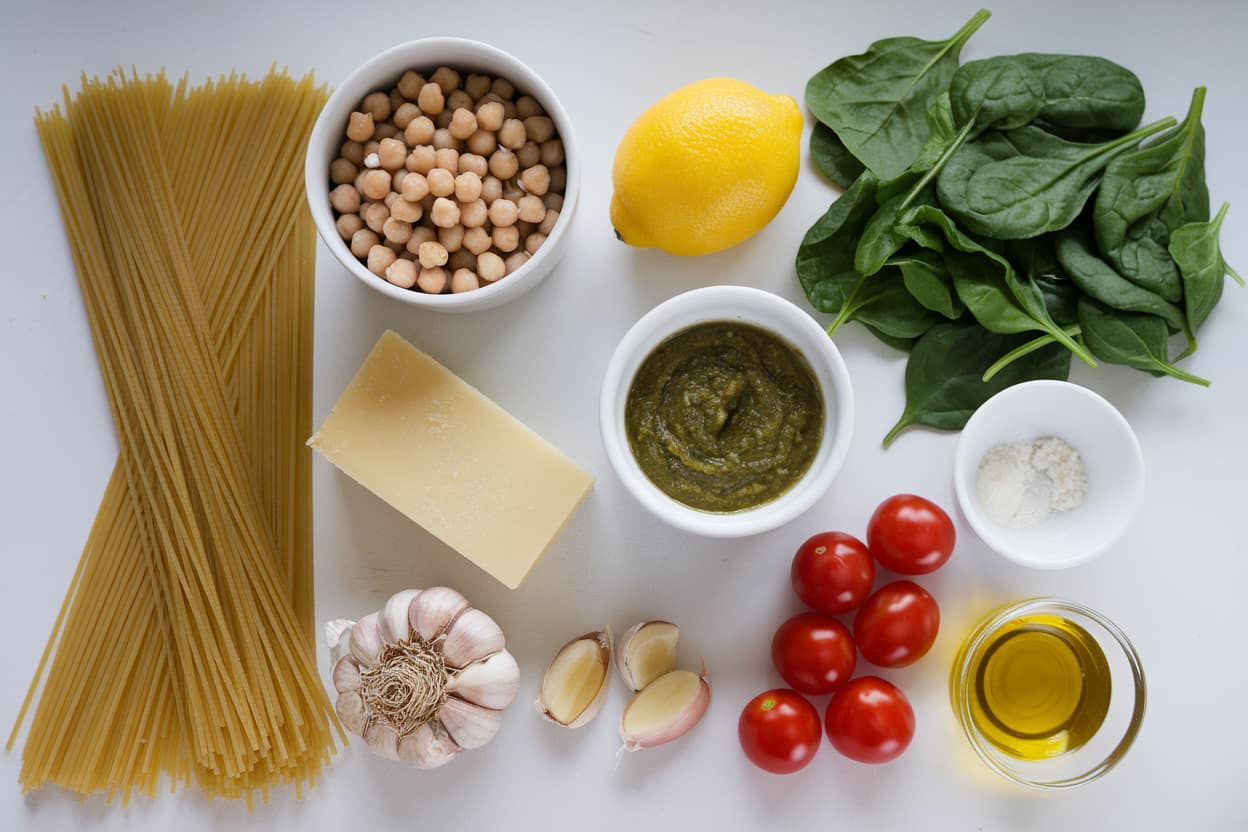
Ingredients laid out for a delicious Mediterranean pasta: spaghetti, chickpeas, spinach, cherry tomatoes, Parmesan cheese, pesto, garlic, and olive oil.
This recipe brings together garlic, mushrooms, and chickpea pasta for a quick and healthy dinner. The meal is plant-based and can be prepared in under 30 minutes, making it perfect for busy weeknights.
Ingredients:
8 oz chickpea pasta
2 tbsp olive oil
1 cup mushrooms, sliced
3-4 cloves garlic, minced
1/4 cup Parmesan cheese (optional)
Salt and pepper to taste
Fresh parsley for garnish
Instructions:
Pasta should be cooked as focused on the package and then set aside.
Garlic should be sautéed until fragrant in a skillet with heated olive oil over medium heat.
When the mushrooms are soft, add them and simmer, about 5 minutes.
Mix the cooked pasta with the mushrooms and garlic. Season with salt, pepper, and (if preferred) Parmesan cheese.
Garnish with parsley and serve hot.
This dish combines the savory flavor of mushrooms with the robust taste of garlic, while chickpea pasta adds a healthy twist. You can also add fresh spinach, grilled chicken, or roasted veggies to make the meal more substantial.
Other Recipe Ideas
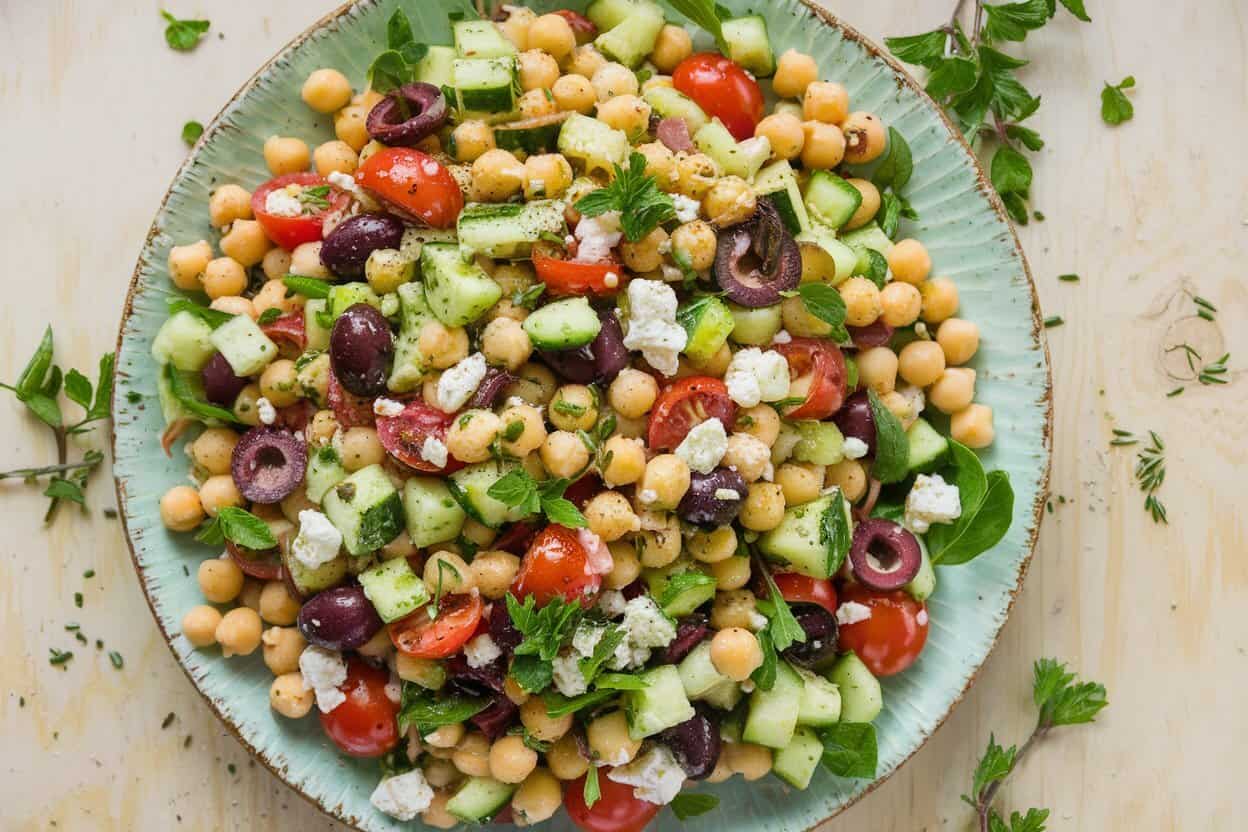
A refreshing Mediterranean chickpea salad with cucumbers, cherry tomatoes, Kalamata olives, feta cheese, and fresh herbs, perfect for a light and healthy meal.
Pesto Chickpea Rotini
This Mediterranean-inspired dish combines chickpea pasta with a vibrant pesto sauce, sautéed spinach, crunchy pistachios, and creamy feta. It delivers the perfect balance of plant-based protein, healthy fats, and antioxidants, making it both satisfying and nutritious. This recipe is a go-to for anyone craving bold flavors with a healthy twist.
Chickpea Pasta Salad
For a cool and refreshing option, toss chickpea pasta with diced cucumbers, juicy cherry tomatoes, and a light vinaigrette. Add in Kalamata olives and extra chickpeas for a protein boost, creating a perfect make-ahead meal that’s brimming with Mediterranean flavors and ready to enjoy at any time.
Spicy Chickpea Arrabbiata
Turn up the heat with this fiery chickpea pasta dish! Toss your pasta with a spicy arrabbiata sauce made from garlic, crushed tomatoes, and red pepper flakes. Add some sautéed spinach or roasted veggies for extra nutrition. This high-protein meal is perfect for spice lovers looking for a bold, energizing dinner.
Creamy Avocado Chickpea Pasta
Blend ripe avocados, garlic, lemon juice, and a little olive oil to make a silky sauce for your chickpea spaghetti for a rich and creamy touch. Toss with cherry tomatoes, fresh basil, and a sprinkle of red pepper flakes for a dish that’s bursting with healthy fats and bright flavors. This meal is a perfect mix of indulgence and nutrition.
Lemon Garlic Chickpea Spaghetti
Brighten up your dinner with a simple yet zesty lemon garlic chickpea spaghetti. Cook chickpea pasta to al dente and toss with a light sauce of olive oil, minced garlic, and freshly squeezed lemon juice. Add chopped parsley and grated Parmesan cheese for a fresh, citrusy dish that’s quick to prepare and packed with protein and flavor.
Chickpea Pasta and Sustainability
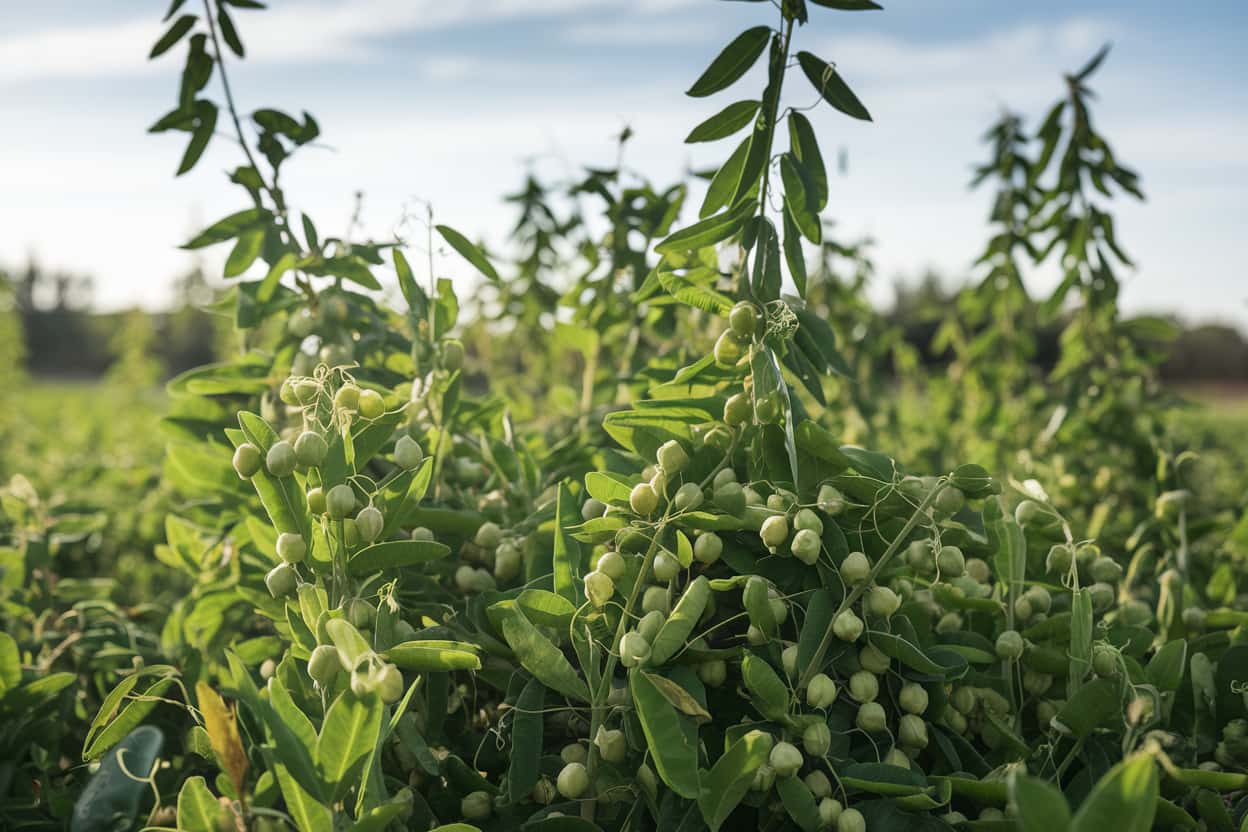
Climbing plants with green pods growing in a sunlit field.
Switching to chickpea pasta isn’t just a smart choice for your health—it’s also an environmentally friendly one. Chickpeas, the star ingredient in this pasta, are a member of the legume family, which plays a vital role in sustainable agriculture. Unlike traditional wheat, chickpeas require significantly less water to grow and are highly drought-tolerant, making them an ideal crop for areas facing water scarcity. This reduces the overall water footprint of your meal compared to wheat-based pasta.
Incorporating chickpea pasta into your diet also helps reduce the demand for resource-intensive crops like wheat and corn, contributing to a more diverse and resilient food system. Because chickpeas are a plant-based protein source, when compared to proteins derived from animals, they have a smaller carbon impact. Choosing chickpea pasta can therefore help decrease the environmental impact of your meals, making it a great option for those looking to align their food choices with eco-friendly values.
Ultimately, by opting for chickpea pasta, you’re not only nourishing your body with a nutritious, plant-based diet while simultaneously promoting more environmentally friendly farming methods and making the world a healthier place.
Conclusion
Chickpea pasta is a versatile, nutrient-rich option that fits into many dietary lifestyles, from gluten-free to plant-based and low-carb. Whether you want to cook a quick weeknight dinner like Garlic-Lover’s Mushroom Chickpea Pasta or prepare a meal-prepped salad, chickpea pasta delivers on taste, texture, and health benefits. By making the switch, you’re not only fueling your body with wholesome, plant-based nutrition but also contributing to a more sustainable future.[/vc_column_text][/vc_column][/vc_row][vc_row][vc_column width=”1/1″][us_separator size=”small”][us_text text=”Frequently Asked Questions (FAQ)” link=”%7B%22url%22%3A%22%22%7D” tag=”h2″][vc_tta_accordion][vc_tta_section title=”What is chickpea pasta made from?” tab_link=”%7B%22url%22%3A%22%22%7D”][vc_column_text]Chickpea pasta is made primarily from chickpea flour, which is made by grinding dried chickpeas into a fine powder. This makes it a gluten-free alternative to traditional wheat pasta.[/vc_column_text][/vc_tta_section][vc_tta_section title=”Is chickpea pasta a good source of protein?” tab_link=”%7B%22url%22%3A%22%22%7D”][vc_column_text]Yes, chickpea pasta is a great source of plant-based protein. It typically contains about 14-20 grams of protein per serving, compared to about 7 grams in traditional pasta.[/vc_column_text][/vc_tta_section][vc_tta_section title=”How does chickpea pasta compare to regular pasta in terms of taste and texture?” tab_link=”%7B%22url%22%3A%22%22%7D”][vc_column_text]Chickpea pasta has a slightly nutty flavor and a firmer texture than regular pasta. While it may taste a bit different, many people find it to be a satisfying and delicious alternative.[/vc_column_text][/vc_tta_section][vc_tta_section title=”How do you cook chickpea pasta?” tab_link=”%7B%22url%22%3A%22%22%7D”][vc_column_text]Chickpea pasta is cooked similarly to regular pasta. Boil it in salted water for about 7-10 minutes, or until it reaches your desired level of tenderness. It’s important to stir it occasionally to prevent sticking.[/vc_column_text][/vc_tta_section][vc_tta_section title=”Can chickpea pasta be used in all the same recipes as regular pasta?” tab_link=”%7B%22url%22%3A%22%22%7D”][vc_column_text]Yes, chickpea pasta can be used in most recipes that call for regular pasta. It works well in salads, stir-fries, and traditional pasta dishes. Just keep in mind that its unique flavor and texture might slightly alter the final dish.[/vc_column_text][/vc_tta_section][vc_tta_section title=”Section”][/vc_tta_section][/vc_tta_accordion][/vc_column][/vc_row]
[vc_row][vc_column][vc_column_text]If you’ve ever wanted to recreate that restaurant-quality salmon pasta at home, you’re in the right place. While it might seem like an indulgent dish reserved for special occasions, Make salmon pasta with a few essential materials and techniques, and it’s surprisingly easy. Whether you’re a beginner or a seasoned cook, this step-by-step guide will help you master the secrets to preparing a gourmet salmon pasta meal that’s bursting with flavor.
Let’s dive in and discover how to bring this delicious dish from sea to table!
Why Salmon Pasta Deserves a Spot in Your Recipe Arsenal
Salmon pasta is an elegant, yet approachable dish that combines the richness of tender salmon with the comforting bite of pasta. The flavors are incredibly versatile, allowing you to craft anything from a light, lemony pasta for summer evenings to a creamy, indulgent version perfect for cozy nights in.
What makes this dish truly stand out is how easy it is to customize to your taste. Whether you prefer smoked salmon or fresh filets, creamy sauces or zesty, oil-based ones, salmon pasta offers endless opportunities for experimentation. It’s also loaded with nutrients—pasta gives you a filling energy boost, while salmon is a fantastic source of protein and omega-3 fatty acids.
Here’s a detailed recipe for a classic Creamy Garlic Salmon Pasta that’s sure to impress your family or guests:
Ingredients:
2 salmon fillets (fresh or smoked)
300g pasta (fettuccine, penne, or your choice)
1 cup heavy cream
1/2 cup grated parmesan cheese
2 cloves garlic (minced)
2 tbsp butter
1 lemon (zest and juice)
Fresh parsley (chopped)
Salt and pepper to taste
1/2 cup reserved pasta water
Follow these steps to create your own delicious version of salmon pasta, tailored to your preferences and ready to impress:
To make gourmet salmon pasta, you’ll want to start with high-quality, fresh ingredients. This dish’s flavors are basic, so the quality of your salmon and pasta really shines through.
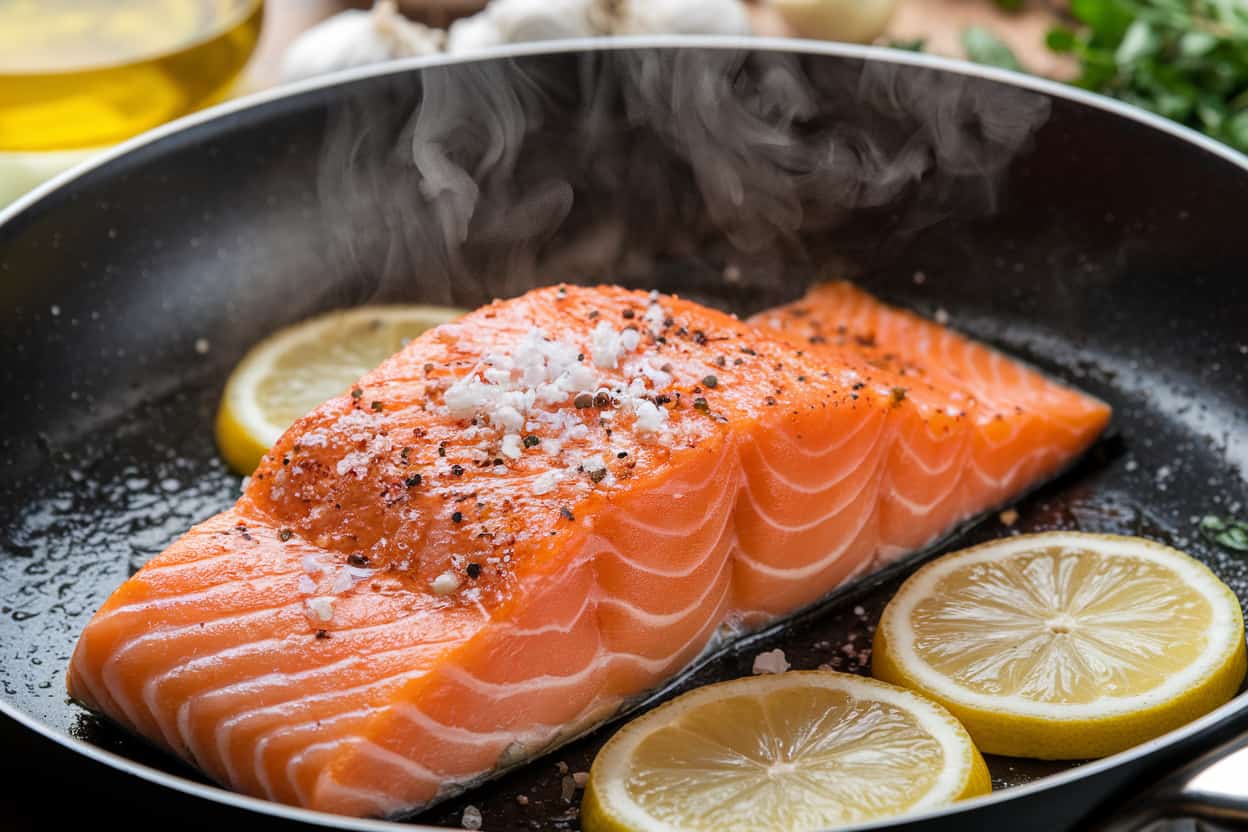
Fresh salmon fillet being lightly seared in a pan with lemon slices, ready for a delicious and healthy meal.
Salmon
You have a few options when it comes to the salmon:
Fresh Salmon Filets: These are perfect for those who prefer tender, juicy flakes of fish throughout the dish. Fresh filets give you more control over the texture.
Smoked Salmon: For a rich, salty flavor with a slightly firmer texture, smoked salmon is an excellent choice. It’s especially good in lighter sauces, like lemon and herb butter.
Canned Salmon: If you’re short on time, canned salmon can work as a quick alternative. It’s not as luxurious, but it still delivers on flavor.
Pasta
The texture of pasta might vary significantly depending on the kind you select:
Long Pasta: Fettuccine, spaghetti, or linguine are excellent for creamy sauces, where you want the sauce to cling to every strand.
Short Pasta: Penne, rigatoni, or farfalle work well in chunkier dishes where you want the pasta to catch bits of salmon and vegetables.
Fresh Herbs and Vegetables
For an added layer of flavor and brightness, fresh herbs like parsley, dill, or basil complement salmon beautifully. Vegetables like spinach, cherry tomatoes, or asparagus can add color and texture, while boosting the nutritional value of the dish.
Preparing the Salmon
How you prepare your salmon depends on the type you’re using:
Fresh Salmon Filets: Season your filets with salt, pepper, and a bit of lemon zest. Melt a tiny amount of butter or olive oil in a pan over medium heat. Sear the salmon filets skin-side down for about 4-5 minutes, The salmon should be cooked through but still moist after two to three minutes of cooking on the opposite side. Remove and set aside.
Smoked Salmon: Since it’s already cooked, smoked salmon is ready to add straight into the pasta. Simply slice it into thin strips or bite-sized pieces and toss it in at the last step.
Canned Salmon: Drain the canned salmon and break it into chunks. You can add it to the sauce once it’s heated to keep things quick and easy.
Cooking the Pasta to Perfection
Boil a large pot of salted water for your pasta. Cooking it until it’s firm to the bite but not overly done is crucial. Overcooked pasta becomes mushy, especially when mixed with sauce.
Save roughly ½ cup of the pasta water before emptying. This water with starch is a covert weapon for creating a silky sauce that clings to the pasta, adding richness without needing to overload on cream or butter.
Crafting the Perfect Sauce
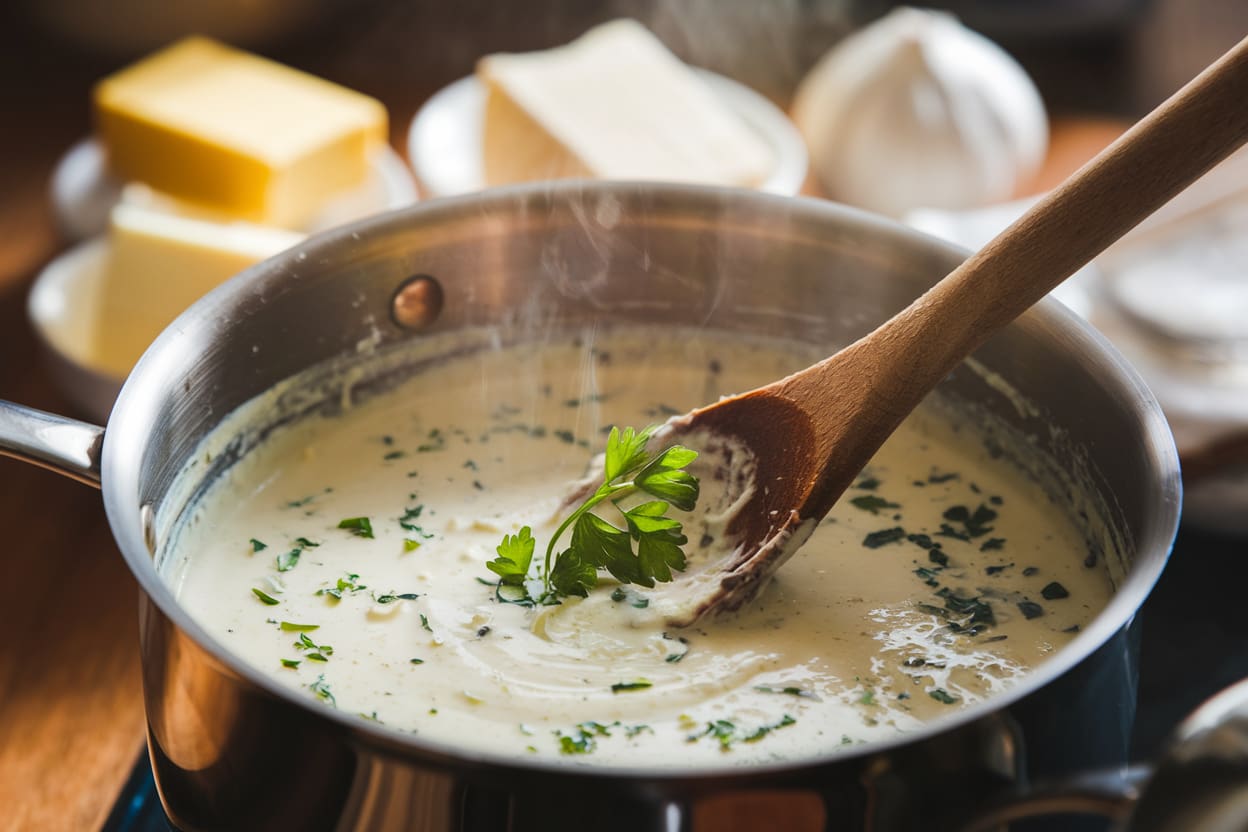
Creamy garlic sauce simmering in a pan, garnished with herbs for added flavor.
The sauce can make or break your salmon pasta, and fortunately, there are several routes you can take depending on the style you’re aiming for.
Creamy Garlic Sauce
A classic creamy garlic sauce is indulgent yet easy to make. Here’s how to do it:
The pan used to cook the fish was added a tablespoon of butter and sauté minced garlic for about a minute until fragrant.
Pour in heavy cream (about 1 cup) and let it simmer for a couple of minutes.
Stir in grated parmesan cheese (½ cup) and allow the sauce to thicken.
Once the sauce has reached a smooth and creamy consistency, add a small amount of the pasta water that was set aside.
Add some salt, pepper, and freshly squeezed lemon juice for seasoning.
Lemon Butter Sauce
For a lighter option, try a lemon butter sauce:
In a pan over low heat, melt the butter.
Simmer the minced garlic for one minute after adding it, then whisk in the lemon zest and juice.
Once the sauce is thoroughly combined and somewhat thickened, whisk in a few tablespoons of olive oil and a little amount of the pasta water that was set aside.
For a hit of freshness, toss in some fresh herbs, such as parsley or dill.
Bringing It All Together
Now that your pasta, salmon, and sauce are ready, it’s time to combine everything:
To the sauce, add the cooked pasta, tossing well to coat every strand or piece.
Flake the seared salmon into chunks and gently fold it into the pasta.
If you’re using smoked salmon, stir it in at this stage to warm it through without cooking it further.
Add any finishing touches, like fresh herbs, a sprinkling of parmesan cheese, or lemon zest.
For extra flavor, try tossing in lightly sautéed spinach, roasted cherry tomatoes, or grilled asparagus.
Perfect Presentation
Serving up a delicious plate of creamy fettuccine pasta with tender salmon, accompanied by a refreshing glass of white wine and a light salad – a perfect gourmet meal.
The final step in creating your gourmet salmon pasta is presentation. Even a simple dish can look elegant with the right plating. Here’s how to make it restaurant-worthy:
Twirl the Pasta: Use tongs to twirl a portion of pasta onto each plate, creating a neat mound.
Top with Salmon: Gently place larger chunks of salmon on top of the pasta.
Finish with Garnishes: As a final touch, add some red pepper flakes, fresh parsley, and a tiny quantity of extra virgin olive oil.
Serve with a Side: For a complete meal, serve your salmon pasta with a side of garlic bread or a simple green salad.
Conclusion
Salmon pasta doesn’t have to be complicated or reserved for special occasions. With these step-by-step secrets, you can create a gourmet meal in the comfort of your own kitchen. Whether you’re opting for a creamy garlic sauce or a light lemon butter variation, the use of fresh ingredients is essential for success and mastering simple techniques like cooking your pasta al dente and perfectly preparing your salmon.
So next time you’re in the mood for a sophisticated yet comforting dish, remember these salmon pasta secrets and elevate your dinner to gourmet levels[/vc_column_text][/vc_column][/vc_row][vc_row][vc_column width=”1/1″][us_separator size=”small”][us_text text=”Frequently Asked Questions (FAQ)” link=”%7B%22url%22%3A%22%22%7D” tag=”h2″][vc_tta_accordion][vc_tta_section title=”Can I use a different type of pasta for this recipe?” tab_link=”%7B%22url%22%3A%22%22%7D”][vc_column_text]Yes, while fettuccine is often used for creamy sauces, you can substitute it with other pasta types like spaghetti, linguine, or even penne for a different texture.[/vc_column_text][/vc_tta_section][vc_tta_section title=”What’s the best way to cook the salmon for this dish?” tab_link=”%7B%22url%22%3A%22%22%7D”][vc_column_text]For optimal flavor and texture, grilling or pan-searing the salmon fillets is ideal. You can also bake or poach the salmon if you prefer a lighter cooking method.[/vc_column_text][/vc_tta_section][vc_tta_section title=”Can I use canned or smoked salmon instead of fresh fillets?” tab_link=”%7B%22url%22%3A%22%22%7D”][vc_column_text]Yes, canned or smoked salmon can be used if you’re short on time. However, fresh fillets offer the best taste and texture for this gourmet dish.[/vc_column_text][/vc_tta_section][vc_tta_section title=”How do I make the creamy sauce?” tab_link=”%7B%22url%22%3A%22%22%7D”][vc_column_text]The sauce typically consists of heavy cream, butter, garlic, and Parmesan cheese. You can also add a splash of white wine or lemon juice to enhance the flavor.[/vc_column_text][/vc_tta_section][vc_tta_section title=”What herbs and seasonings work best with salmon pasta?” tab_link=”%7B%22url%22%3A%22%22%7D”][vc_column_text]Fresh dill, parsley, lemon zest, and black pepper are commonly used to season the salmon and pasta, bringing out fresh, zesty flavors. You can also add a pinch of red pepper flakes for heat.[/vc_column_text][/vc_tta_section][vc_tta_section title=”Can I make this dish ahead of time?” tab_link=”%7B%22url%22%3A%22%22%7D”][vc_column_text]While it’s best served fresh, you can prepare the sauce and pasta ahead of time and store them separately. Reheat gently and combine them when you’re ready to serve.[/vc_column_text][/vc_tta_section][vc_tta_section title=”How can I make this dish healthier?” tab_link=”%7B%22url%22%3A%22%22%7D”][vc_column_text]To lighten the dish, use low-fat cream or substitute with Greek yogurt for the sauce. You can also grill the salmon with minimal oil and add more vegetables like spinach or asparagus.[/vc_column_text][/vc_tta_section][vc_tta_section title=”Can I use other seafood instead of salmon?” tab_link=”%7B%22url%22%3A%22%22%7D”][vc_column_text]Absolutely! You can substitute the salmon with shrimp, scallops, or even a white fish like cod or tilapia for a different twist on the dish.[/vc_column_text][/vc_tta_section][vc_tta_section title=”What side dishes pair well with salmon pasta?” tab_link=”%7B%22url%22%3A%22%22%7D”][vc_column_text]This dish pairs well with a light side salad, garlic bread, or roasted vegetables like asparagus or broccoli to complement the rich flavors of the pasta.[/vc_column_text][/vc_tta_section][vc_tta_section title=”How long will leftovers last in the fridge?” tab_link=”%7B%22url%22%3A%22%22%7D”][vc_column_text]Leftover salmon pasta can be stored in an airtight container in the fridge for up to 2-3 days. Reheat on low heat to avoid drying out the salmon.[/vc_column_text][/vc_tta_section][vc_tta_section title=”Section”][/vc_tta_section][/vc_tta_accordion][/vc_column][/vc_row]
 Nutritional Benefits of Eating Salmon Skin
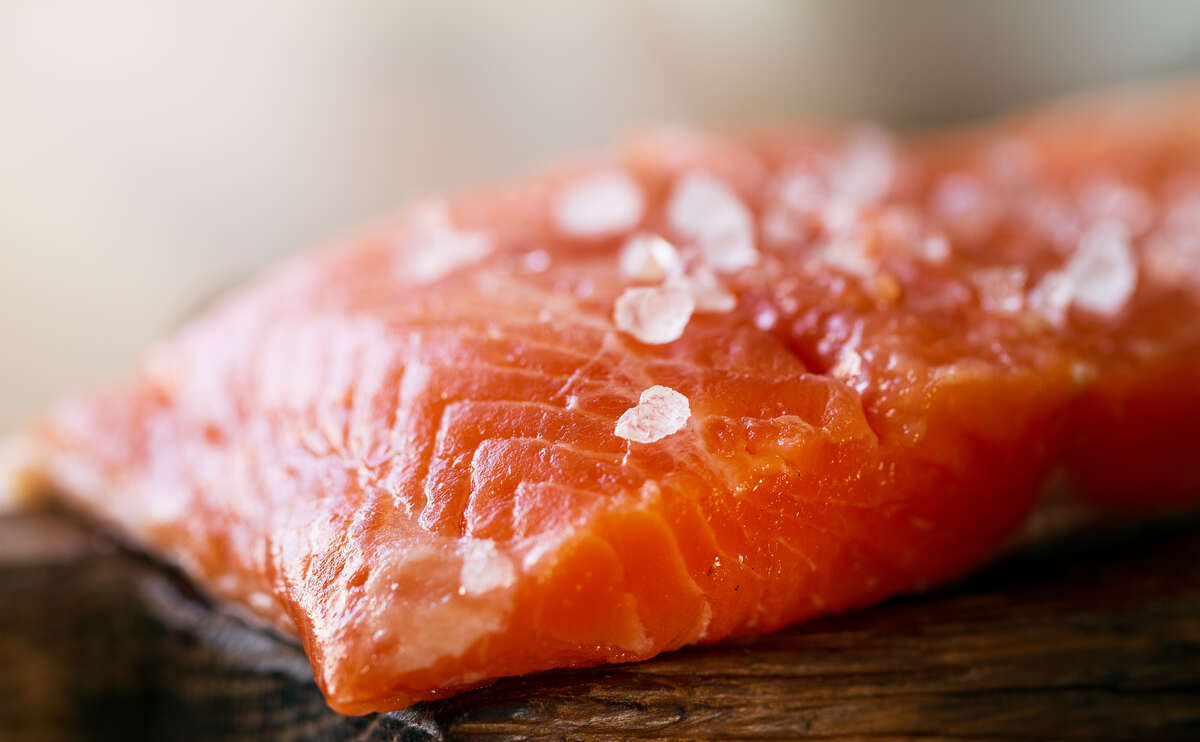 How to Cook Salmon Skin for Maximum Flavor and Texture
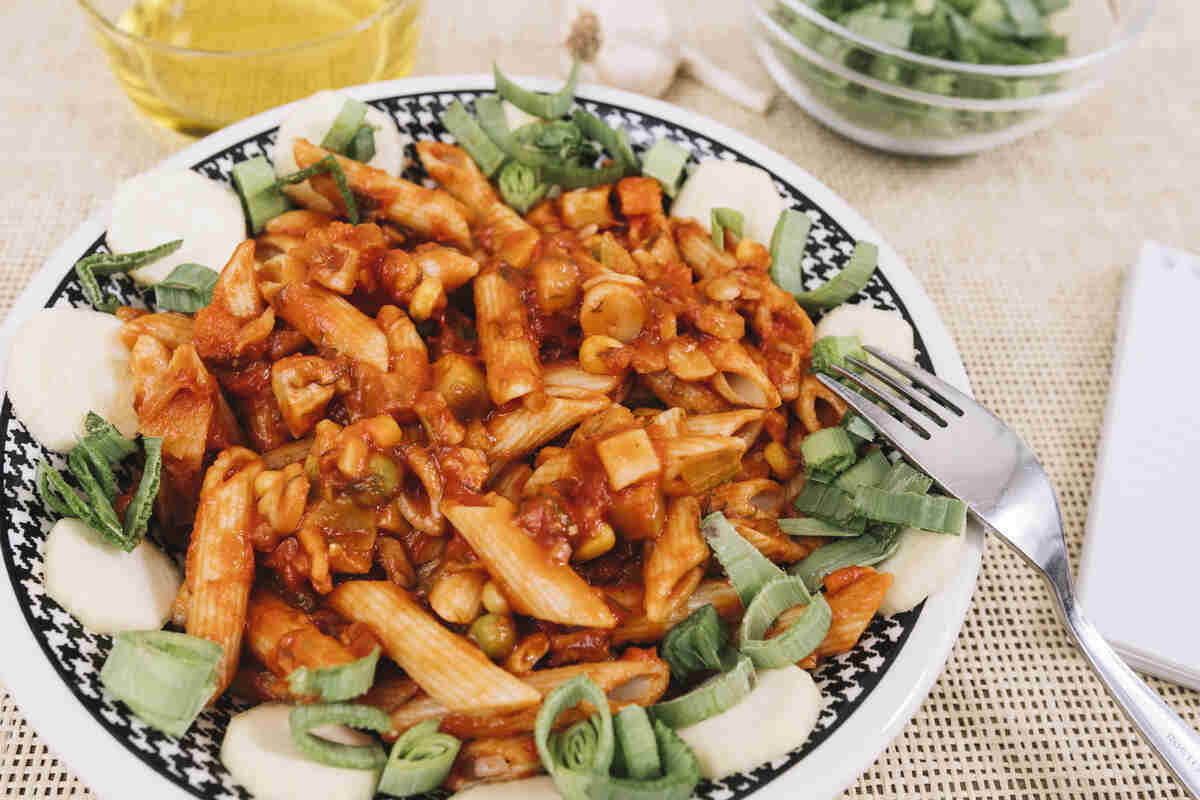 Why Tuscan Chicken Pasta Works So Well
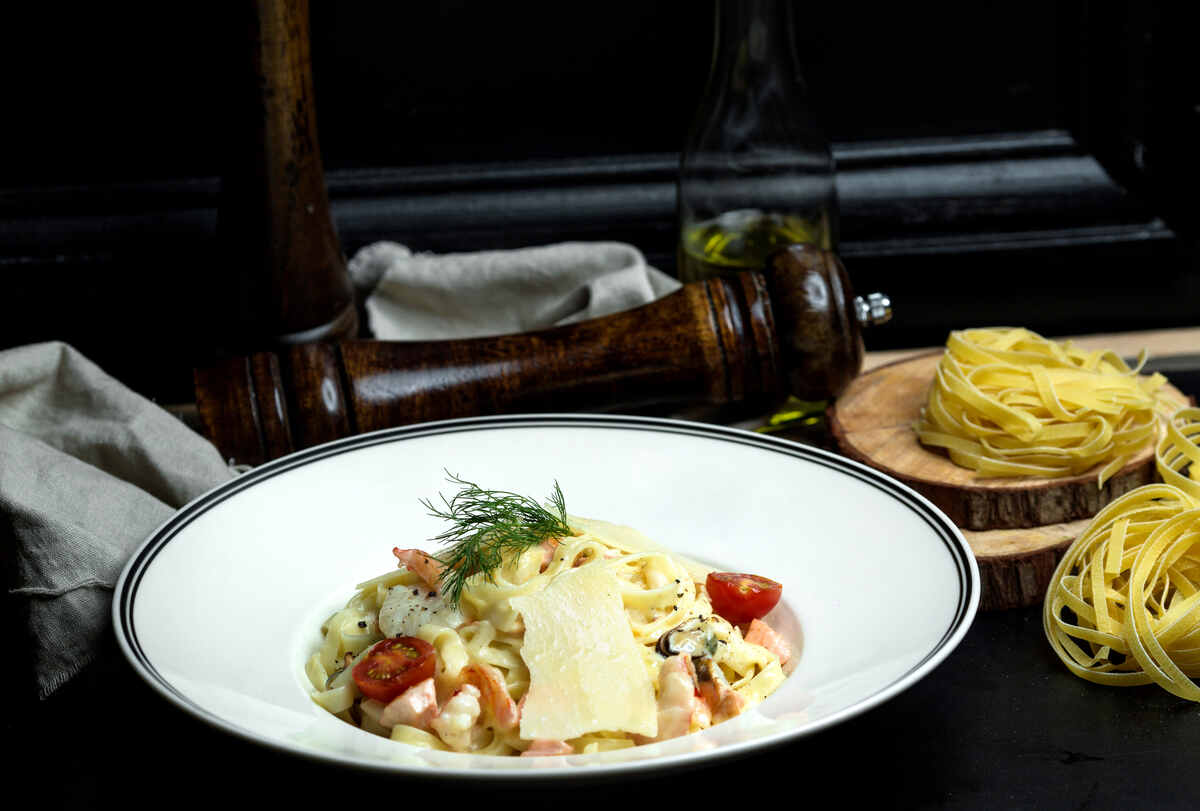 Why You’ll Love Tuscan Chicken Pasta
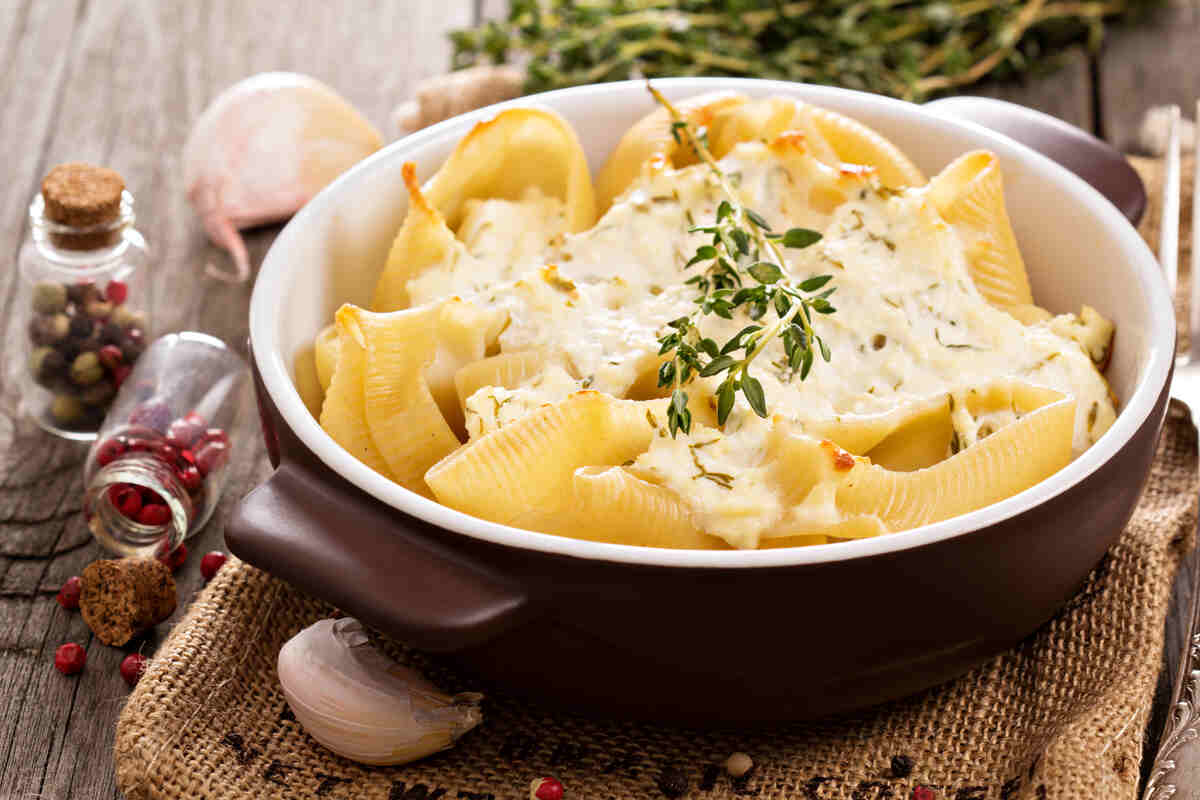 The Key Ingredients
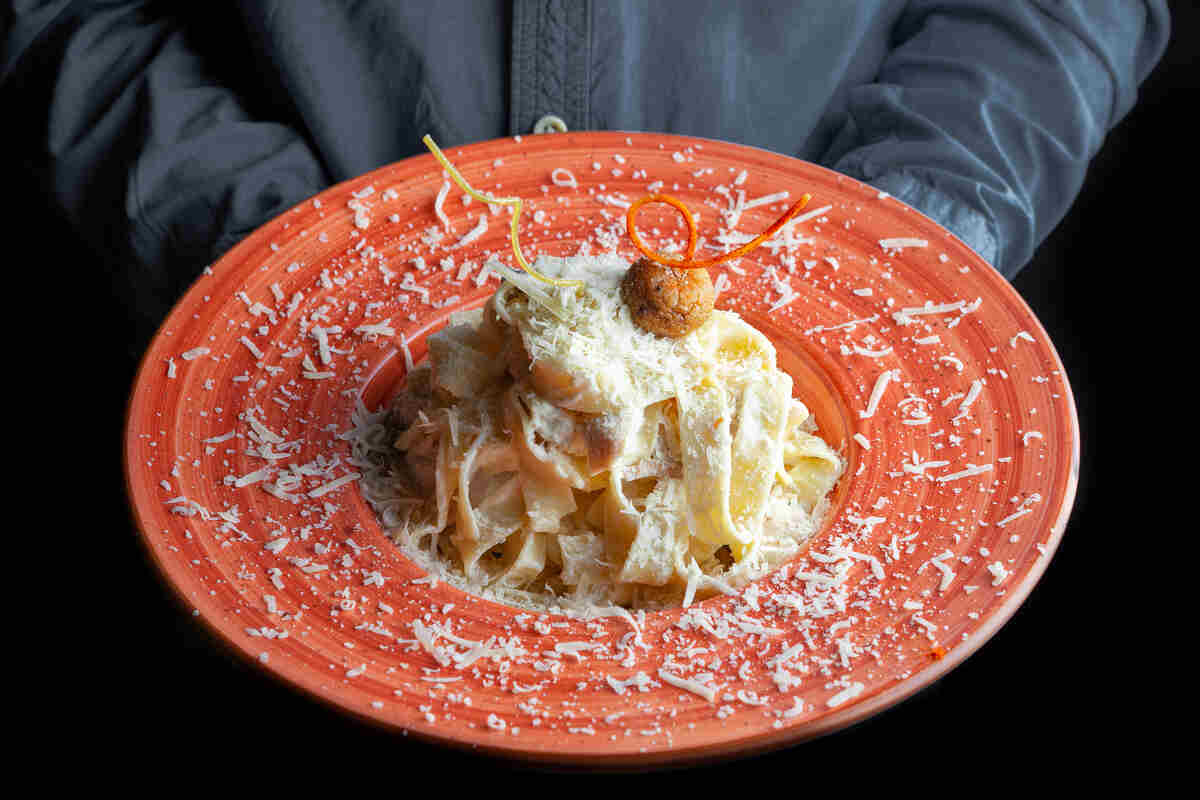 Final Thoughts
 The Difference Between Chuck Roast and Clod Roast
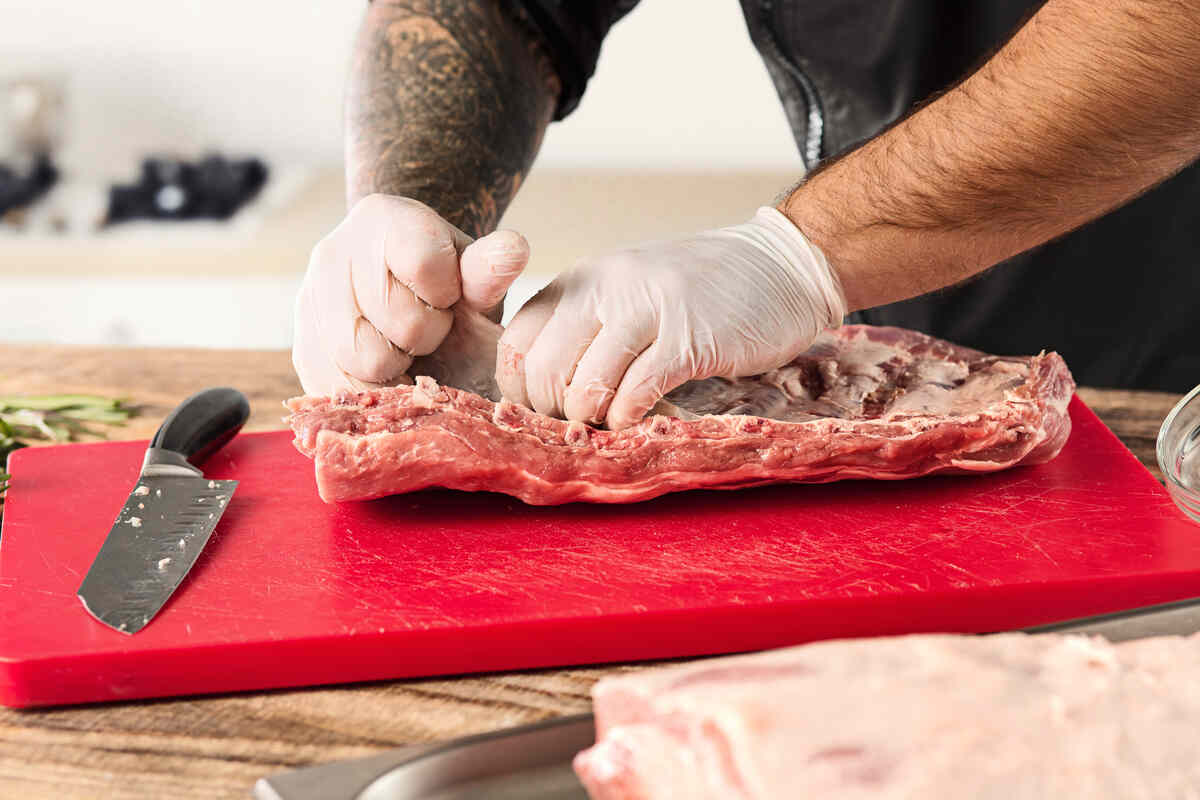 Tips for Maximum Tenderness: