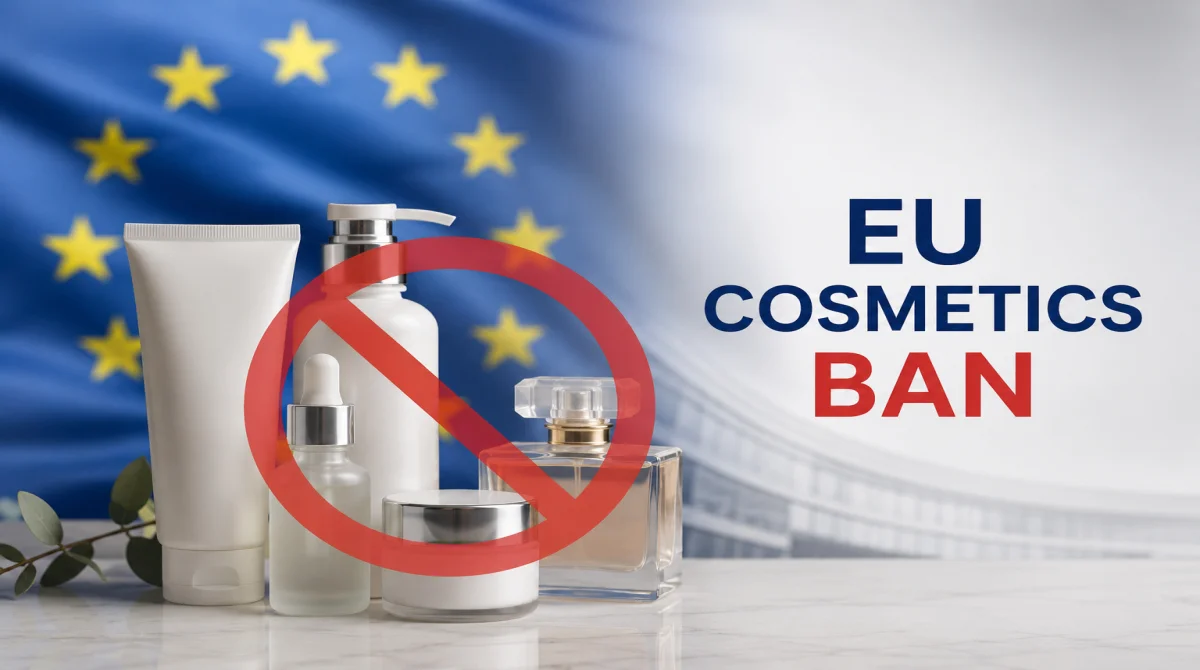
The European Union is once again introducing stricter regulations for cosmetic products. Under a new regulation, several ingredients will now be banned or heavily restricted. Nail polishes, nail hardeners, UV filters, and certain fragrance ingredients are among the products most affected. Consumers across Germany and other EU countries should expect many beauty products to gradually disappear from store shelves.
EU Responds to Health Concerns
The new rules are based on updated assessments from the Scientific Committee on Consumer Safety (SCCS). Experts warned that some cosmetic ingredients could pose potential health risks when used over long periods. As a result, the European Commission has updated its cosmetics regulation and introduced tighter restrictions on specific substances.
One of the main ingredients under scrutiny is Triphenyl Phosphate (TPP). This chemical is commonly used in nail products to improve flexibility and durability. However, authorities now believe the substance may have harmful health effects, leading to stricter limitations and bans in many cosmetic formulas.
Read more: Everlane Sold to Shein
These Products Will Be Most Affected
The new EU restrictions will impact a wide range of beauty and personal care products, including:
- Nail polishes
- Nail hardeners
- Base coats and top coats for gel or hybrid nails
- Products containing certain fragrance compounds
- Cosmetics using specific UV filters
- Beauty products with restricted colorants or chemical additives
For cosmetic manufacturers, the regulation means major reformulations and production changes. Many brands are already working on alternative ingredients to ensure their products can still be legally sold within the European market.
Ban Officially Begins — Transition Periods Announced
The new EU regulation officially takes effect on May 18, 2026. However, transition periods have been introduced to allow manufacturers and retailers enough time to clear existing inventory. Key deadlines include:
- May 18, 2026 — New EU rules officially come into force.
- January 1, 2027 — Non-compliant products can no longer be newly introduced to the market.
- July 1, 2028 — Existing stock that does not meet the rules can no longer be sold.
For consumers, this means some familiar cosmetic products may remain temporarily available, but many are expected to disappear completely over the next few years.
PFAS Forever Chemicals Also Facing New Restrictions
At the same time, the EU is tightening regulations on PFAS, often referred to as forever chemicals because they break down slowly in the environment. These substances are commonly found in cosmetics, food packaging, and textiles.
Beginning in October 2026, many PFAS-containing products, including certain cosmetic items, are expected to face bans across the European Union. Regulators are concerned that these chemicals may accumulate in both the human body and the environment over time, potentially creating long-term health and environmental risks.
Read more: Sunscreen or Moisturizer First?
Wider Ban Discussions Continue Across Europe
The new cosmetic rules are part of a broader European effort to regulate potentially harmful chemicals and consumer products. Other industries are also facing increasing scrutiny, including packaging materials, cleaning products, and pest-control chemicals.
In Germany, for example, discussions are already growing around a possible “rat poison ban” (“rattengift verbot”). Authorities are considering stricter rules on the sale of toxic rodent-control products to private consumers. Critics argue that tighter restrictions could worsen rat infestations in urban areas.
Debates around vehicle restrictions, including driving entry bans in low-emission zones, also highlight Europe’s growing focus on public health and environmental protection policies.
Consumers Are Being Urged to Check Ingredients Carefully
With the new regulations taking effect, the cosmetics industry is expected to undergo significant changes in the coming years. Consumers are being encouraged to pay closer attention to ingredient labels and stay informed about safer alternatives.
Meanwhile, cosmetic companies face mounting pressure to develop formulas that are both effective and compliant with stricter EU safety standards. Industry experts believe this could become one of the biggest transformations the beauty sector has experienced in years.