
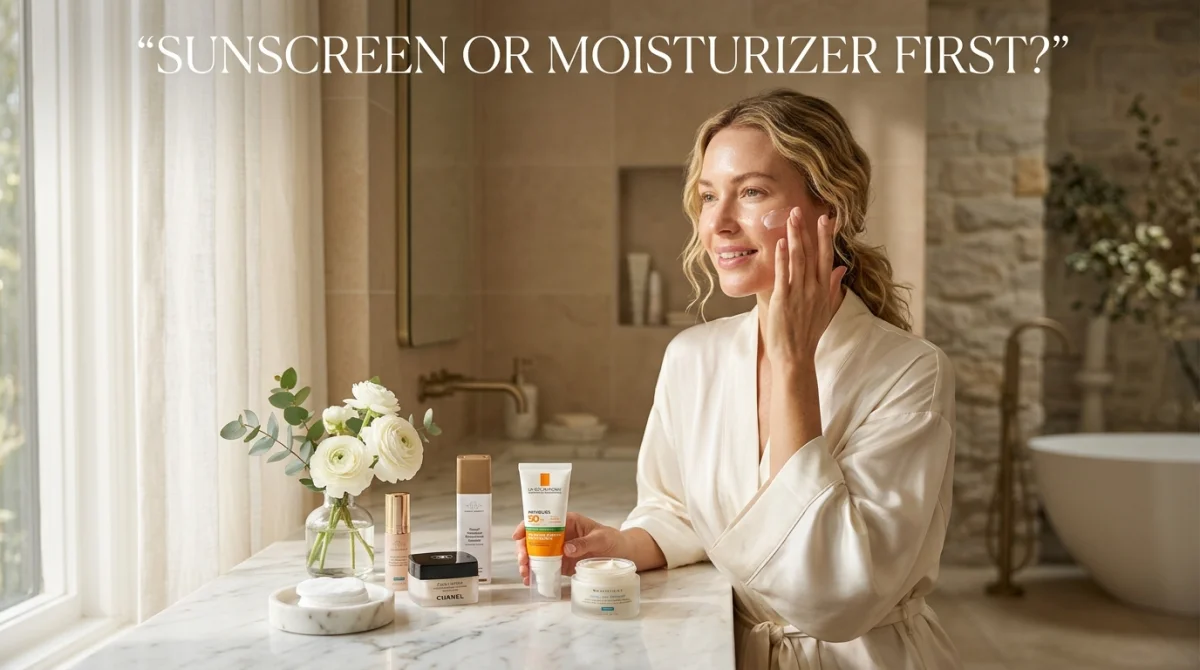
If your skincare routine leaves you wondering, “Do I apply sunscreen or moisturizer first?” you’re asking one of the most important questions in skincare. The order of your products can affect how hydrated your skin feels, how well your SPF performs, and even how your makeup looks throughout the day.
The good news is that the answer is simple once you understand how skincare products are designed to work. Moisturizer should go on before sunscreen. Your moisturizer hydrates and supports the skin barrier, while sunscreen forms a protective shield on top of the skin to defend against harmful UV rays.
Getting this order right can help your skin look smoother, feel healthier, and stay protected from premature aging, dark spots, and sun damage. Whether you have dry, oily, combination, or sensitive skin, following the correct layering routine makes a noticeable difference over time.
Why the Order of Skincare Products Matters
Every skincare product has a specific purpose and texture. Some products are meant to absorb deeply into the skin, while others are designed to stay on the surface.
Moisturizers are formulated to deliver hydration, reduce moisture loss, and strengthen the skin barrier. Sunscreens, on the other hand, are designed to create an even protective layer that blocks or absorbs UV radiation.
If sunscreen is applied underneath heavier products, its protective film can become disrupted or diluted. This may leave areas of your skin exposed to UV damage without you realizing it. Applying products in the correct sequence ensures each formula performs properly and helps your skin get the maximum benefit from your routine.
Read more: Ruddy Skin
Sunscreen or Moisturizer First? The Correct Answer
The correct order is:
- Cleanser
- Toner or serum (optional)
- Moisturizer
- Sunscreen
- Makeup
Sunscreen should always be the final step in your skincare routine before makeup. Your moisturizer prepares the skin by locking in hydration and smoothing the surface. Sunscreen then sits on the skin’s surface, creating a protective barrier against UVA and UVB rays.
Why Moisturizer Should Come Before Sunscreen
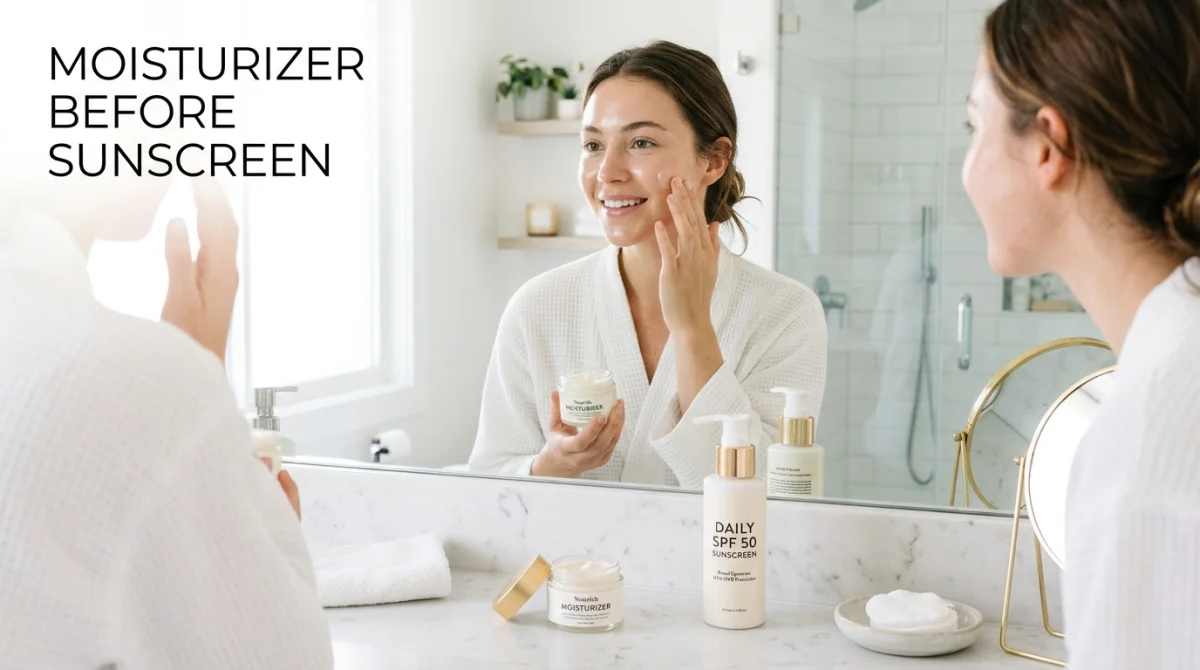
It Helps Create a Smooth Base
Well-moisturized skin allows sunscreen to spread more evenly. Dry patches, flaky skin, or dehydration can make sunscreen appear streaky or patchy, reducing coverage.
A moisturizer helps soften the skin and improves how sunscreen sits on the skin throughout the day. This is especially important if you spend time in air-conditioned spaces, heated rooms, or dry climates where moisture loss happens quickly.
It Supports the Skin Barrier
Healthy skin needs hydration to function properly. A good moisturizer strengthens the skin barrier, helping your skin retain water and defend itself against environmental stress.
Without enough hydration, the skin may become irritated, tight, or sensitive — even when using high-quality sunscreen.
It Improves Makeup Application
When sunscreen is applied over hydrated skin, makeup tends to look smoother and last longer. Proper layering can also help reduce pilling, patchiness, and uneven texture.
Read more: Body Care Routine
Why Sunscreen Should Always Be the Last Skincare Step
Sunscreen Forms a Protective Shield
Unlike moisturizers and serums, sunscreen is designed to stay on the skin’s surface. Its job is to create an uninterrupted layer that protects against sun exposure. Applying moisturizer after sunscreen can break apart that protective film and reduce SPF effectiveness.
UV Protection Depends on Even Coverage
For sunscreen to work properly, it needs to remain evenly distributed across the skin. Layering products on top of it before it sets can create gaps in protection. That’s why dermatologists consistently recommend sunscreen as the final step in your morning skincare routine.
Does the Type of Sunscreen Change the Order?
No. Whether you use mineral sunscreen or chemical sunscreen, the application order stays the same.
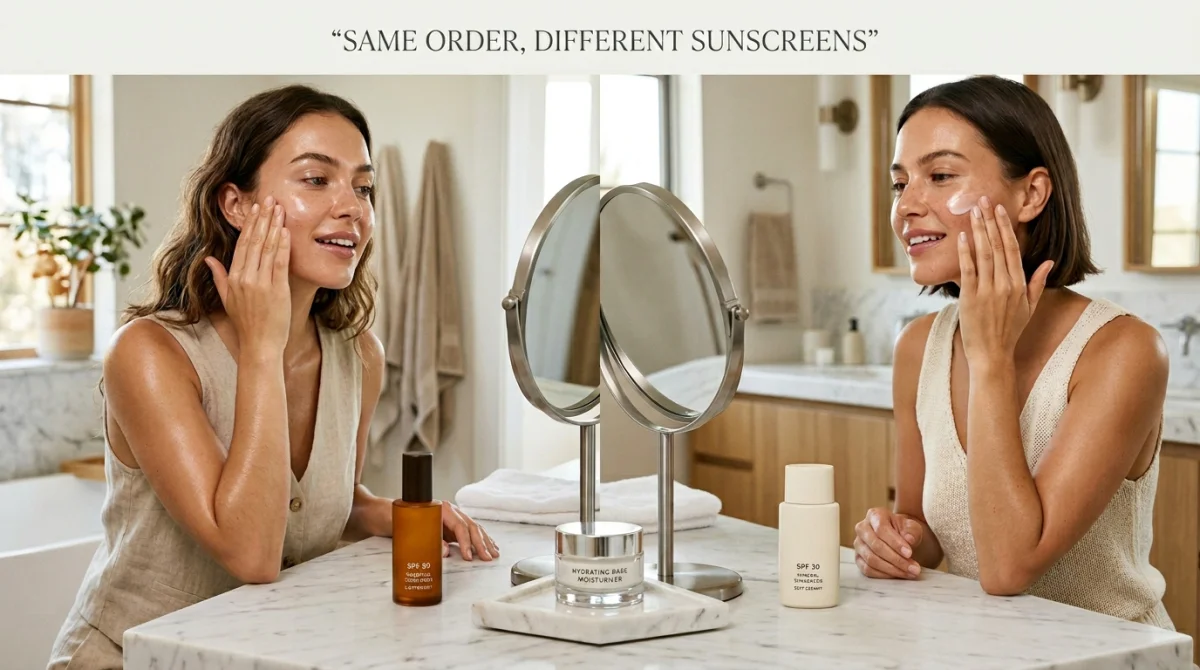
Chemical Sunscreen
Chemical sunscreens absorb UV rays and convert them into heat. They often feel lightweight and blend easily into the skin.
Mineral Sunscreen
Mineral sunscreens use ingredients like zinc oxide or titanium dioxide to physically block UV rays. They usually sit more visibly on the skin and may feel thicker. Even though the textures differ, both types should still be applied after moisturizer.
Read more: Hair Care
The Best Morning Skincare Routine for Healthy Skin
Following a consistent routine helps each product work more effectively. Here’s a simple morning routine that works for most skin types.
Step 1: Cleanse Your Skin
Start with a gentle cleanser to remove oil, sweat, and overnight buildup. Clean skin helps your other products absorb evenly.
Step 2: Apply Serums or Treatments
Use lightweight products such as:
- Vitamin C serum
- Hyaluronic acid
- Niacinamide
- Antioxidant treatments
These products should go on before moisturizer because they are designed to absorb directly into the skin.
Step 3: Moisturize
Choose a moisturizer that suits your skin type.
- Lightweight gel moisturizers work well for oily skin.
- Cream-based moisturizers are ideal for dry skin.
- Fragrance-free formulas are best for sensitive skin.
Allow the moisturizer to absorb for about 30–60 seconds before applying sunscreen.
Step 4: Apply Sunscreen
Use a broad-spectrum sunscreen with SPF 30 or higher every day, even when it’s cloudy. For proper coverage, apply approximately two finger lengths of sunscreen to your face and neck combined.
Step 5: Apply Makeup
Once your sunscreen has settled for a minute or two, you can safely apply makeup without disturbing your SPF layer.
Read more: Dry Scalp
Common Mistakes That Reduce Sunscreen Effectiveness
Even expensive skincare products can underperform when applied incorrectly. Here are some common mistakes to avoid.
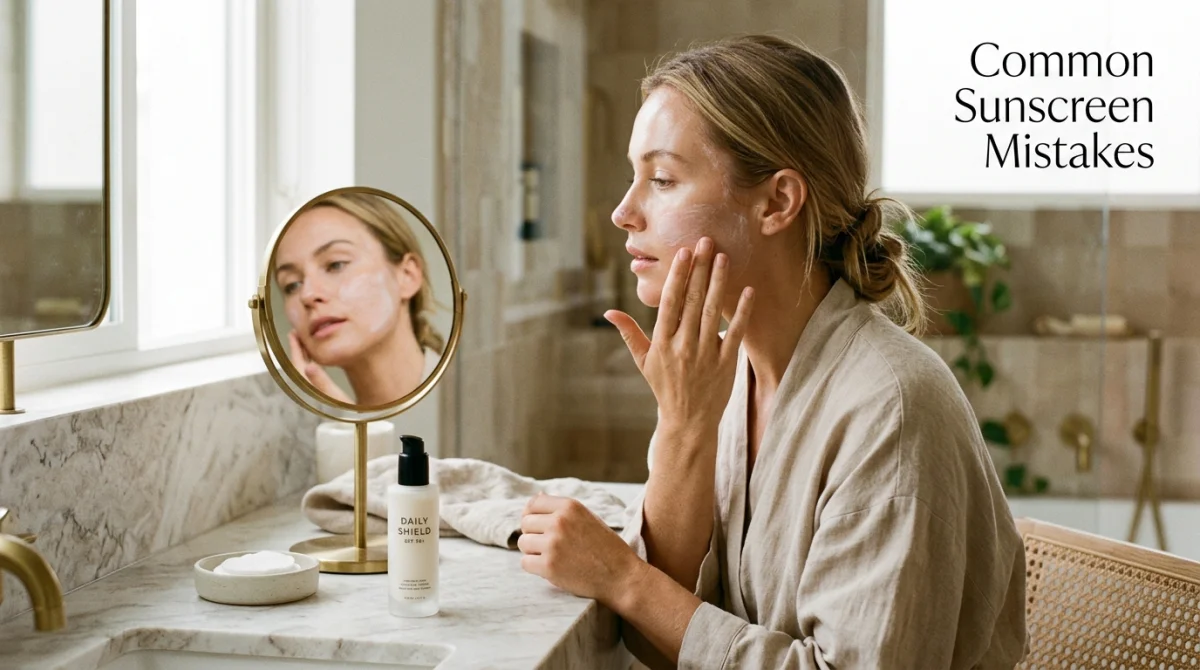
Applying Too Little Sunscreen
Using a small amount dramatically lowers protection. Most people do not apply enough SPF to achieve the protection listed on the label.
Mixing Sunscreen With Moisturizer
Combining the two products may dilute the sunscreen and result in uneven coverage. It’s best to apply them separately.
Applying Moisturizer Over Sunscreen
This can disrupt the sunscreen layer, reducing UV protection.
Forgetting Reapplication
Sunscreen wears down throughout the day due to sweat, oil, and environmental exposure. Reapply every two hours during prolonged sun exposure.
How Long Should You Wait Between Moisturizer and Sunscreen?
You do not need to wait long, but allowing your moisturizer to settle for about 1 minute can improve your sunscreen’s effectiveness. This short pause helps:
- Prevent pilling.
- Improve product layering.
- Create smoother coverage.
- Reduce patchiness under makeup.
If your skincare feels sticky or heavy, you may be applying products too quickly.
Read more: Solution for Dry Scalp
Can You Skip Moisturizer if Your Sunscreen Feels Hydrating?
Sometimes, but it depends on your skin type. Some modern sunscreens contain hydrating ingredients like:
- Glycerin
- Ceramides
- Hyaluronic acid
If you have oily skin, a moisturizing sunscreen may provide enough hydration on its own. However, people with dry or compromised skin barriers usually benefit from a separate moisturizer underneath.
Does Skin Type Change the Layering Order?
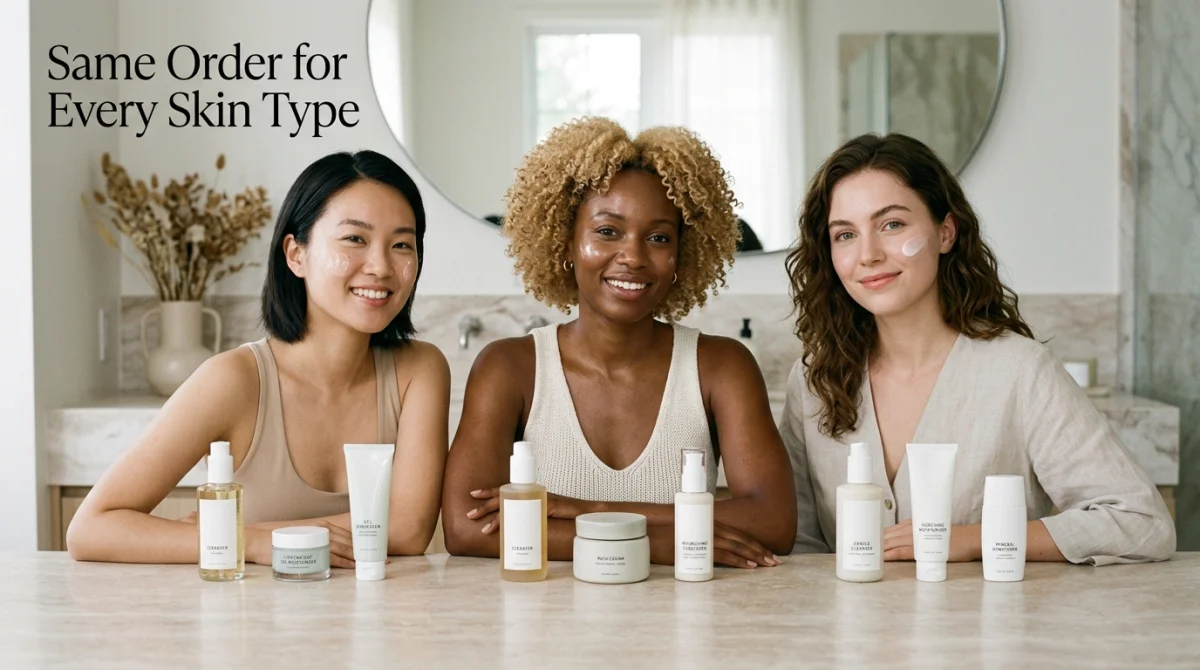
No. The correct order remains the same for every skin type. What changes is the type of formula you choose.
For Oily Skin
Look for:
- Oil-free moisturizers
- Gel textures
- Non-comedogenic sunscreen
For Dry Skin
Choose:
- Rich cream moisturizers
- Ceramide-based products
- Hydrating sunscreen formulas
For Sensitive Skin
Use:
- Fragrance-free products
- Mineral sunscreen
- Gentle moisturizing ingredients
Is SPF Makeup Enough?
No. Makeup with SPF should not replace sunscreen. Most people do not apply enough foundation or tinted moisturizer to reach the SPF level listed on the packaging. SPF makeup can provide additional protection, but it should always be layered over dedicated sunscreen. Think of sunscreen as your main defense and SPF makeup as a bonus.
Read more: Scalp Detox
The Long-Term Benefits of Correct Layering
Applying moisturizer before sunscreen may seem like a small detail, but consistency has a powerful long-term impact on skin health. Proper layering helps:
- Reduce premature aging
- Prevent sun spots and uneven skin tone.
- Support collagen preservation.
- Minimize dryness and irritation.
- Maintain smoother-looking skin.
Sun damage builds gradually over time. Daily sunscreen use paired with a healthy skincare routine can help preserve your skin’s appearance for years.
Quick Guide: Sunscreen or Moisturizer First?
| Step | Product Type | Main Purpose / Function |
|---|---|---|
| 1 | Cleanser | Removes dirt and oil |
| 2 | Serum | Targets specific skin concerns |
| 3 | Moisturizer | Hydrates and supports the skin barrier |
| 4 | Sunscreen | Protects against UV damage |
| 5 | Makeup | Cosmetic coverage |
Conclusion
If you have been wondering, “Sunscreen or moisturizer first?” the answer is clear: moisturizer comes first, sunscreen comes last.
Moisturizer hydrates and prepares the skin, while sunscreen forms a protective layer that shields your skin from daily UV damage. Following the correct order helps your skincare products perform better, improves makeup application, and supports healthier-looking skin over time.
The most important step is consistency. A simple routine followed every day is far more effective than an elaborate routine used occasionally. Apply your sunscreen daily, layer your products correctly, and your skin will thank you in the long run.
Frequently Asked Questions (FAQs)
Should I apply sunscreen or moisturizer first?
Apply moisturizer first, then sunscreen, in your morning skincare routine.
Can I use sunscreen without moisturizer?
Yes, especially if your sunscreen contains hydrating ingredients. However, dry skin types often benefit from a separate moisturizer.
Does sunscreen go before or after serum?
Sunscreen goes after serum and moisturizer.
How much sunscreen should I apply to my face?
Use about two finger lengths of sunscreen for your face and neck combined.
Is sunscreen necessary indoors?
Yes. UVA rays can penetrate windows and contribute to premature aging and skin damage indoors.
Can I apply makeup immediately after sunscreen?
Wait about one to two minutes after applying sunscreen before putting on makeup to help prevent pilling and uneven coverage.

