
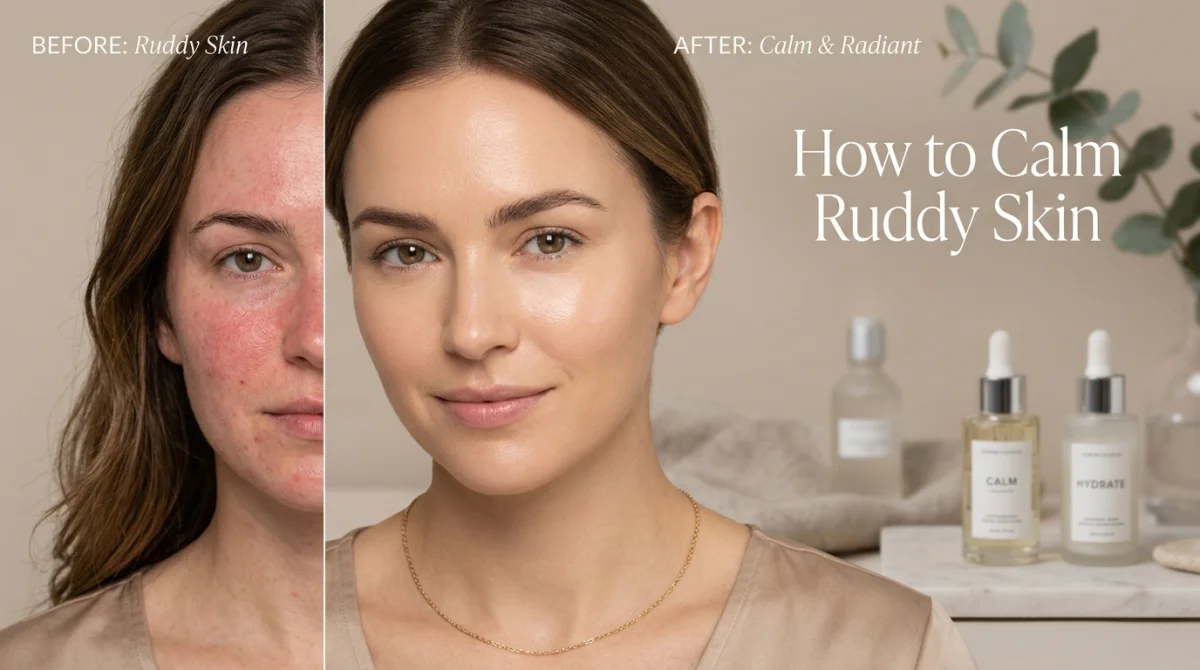
Persistent facial redness can make your skin feel unpredictable, sensitive, and difficult to manage. If your cheeks, nose, or chin often look flushed even when you are not embarrassed, overheated, or exercising, you may have ruddy skin. Unlike temporary redness that fades quickly, ruddy skin tends to linger and can become more noticeable over time if the skin barrier is weakened or irritated.
The good news is that calming ruddy skin does not usually require aggressive treatments. In fact, many harsh skincare products can worsen redness and sensitivity. Dermatologists often recommend a gentler, barrier-focused approach that supports the skin’s natural healing process while reducing inflammation and visible flushing.
In this guide, you will learn what causes ruddy skin, how to identify common triggers, and the most effective dermatologist-backed strategies to calm redness and restore a healthier-looking complexion.
What Is Ruddy Skin?
Ruddy skin refers to persistent facial redness that commonly appears on the cheeks, nose, forehead, or chin. Unlike temporary flushing caused by exercise, embarrassment, or sudden temperature changes, this redness tends to linger and may become more noticeable over time. The skin can appear uneven, irritated, or constantly flushed even when there is no obvious trigger.
In many cases, ruddy skin develops because the skin barrier becomes weakened or overly reactive. When the protective barrier is compromised, the skin struggles to retain moisture and defend itself against environmental irritants. As a result, inflammation increases and visible redness becomes more persistent. Some people may also notice sensitivity, dryness, or stinging alongside the redness, especially after using certain skincare products.
Although ruddy skin is not always linked to a medical condition, it can sometimes overlap with concerns such as rosacea, eczema, or chronic sensitivity. Understanding the root causes is important because treating redness aggressively often worsens irritation instead of improving it.
Read more: Step-by-Step Body Care Routine
Signs You May Have Ruddy Skin
Persistent Facial Redness
One of the most common signs of ruddy skin is redness that does not fully fade. The cheeks and nose are usually the most affected areas, though some people also experience redness across the forehead or chin. The complexion may appear blotchy or uneven throughout the day.
Increased Skin Sensitivity
People with ruddy skin often notice that their skin reacts easily to skincare products, weather changes, or heat exposure. Burning, stinging, and irritation may occur after applying strong active ingredients or fragranced products.
Visible Blood Vessels and Flushing
Small visible capillaries around the cheeks or nose can sometimes accompany ruddy skin. Flushing episodes may also become more frequent, especially after consuming alcohol, spicy foods, or spending time in extreme temperatures.
Common Causes of Ruddy Skin
A Damaged Skin Barrier
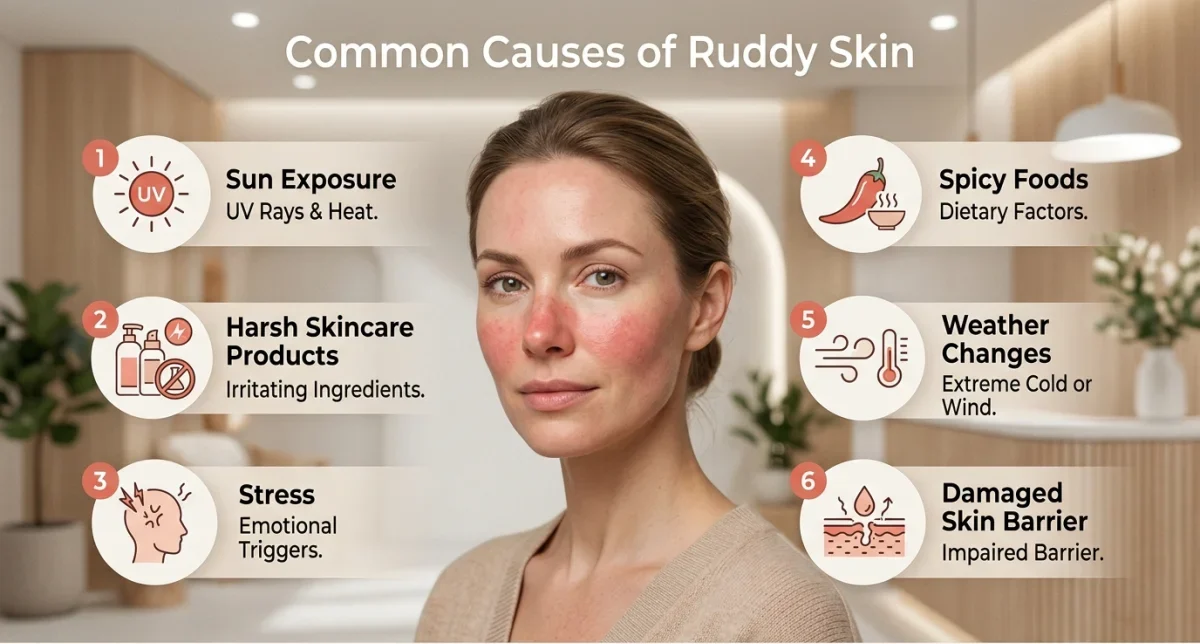
A weakened skin barrier is one of the leading causes of persistent redness. Over-exfoliation, harsh cleansers, and excessive use of strong skincare ingredients can strip away the skin’s natural protective layer. When this happens, the skin becomes more vulnerable to moisture loss, irritation, and inflammation.
As the barrier weakens, the skin reacts more strongly to everyday environmental stressors. This often leads to ongoing redness, sensitivity, and discomfort that can become difficult to manage without a gentler routine.
Sun Exposure and Environmental Damage
Sun exposure is another major contributor to ruddy skin. Ultraviolet rays can weaken capillaries beneath the skin and increase inflammation, making redness appear deeper and more noticeable over time. Wind, pollution, and sudden changes in weather may also trigger flare-ups in sensitive skin. Repeated environmental exposure without proper protection can gradually worsen redness and create long-term sensitivity issues.
Lifestyle and Internal Triggers
Lifestyle habits also play an important role in facial redness. Alcohol, spicy foods, stress, dehydration, and poor sleep can all increase blood flow and inflammation, causing the skin to flush more easily. When these internal triggers combine with an already weakened skin barrier, redness often becomes more persistent and difficult to calm.
Read more: 9 Dermatologist-Approved Dry Scalp At-Home Remedies
How to Calm Ruddy Skin Naturally
Focus on Repairing the Skin Barrier
The first step in calming ruddy skin is strengthening the skin barrier. Healthy skin retains moisture more effectively and responds less aggressively to irritation. Instead of using strong corrective treatments, it is often better to focus on hydration and barrier support.
Ingredients such as ceramides, glycerin, hyaluronic acid, and panthenol can help reinforce the skin’s protective layer while reducing dryness and irritation. Over time, a stronger barrier helps the complexion appear calmer and more balanced.
Use a Gentle Cleansing Routine
Cleansing should remove dirt and sunscreen without stripping away the skin’s natural oils. Harsh foaming cleansers can disrupt the skin barrier and increase redness, especially in sensitive skin.
Using a fragrance-free cleanser with lukewarm water helps reduce unnecessary irritation. It is also important to avoid scrubbing the skin or using rough cleansing tools, as friction can worsen flushing and inflammation.
Choose Soothing Skincare Products
People with ruddy skin often benefit more from calming ingredients than aggressive active treatments. Products formulated with niacinamide, aloe vera, green tea extract, or centella asiatica can help reduce visible redness and improve skin comfort.
Introducing products gradually is important because sensitive skin can react negatively to sudden changes in routine. A simple, consistent skincare routine usually yields better long-term results than layering multiple active ingredients.
Read more: Lip Neutralization
Why Daily Sunscreen Matters

Protecting Against UV Damage
Sun protection is essential for managing ruddy skin because UV exposure can intensify inflammation and make redness more permanent over time. Even brief daily exposure contributes to cumulative damage that weakens the skin barrier and makes visible blood vessels more apparent.
Mineral sunscreens containing zinc oxide or titanium dioxide are often better tolerated by reactive skin. Choosing a lightweight, fragrance-free SPF and applying it consistently can help prevent redness from worsening.
Reducing Environmental Stress
In addition to sunscreen, protecting the skin from wind, pollution, and extreme temperatures can help reduce flare-ups. Wearing protective clothing, avoiding excessive heat exposure, and maintaining hydration all support healthier skin function.
Skincare Habits That Can Worsen Ruddy Skin
Over-Exfoliating the Skin
One of the biggest mistakes people make when treating redness is over-exfoliating. Frequent use of scrubs, acids, or strong exfoliants can damage the skin barrier further and increase inflammation. Although gentle exfoliation may occasionally help improve texture, it should never become the focus of a redness-prone skincare routine.
Using Too Many Active Ingredients
Layering multiple active ingredients at once can overwhelm sensitive skin and trigger irritation. Strong retinoids, acids, and highly concentrated treatments may worsen flushing when used excessively. Keeping the skincare routine simple allows the skin time to recover naturally and rebuild its resilience.
Read more: Dry Scalp Relief
Supporting Skin Health From Within

Hydration and Nutrition
Internal wellness directly impacts skin appearance. Staying hydrated helps regulate circulation and supports the skin’s natural repair processes. Eating antioxidant-rich foods may also help reduce inflammation that contributes to redness.
Stress and Sleep Management
Stress and lack of sleep are common triggers for facial flushing. Chronic stress increases inflammatory responses in the body, while poor sleep slows the skin’s recovery process. Creating healthier daily habits can improve both skin comfort and overall complexion over time.
When to See a Dermatologist
Persistent redness sometimes requires professional evaluation, especially if symptoms worsen despite gentle skincare. If ruddy skin becomes painful, swollen, or increasingly sensitive, a dermatologist can help identify underlying conditions such as rosacea or dermatitis.
Early treatment may prevent long-term skin damage and provide access to targeted therapies that reduce inflammation more effectively.
Read more: The Complete Hair Care Guide
Conclusion
Ruddy skin is often a sign that the skin barrier has become weakened and overly reactive. Instead of relying on harsh treatments, the most effective approach is usually gentle, consistent care focused on reducing irritation and supporting long-term skin health.
By repairing the skin barrier, avoiding common triggers, protecting the skin from sun exposure, and maintaining healthy lifestyle habits, facial redness can gradually become less noticeable. Patience and consistency are key, as calm and balanced skin rarely happens overnight.
Frequently Asked Questions (FAQs)
What causes ruddy skin?
Ruddy skin is commonly caused by a weakened skin barrier, inflammation, sun damage, environmental stress, or sensitive skin. Lifestyle factors such as stress, alcohol, spicy foods, and lack of sleep can also contribute to persistent facial redness.
Is ruddy skin the same as rosacea?
No, ruddy skin and rosacea are not exactly the same. Ruddy skin is a general term for persistent redness, while rosacea is a medical skin condition that may include flushing, visible blood vessels, bumps, and skin sensitivity. However, the two can sometimes overlap.
Can ruddy skin be treated naturally?
Yes, many people improve ruddy skin naturally by following a gentle skincare routine, repairing the skin barrier, using sunscreen daily, and avoiding triggers that worsen redness. Consistency and patience are important for long-term improvement.
Which skincare ingredients are best for ruddy skin?
Ingredients such as niacinamide, ceramides, hyaluronic acid, aloe vera, green tea extract, and centella asiatica are often helpful for calming redness and strengthening the skin barrier. Fragrance-free and soothing formulas are usually best for sensitive skin.
What skincare products should I avoid if I have ruddy skin?
People with ruddy skin should avoid harsh exfoliants, alcohol-based toners, heavily fragranced products, and excessive use of strong acids or retinoids. These products can weaken the skin barrier and worsen inflammation.
Does sunscreen help reduce facial redness?
Yes, daily sunscreen is essential to prevent redness from worsening. UV exposure can increase inflammation and damage blood vessels beneath the skin, making facial redness more noticeable over time.
Can stress make ruddy skin worse?
Stress can trigger inflammation and increased blood circulation, which may cause flushing and worsen persistent redness. Managing stress through healthy habits and proper sleep may help improve skin appearance over time.
How long does it take to calm ruddy skin?
Improvement usually happens gradually over several weeks or months, depending on the cause and severity of the redness. Consistently gentle skincare, sun protection, and avoidance of triggers often lead to the best results.
Is exfoliation safe for ruddy skin?
Exfoliation should be minimal and very gentle for redness-prone skin. Over-exfoliating can damage the skin barrier and increase irritation, making ruddy skin appear worse.
When should I see a dermatologist for ruddy skin?
You should consider seeing a dermatologist if the redness becomes painful, spreads, worsens over time, or does not improve with gentle skincare. A professional evaluation can help identify conditions such as rosacea, eczema, or allergic dermatitis.