Healthy, beautiful hair rarely comes from using random products or following every viral beauty trend online. Real hair care is about understanding your unique hair type, recognizing what your scalp and strands truly need, and creating a routine that supports long-term hair health. Many people struggle with dryness, frizz, breakage, dandruff, or hair fall simply because they are using products and routines designed for someone else’s hair texture or scalp condition.
A hair care routine that works for straight hair may not work for curly, coily, or color-treated hair. That is why building a personalized routine is one of the most important steps toward achieving stronger, shinier, and healthier-looking hair. This guide explains everything you need to know about hair care, including how to identify your hair type, treat common hair concerns, choose the right products, and maintain healthy hair habits that actually make a difference.
Why Hair Care Is Important
Hair care is about much more than appearance. Your hair is constantly exposed to environmental stress, heat styling, pollution, harsh weather, and chemical treatments. Without proper care, these factors can weaken the hair shaft, damage the scalp, and lead to issues such as breakage, dryness, and thinning.
Healthy hair care habits help maintain the balance of moisture, protein, and natural oils your hair needs to stay strong. A good routine also protects your scalp, which plays a major role in healthy hair growth. When your scalp is clean and balanced, your hair follicles are better able to support stronger and healthier strands.
Consistent hair care can improve shine, softness, manageability, and overall hair texture. Over time, the right routine can also reduce split ends, frizz, scalp irritation, and excessive shedding.
Understanding Your Hair Type
One of the biggest mistakes people make is choosing products without understanding their hair type. Hair texture, thickness, oil production, and curl pattern all affect how your hair responds to products and styling methods.
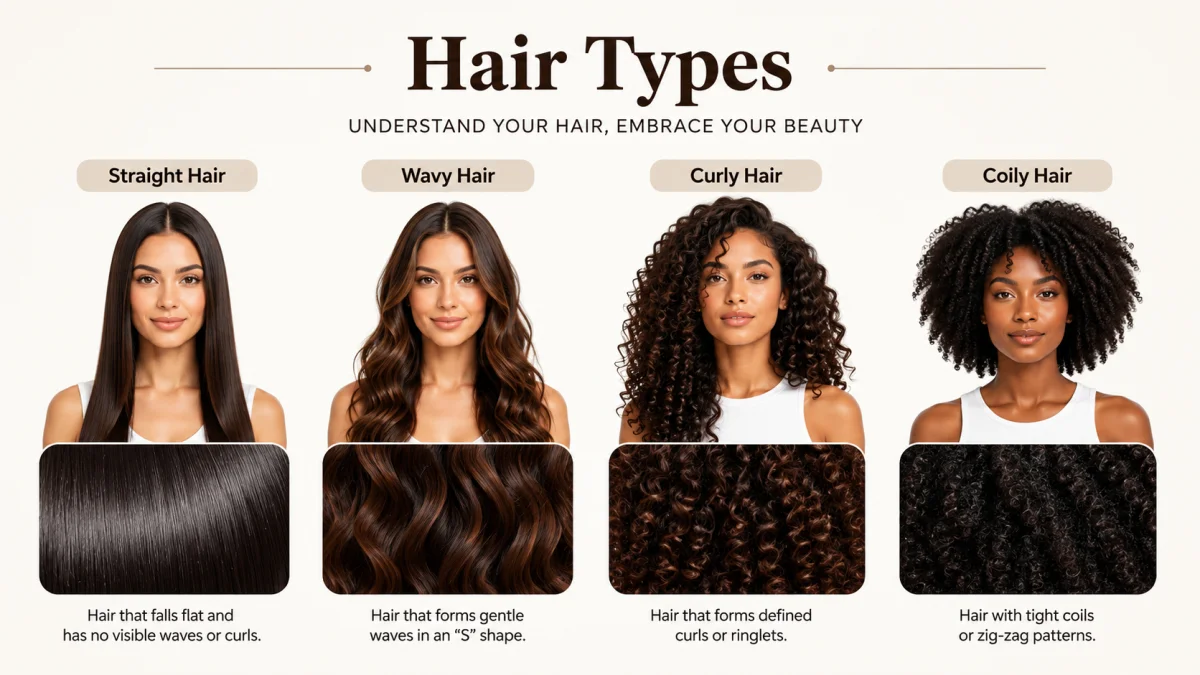
Straight Hair
Straight hair tends to become oily more quickly because natural oils travel easily from the scalp down the hair shaft. This hair type often appears naturally shiny but may struggle with flatness and a lack of volume. Lightweight shampoos and conditioners usually work best, as heavier formulas can weigh hair down and make it appear greasy.
People with straight hair should focus on maintaining scalp cleanliness while avoiding excessive product buildup. Volumizing products and lightweight leave-in sprays can help create movement and body without weighing hair down.
Wavy Hair
Wavy hair sits between straight and curly textures and often has a naturally soft, textured appearance. While it can look effortlessly styled, wavy hair is also more prone to frizz and uneven texture, especially in humid conditions.
This hair type benefits from moisturizing products that hydrate without making the hair limp. Sulfate-free shampoos, lightweight curl creams, and gentle leave-in conditioners can help define waves while controlling frizz and dryness.
Curly Hair
Curly hair naturally requires more moisture because scalp oils struggle to evenly distribute throughout the curls. As a result, curls often become dry, tangled, or frizzy if not properly hydrated.
An effective hair care routine for curly hair should focus on moisture retention and gentle handling. Deep conditioners, leave-in creams, and nourishing oils are especially beneficial. Curly hair also responds better to minimal heat styling and gentle detangling techniques to reduce breakage and maintain curl definition.
Coily Hair
Coily hair has a tight curl pattern that is highly delicate and more vulnerable to dryness and breakage. Because this hair type loses moisture quickly, hydration is one of the most important aspects of its care.
Rich moisturizing products, protective hairstyles, and low-manipulation routines are often recommended for coily hair. Satin pillowcases or bonnets can also help reduce friction while sleeping and prevent unnecessary breakage.
Common Hair Problems and Their Causes
Most hair concerns result from a combination of internal and external factors. Understanding what causes these problems can help you create a routine that targets the root cause rather than temporarily masking symptoms.
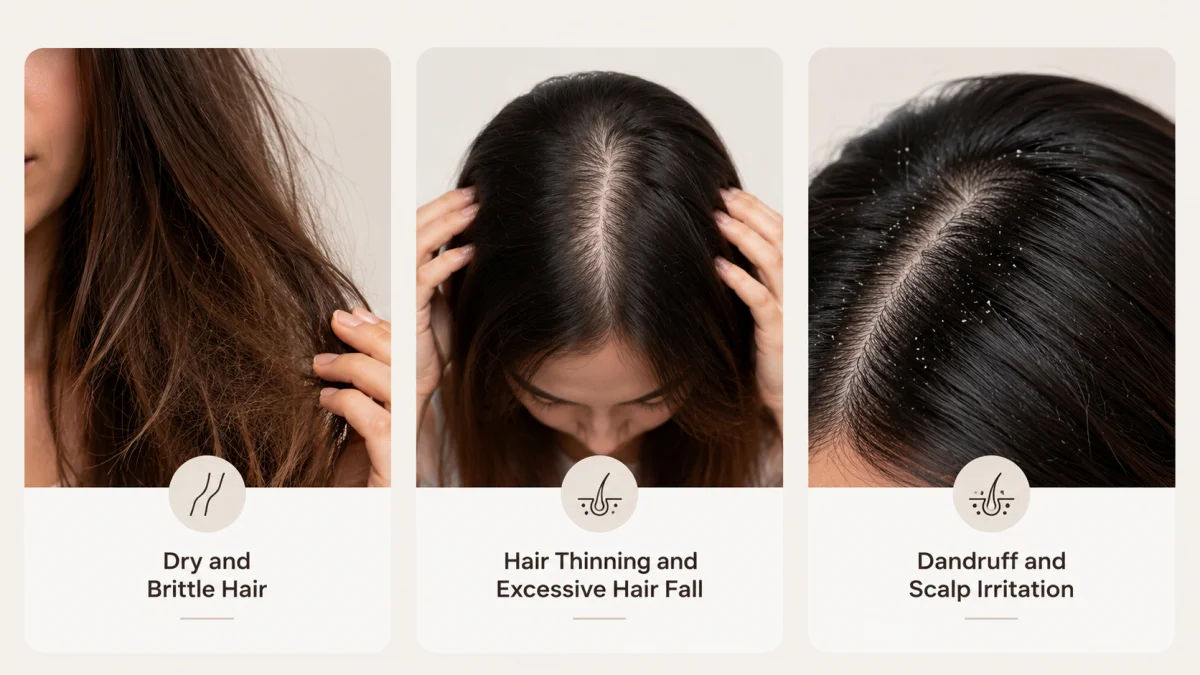
Dry and Brittle Hair
Dry hair is one of the most common hair care concerns. Hair may feel rough, appear dull, and break easily when it lacks enough moisture. Frequent heat styling, harsh shampoos, excessive washing, and environmental damage often contribute to dryness.
Using hydrating shampoos, weekly hair masks, and nourishing oils can help restore moisture and improve softness. Reducing the use of hot tools and protecting hair from sun exposure also supports healthier strands over time.
Hair Thinning and Excessive Hair Fall
Hair shedding is normal, but excessive hair fall can indicate stress, hormonal changes, nutritional deficiencies, or damage from tight hairstyles and chemical treatments. Hair thinning may appear gradually and often results in reduced volume and visible scalp areas.
A healthy scalp-focused routine can help support stronger hair growth. Gentle cleansing, balanced nutrition, and avoiding excessive tension on the hair are all important steps. In some cases, professional advice from a dermatologist may be necessary to identify underlying causes.
Dandruff and Scalp Irritation
Scalp health plays a major role in maintaining healthy hair. Dandruff, itching, and redness often develop due to an oil imbalance, dry skin, product buildup, or sensitivity to hair products.
Using anti-dandruff shampoos and regularly cleansing the scalp can help reduce flakes and irritation. Maintaining scalp hygiene while avoiding overly harsh products is essential for creating a healthy environment for hair growth.
Building a Hair Care Routine That Actually Works
Creating a successful hair care routine does not require dozens of expensive products. In most cases, a simple and consistent routine works better than constantly changing products or following short-term trends.
1. Cleansing Your Hair Properly
The foundation of every hair care routine is proper cleansing. Shampoo removes dirt, sweat, excess oil, and product buildup from the scalp. However, washing too frequently can strip natural oils, leaving the hair dry and irritated.
The ideal washing frequency depends on your hair type. Oily hair may require more frequent cleansing, while curly and coily hair often benefits from less frequent washing to preserve moisture. Choosing a shampoo designed for your scalp condition rather than just your hair texture is also important.
When shampooing, focus primarily on the scalp rather than aggressively scrubbing the lengths of the hair. This helps cleanse the roots while preventing unnecessary dryness on the ends.
2. Conditioning for Moisture and Protection
Conditioner helps restore hydration, smooth the hair cuticle, and reduce tangling after washing. Applying conditioner mainly to the mid-lengths and ends can help protect the hair without making the scalp greasy.
Deep conditioning treatments can be especially helpful for dry, damaged, or chemically treated hair. Using a deep conditioner once weekly can improve softness, elasticity, and overall manageability.
3. Using Leave-In Products and Hair Treatments
Leave-in conditioners, serums, and oils can provide extra moisture and protection throughout the day. The key is choosing products that suit your hair texture.
Fine hair generally benefits from lightweight sprays or serums, while thicker or curlier hair often responds better to creams and nourishing oils. Using too many products at once can create buildup, so keeping your routine simple is usually more effective.
4. Protecting Hair From Heat Damage
Heat styling tools can weaken the hair shaft over time, especially when used daily. Excessive heat exposure often causes split ends, dryness, and breakage.
Using a heat protectant before styling is essential for minimizing damage. Lowering heat settings and air-drying whenever possible can also help maintain healthier hair in the long run.
The Importance of Nutrition in Hair Care
Healthy hair starts from within. Your body needs the right nutrients to support strong hair growth and maintain scalp health. Nutritional deficiencies can contribute to hair thinning, dullness, and slow growth.
Protein is especially important because hair is primarily made of keratin, a structural protein. Iron, zinc, omega-3 fatty acids, biotin, and vitamins A, C, and D also play important roles in hair health.
Staying hydrated is equally important because dehydration can affect both the scalp and hair texture. Drinking enough water and maintaining a balanced diet can significantly improve your hair’s condition over time.
Best Hair Care Brands for Different Hair Concerns
Different hair care brands address different concerns, so choosing products that match your specific needs can make your routine more effective.
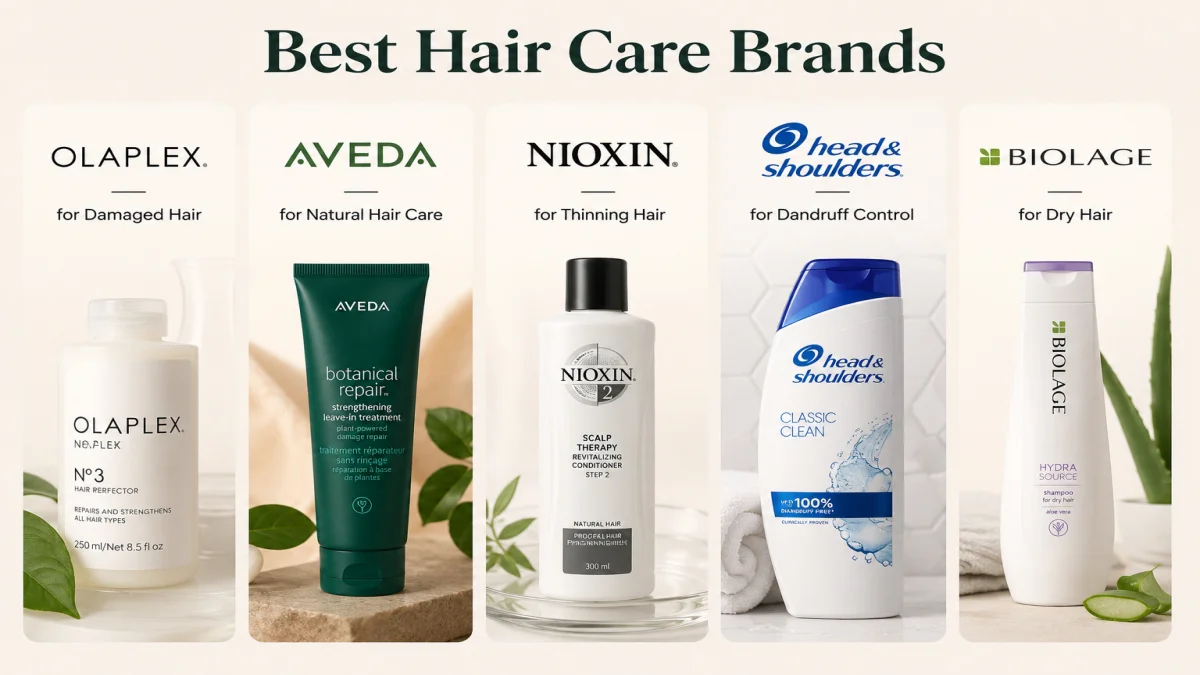
Olaplex for Damaged Hair
Olaplex is widely known for its bond-repair technology, which helps strengthen hair weakened by bleaching, coloring, or excessive heat styling. Its treatments are especially popular among people trying to repair damaged hair and reduce breakage.
Aveda for Natural Hair Care
Aveda focuses on plant-based formulas and scalp wellness. Many people prefer this brand because of its gentle ingredients and naturally inspired approach to hair care.
Nioxin for Thinning Hair
Nioxin products are designed to support scalp health and improve the appearance of thinning hair. Their systems often focus on cleansing the scalp and creating a healthier environment for hair growth.
Head & Shoulders for Dandruff Control
Head & Shoulders remains one of the most recognized brands for treating dandruff and itchy scalp conditions. Its anti-dandruff formulas help reduce flakes while keeping the scalp balanced.
Biolage for Dry Hair
Biolage products are known for providing hydration and softness, making them a popular choice for people with dry, damaged hair.
Final Thoughts
Building an effective hair care routine starts with understanding your hair type, scalp condition, and lifestyle. Instead of copying routines from social media or using products solely because of trends, focus on what your hair genuinely needs.
Healthy hair care is all about consistency, balance, and patience. Whether your goal is to reduce frizz, repair damage, improve scalp health, or promote stronger growth, choosing the right products and maintaining healthy habits can make a noticeable difference over time.
The best hair care routine is not the most complicated one. It is the routine that keeps your hair healthy, manageable, and supported every single day.
Frequently Asked Questions (FAQs)
How often should I wash my hair?
The ideal washing frequency depends on your hair type and scalp condition. Oily hair may need washing every one to two days, while curly or coily hair often benefits from washing once a week or as needed to maintain moisture.
What is the best hair care routine for dry hair?
A routine for dry hair should focus on hydration and repair. Using moisturizing shampoos, deep conditioners, and leave-in treatments, and reducing heat styling, can help reduce dryness and improve softness.
Can a poor diet affect hair health?
Yes, nutritional deficiencies can weaken hair, leading to thinning, breakage, and dullness. A balanced diet rich in protein, vitamins, and minerals supports healthier hair growth.
How can I reduce frizz naturally?
Using sulfate-free shampoos, avoiding excessive heat styling, applying leave-in conditioner, and sleeping on a satin pillowcase can help reduce frizz naturally.
Which hair care ingredients are best for damaged hair?
Ingredients such as keratin, argan oil, ceramides, and bond-building treatments are commonly recommended to repair damaged hair and improve strength.
Is scalp care important for healthy hair?
Yes, scalp health is essential for strong hair growth. A clean, balanced scalp helps support healthy follicles and reduce issues like dandruff, itching, and buildup.