Whether juggling work, parenting, or studies, quick and healthy meal prep can transform your energy levels and support long-term wellness goals. One underrated star of clean eating? Apple cider vinegar Recipe is a gut-friendly ingredient that can boost digestion, regulate blood sugar, and even aid weight management.
In this guide, you’ll learn:
How to make your apple cider vinegar from scratch
Balanced make-ahead meal prep ideas
Simple, energy-boosting recipes
Hydrating drinks to complement your plan
Let’s dive in and revitalize your wellness routine the smart way.
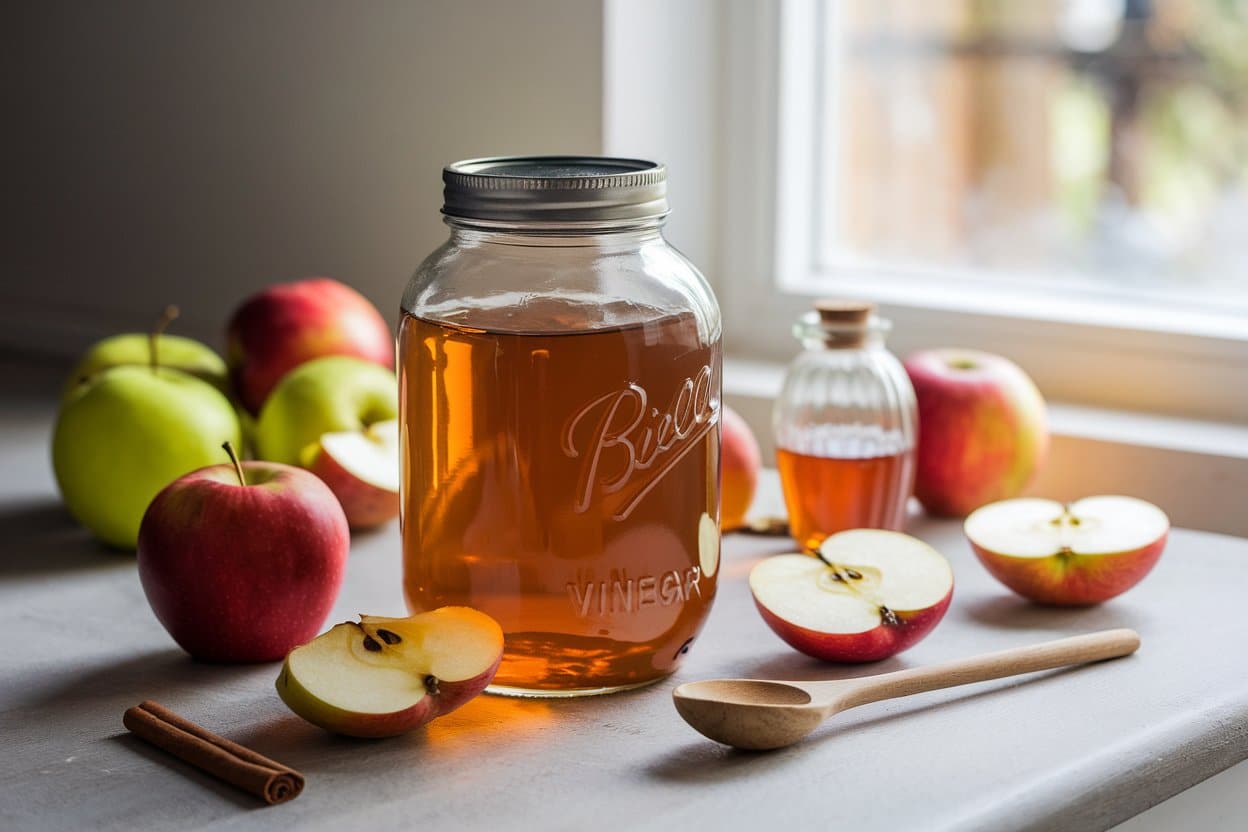
Homemade Apple Cider Vinegar Recipe
Apple cider vinegar is incredibly simple to make and requires minimal ingredients.
Ingredients:
Apple scraps (peels, cores – from 6–8 apples)
2 tablespoons of organic sugar or raw honey
Filtered water (enough to submerge apples)
A wide-mouth glass jar
Cheesecloth or breathable fabric & rubber band
Instructions:
Fill your jar with the apple scraps.
Mix sugar/honey with water and pour it over the apples until fully covered.
Cover the jar with cheesecloth and secure with a rubber band.
Store in a warm, dark place for 3–4 weeks, stirring every few days.
Strain out the apple solids and ferment for another 3–4 weeks until it smells tangy.
Use scraps: Apple cores and peels are perfect for homemade ACV
Meal plan weekly: Saves both money and stress
Meal Prep for Beginners: Tips to Succeed
Start small: Prep 1–2 meals a day to build consistency
Use clear containers: They help with portion control
Label everything: Reduces waste and keeps you organized
Stay flexible: Mix and match grains, proteins, and veggies
Final Thoughts
From gut-loving apple cider vinegar to balanced, budget-friendly meals, taking small, consistent steps can transform your health routine. Whether meal prepping overnight oats or sipping on an ACV electrolyte drink, the key is to fuel your body intentionally, not ideally.
Frequently Asked Questions (FAQs)
How often should I consume apple cider vinegar?
1–2 tablespoons a day, diluted in water or used in food, is considered safe for most people.
Can I drink ACV on an empty stomach?
Yes, but always dilute it. Straight ACV may harm tooth enamel or cause stomach discomfort.
How long does homemade ACV last?
Up to a year when stored in a cool, dark place. Once opened, refrigerate to prolong freshness.
Tacos are universally loved, and their versatility makes them a fantastic meal option for any occasion. But if you’re aiming to maintain a healthy diet without sacrificing taste, chicken tacos can easily fit into your nutritious meal plan. With lean protein, healthy fats, & plenty of fresh vegetables, healthy chicken tacos perfectly balance flavor and nutrition.
This blog will walk you through a Healthy Chicken Taco Recipe that is quick, easy, and customizable. Whether you’re looking to meal prep or create a light dinner, these tacos check all the boxes: delicious, nutritious, and satisfying.
Why Choose Chicken for Tacos?
Chicken is a lean protein, offering numerous health benefits while keeping the calorie count in check. It’s lower in fat than other meats, making it an excellent choice for anyone looking to eat healthily while still enjoying the rich flavors of tacos. Plus, chicken is incredibly versatile, allowing it to adapt to different seasonings, cooking methods, and taco variations.
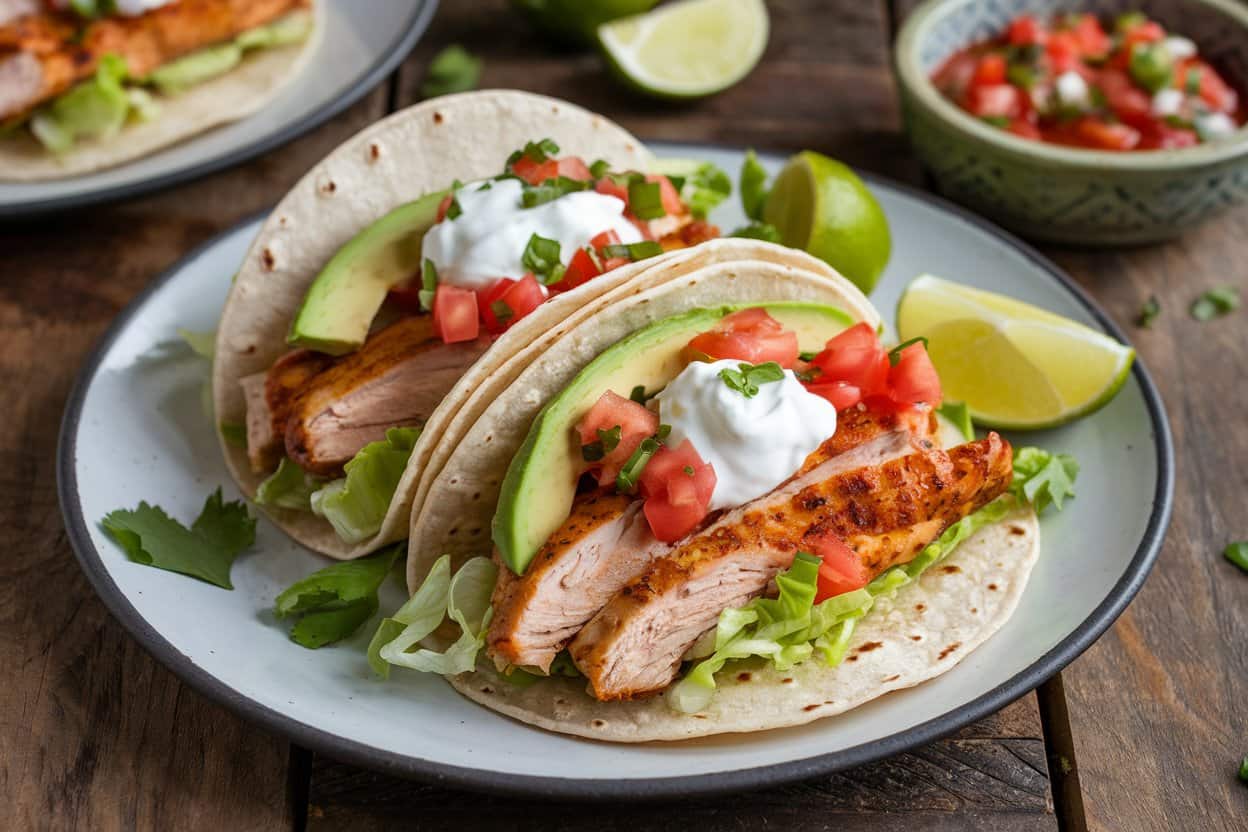
Healthy Chicken Taco Recipe
Ingredients:
For the Chicken:
1 lb (450g) boneless, skinless chicken breasts (organic or free-range if possible)
One tablespoon of olive oil
Two teaspoons taco seasoning (paprika, cumin, chili powder, garlic powder, onion powder, cayenne)
One tablespoon of fresh lime juice
Salt and pepper to taste
For the Toppings:
1 cup shredded lettuce (romaine or spinach for added vitamins)
1/2 cup diced tomatoes (rich in antioxidants)
1/2 cup diced avocado (heart-healthy fats)
1/4 cup diced red onion (for crunch)
1/4 cup chopped cilantro (for fresh flavor)
1/4 cup plain low-fat Greek yogurt (a protein-packed alternative to sour cream)
Tortillas (whole wheat, corn, or low-carb options)
Step-by-Step Instructions:
Prepare the Chicken
Begin by trimming any excess fat from chicken breasts. For more even cooking, place the chicken breasts between two sheets of plastic wrap & use meat mallet or rolling pin to quid them to an thickness.
Marinate the Chicken
Combine the taco seasoning, lime juice, olive oil, salt, and pepper in a small bowl. Coat the chicken breasts with this mixture. Allow the chicken to marinate for at least 15 minutes, but for best flavor, let it marinate in the refrigerator for up to 2 hours.
Cook the Chicken
Heat non-stick skillet or grill pan over medium-high heat. Heat the pan, then add the chicken breasts and cook for 6 to 7 minutes on each side, or until the internal temperature reaches 165°F (75°C). Be cautious not to overcook, as this can cause the chicken to become dry. After cooking, remove the chicken from the heat and let it rest for 5 minutes before slicing it into thin strips.
Warm the Tortillas
While the chicken rests, heat the tortillas. Place them on the stove burner for a few seconds on each side for a slight char, or heat them in a dry skillet for a softer option. Choose whole wheat or corn tortillas to keep things healthier and add more fiber.
Assemble the Tacos
Now comes the fun part! Take a tortilla and layer it with a few strips of chicken—top with shredded lettuce, diced tomatoes, avocado, red onion, and cilantro. For creaminess, add a spoonful of Greek yogurt. To enhance the flavor, squeeze fresh lime juice over the top.
Tips for Perfect Healthy Chicken Tacos
Use Lean Chicken Breast: Skinless chicken breast is low in fat, making it the healthiest option. For variety, you can also use lean turkey or ground chicken.
Add Extra Veggies: Enhance the nutritional value of your tacos by adding bell peppers, cucumbers, or even a light slaw for crunch.
Go Light on the Cheese: While cheese adds flavor, it’s calorie-dense. If you want cheese, opt for a small amount of sharp cheddar or feta, which have more muscular flavors and don’t require much.
Greek Yogurt vs. Sour Cream: Swap sour cream for plain low-fat Greek yogurt. It’s packed with protein and cuts down on calories without losing creaminess.
Make it Spicy: If you enjoy spice, add jalapeños or drizzle on your favorite hot sauce to elevate the flavor profile.
Nutritional Benefits of Healthy Chicken Tacos
This chicken taco recipe isn’t just tasty—it’s also packed with nutritional benefits. Here’s a quick breakdown of why this recipe is a healthy choice:
Chicken Breast: High in lean protein, promoting muscle repair and satiety.
Avocado: Full of heart-healthy monounsaturated fats and essential nutrients like potassium and fiber.
Tomatoes are great source of vitamins C & K and lycopene, supporting heart health.
Greek Yogurt: A protein powerhouse packed with probiotics for gut health.
Whole Wheat Tortillas: Higher in fiber than regular flour tortillas, supporting digestion and keeping you full longer.
Variations of the Healthy Chicken Taco Recipe
Low-Carb Option: Swap tortillas for lettuce wraps or serve the chicken and toppings over a bed of mixed greens to make a fresh taco salad.
Grilled Chicken Tacos: Grill the chicken for a smoky, outdoorsy flavor. This reduces the need for extra oil and enhances the taste.
Spicy Chicken Tacos: Add extra cayenne, chili flakes, or hot sauce to the chicken marinade for a spicy kick.
Gluten-Free Option: Choose corn tortillas or go grain-free with cauliflower or almond flour alternatives.
Why These Tacos Are Great for Meal Prep
These healthy chicken tacos are quick and easy to make and perfect for meal prepping. Cook chicken in advance & store it in the refrigerator for up to three days. When ready to eat, warm the tortillas, reheat the chicken, and assemble your tacos with fresh toppings. You can even pack these tacos for lunch by storing the chicken and toppings separately to prevent sogginess.
Conclusion
These Healthy Chicken Tacos are the ultimate balance of flavor, health, and ease. You’re creating a delicious, satisfying, and nutritious meal by focusing on lean chicken, fresh vegetables, and healthier toppings like Greek yogurt and avocado. Whether you’re preparing meals for the week or seeking a quick, nutritious dinner, this recipe will quickly become a staple in your kitchen.
So, the next time you’re craving tacos, skip the greasy takeout and try this healthy chicken taco recipe instead! It’s the perfect way to enjoy a flavorful meal without compromising on your health goals.
[vc_row][vc_column][vc_column_text]If you’ve ever wanted to recreate that restaurant-quality salmon pasta at home, you’re in the right place. While it might seem like an indulgent dish reserved for special occasions, Make salmon pasta with a few essential materials and techniques, and it’s surprisingly easy. Whether you’re a beginner or a seasoned cook, this step-by-step guide will help you master the secrets to preparing a gourmet salmon pasta meal that’s bursting with flavor.
Let’s dive in and discover how to bring this delicious dish from sea to table!
Why Salmon Pasta Deserves a Spot in Your Recipe Arsenal
Salmon pasta is an elegant, yet approachable dish that combines the richness of tender salmon with the comforting bite of pasta. The flavors are incredibly versatile, allowing you to craft anything from a light, lemony pasta for summer evenings to a creamy, indulgent version perfect for cozy nights in.
What makes this dish truly stand out is how easy it is to customize to your taste. Whether you prefer smoked salmon or fresh filets, creamy sauces or zesty, oil-based ones, salmon pasta offers endless opportunities for experimentation. It’s also loaded with nutrients—pasta gives you a filling energy boost, while salmon is a fantastic source of protein and omega-3 fatty acids.
Here’s a detailed recipe for a classic Creamy Garlic Salmon Pasta that’s sure to impress your family or guests:
Ingredients:
2 salmon fillets (fresh or smoked)
300g pasta (fettuccine, penne, or your choice)
1 cup heavy cream
1/2 cup grated parmesan cheese
2 cloves garlic (minced)
2 tbsp butter
1 lemon (zest and juice)
Fresh parsley (chopped)
Salt and pepper to taste
1/2 cup reserved pasta water
Follow these steps to create your own delicious version of salmon pasta, tailored to your preferences and ready to impress:
To make gourmet salmon pasta, you’ll want to start with high-quality, fresh ingredients. This dish’s flavors are basic, so the quality of your salmon and pasta really shines through.
Fresh salmon fillet being lightly seared in a pan with lemon slices, ready for a delicious and healthy meal.
Salmon
You have a few options when it comes to the salmon:
Fresh Salmon Filets: These are perfect for those who prefer tender, juicy flakes of fish throughout the dish. Fresh filets give you more control over the texture.
Smoked Salmon: For a rich, salty flavor with a slightly firmer texture, smoked salmon is an excellent choice. It’s especially good in lighter sauces, like lemon and herb butter.
Canned Salmon: If you’re short on time, canned salmon can work as a quick alternative. It’s not as luxurious, but it still delivers on flavor.
Pasta
The texture of pasta might vary significantly depending on the kind you select:
Long Pasta: Fettuccine, spaghetti, or linguine are excellent for creamy sauces, where you want the sauce to cling to every strand.
Short Pasta: Penne, rigatoni, or farfalle work well in chunkier dishes where you want the pasta to catch bits of salmon and vegetables.
Fresh Herbs and Vegetables
For an added layer of flavor and brightness, fresh herbs like parsley, dill, or basil complement salmon beautifully. Vegetables like spinach, cherry tomatoes, or asparagus can add color and texture, while boosting the nutritional value of the dish.
Preparing the Salmon
How you prepare your salmon depends on the type you’re using:
Fresh Salmon Filets: Season your filets with salt, pepper, and a bit of lemon zest. Melt a tiny amount of butter or olive oil in a pan over medium heat. Sear the salmon filets skin-side down for about 4-5 minutes, The salmon should be cooked through but still moist after two to three minutes of cooking on the opposite side. Remove and set aside.
Smoked Salmon: Since it’s already cooked, smoked salmon is ready to add straight into the pasta. Simply slice it into thin strips or bite-sized pieces and toss it in at the last step.
Canned Salmon: Drain the canned salmon and break it into chunks. You can add it to the sauce once it’s heated to keep things quick and easy.
Cooking the Pasta to Perfection
Boil a large pot of salted water for your pasta. Cooking it until it’s firm to the bite but not overly done is crucial. Overcooked pasta becomes mushy, especially when mixed with sauce.
Save roughly ½ cup of the pasta water before emptying. This water with starch is a covert weapon for creating a silky sauce that clings to the pasta, adding richness without needing to overload on cream or butter.
Crafting the Perfect Sauce
Creamy garlic sauce simmering in a pan, garnished with herbs for added flavor.
The sauce can make or break your salmon pasta, and fortunately, there are several routes you can take depending on the style you’re aiming for.
Creamy Garlic Sauce
A classic creamy garlic sauce is indulgent yet easy to make. Here’s how to do it:
The pan used to cook the fish was added a tablespoon of butter and sauté minced garlic for about a minute until fragrant.
Pour in heavy cream (about 1 cup) and let it simmer for a couple of minutes.
Stir in grated parmesan cheese (½ cup) and allow the sauce to thicken.
Once the sauce has reached a smooth and creamy consistency, add a small amount of the pasta water that was set aside.
Add some salt, pepper, and freshly squeezed lemon juice for seasoning.
Lemon Butter Sauce
For a lighter option, try a lemon butter sauce:
In a pan over low heat, melt the butter.
Simmer the minced garlic for one minute after adding it, then whisk in the lemon zest and juice.
Once the sauce is thoroughly combined and somewhat thickened, whisk in a few tablespoons of olive oil and a little amount of the pasta water that was set aside.
For a hit of freshness, toss in some fresh herbs, such as parsley or dill.
Bringing It All Together
Now that your pasta, salmon, and sauce are ready, it’s time to combine everything:
To the sauce, add the cooked pasta, tossing well to coat every strand or piece.
Flake the seared salmon into chunks and gently fold it into the pasta.
If you’re using smoked salmon, stir it in at this stage to warm it through without cooking it further.
Add any finishing touches, like fresh herbs, a sprinkling of parmesan cheese, or lemon zest.
For extra flavor, try tossing in lightly sautéed spinach, roasted cherry tomatoes, or grilled asparagus.
Perfect Presentation
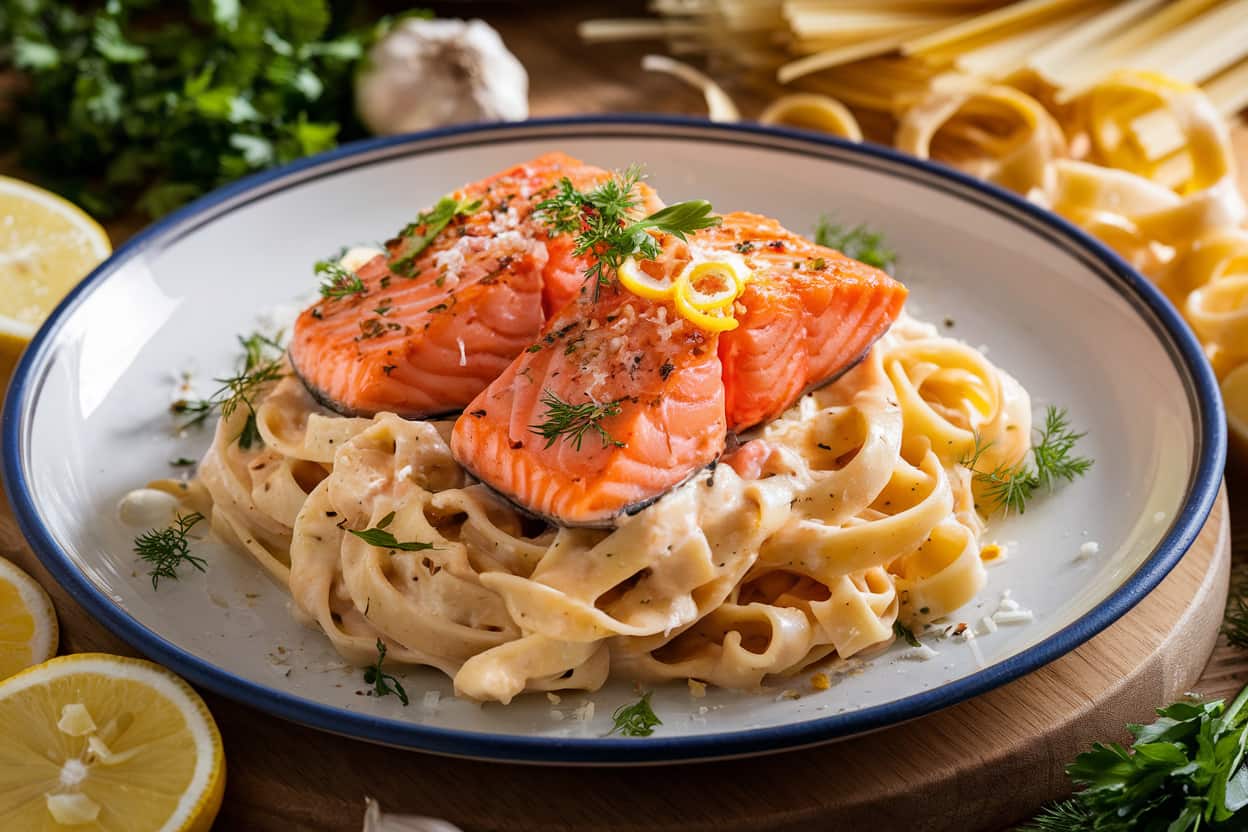
Serving up a delicious plate of creamy fettuccine pasta with tender salmon, accompanied by a refreshing glass of white wine and a light salad – a perfect gourmet meal.
The final step in creating your gourmet salmon pasta is presentation. Even a simple dish can look elegant with the right plating. Here’s how to make it restaurant-worthy:
Twirl the Pasta: Use tongs to twirl a portion of pasta onto each plate, creating a neat mound.
Top with Salmon: Gently place larger chunks of salmon on top of the pasta.
Finish with Garnishes: As a final touch, add some red pepper flakes, fresh parsley, and a tiny quantity of extra virgin olive oil.
Serve with a Side: For a complete meal, serve your salmon pasta with a side of garlic bread or a simple green salad.
Conclusion
Salmon pasta doesn’t have to be complicated or reserved for special occasions. With these step-by-step secrets, you can create a gourmet meal in the comfort of your own kitchen. Whether you’re opting for a creamy garlic sauce or a light lemon butter variation, the use of fresh ingredients is essential for success and mastering simple techniques like cooking your pasta al dente and perfectly preparing your salmon.
So next time you’re in the mood for a sophisticated yet comforting dish, remember these salmon pasta secrets and elevate your dinner to gourmet levels[/vc_column_text][/vc_column][/vc_row][vc_row][vc_column width=”1/1″][us_separator size=”small”][us_text text=”Frequently Asked Questions (FAQ)” link=”%7B%22url%22%3A%22%22%7D” tag=”h2″][vc_tta_accordion][vc_tta_section title=”Can I use a different type of pasta for this recipe?” tab_link=”%7B%22url%22%3A%22%22%7D”][vc_column_text]Yes, while fettuccine is often used for creamy sauces, you can substitute it with other pasta types like spaghetti, linguine, or even penne for a different texture.[/vc_column_text][/vc_tta_section][vc_tta_section title=”What’s the best way to cook the salmon for this dish?” tab_link=”%7B%22url%22%3A%22%22%7D”][vc_column_text]For optimal flavor and texture, grilling or pan-searing the salmon fillets is ideal. You can also bake or poach the salmon if you prefer a lighter cooking method.[/vc_column_text][/vc_tta_section][vc_tta_section title=”Can I use canned or smoked salmon instead of fresh fillets?” tab_link=”%7B%22url%22%3A%22%22%7D”][vc_column_text]Yes, canned or smoked salmon can be used if you’re short on time. However, fresh fillets offer the best taste and texture for this gourmet dish.[/vc_column_text][/vc_tta_section][vc_tta_section title=”How do I make the creamy sauce?” tab_link=”%7B%22url%22%3A%22%22%7D”][vc_column_text]The sauce typically consists of heavy cream, butter, garlic, and Parmesan cheese. You can also add a splash of white wine or lemon juice to enhance the flavor.[/vc_column_text][/vc_tta_section][vc_tta_section title=”What herbs and seasonings work best with salmon pasta?” tab_link=”%7B%22url%22%3A%22%22%7D”][vc_column_text]Fresh dill, parsley, lemon zest, and black pepper are commonly used to season the salmon and pasta, bringing out fresh, zesty flavors. You can also add a pinch of red pepper flakes for heat.[/vc_column_text][/vc_tta_section][vc_tta_section title=”Can I make this dish ahead of time?” tab_link=”%7B%22url%22%3A%22%22%7D”][vc_column_text]While it’s best served fresh, you can prepare the sauce and pasta ahead of time and store them separately. Reheat gently and combine them when you’re ready to serve.[/vc_column_text][/vc_tta_section][vc_tta_section title=”How can I make this dish healthier?” tab_link=”%7B%22url%22%3A%22%22%7D”][vc_column_text]To lighten the dish, use low-fat cream or substitute with Greek yogurt for the sauce. You can also grill the salmon with minimal oil and add more vegetables like spinach or asparagus.[/vc_column_text][/vc_tta_section][vc_tta_section title=”Can I use other seafood instead of salmon?” tab_link=”%7B%22url%22%3A%22%22%7D”][vc_column_text]Absolutely! You can substitute the salmon with shrimp, scallops, or even a white fish like cod or tilapia for a different twist on the dish.[/vc_column_text][/vc_tta_section][vc_tta_section title=”What side dishes pair well with salmon pasta?” tab_link=”%7B%22url%22%3A%22%22%7D”][vc_column_text]This dish pairs well with a light side salad, garlic bread, or roasted vegetables like asparagus or broccoli to complement the rich flavors of the pasta.[/vc_column_text][/vc_tta_section][vc_tta_section title=”How long will leftovers last in the fridge?” tab_link=”%7B%22url%22%3A%22%22%7D”][vc_column_text]Leftover salmon pasta can be stored in an airtight container in the fridge for up to 2-3 days. Reheat on low heat to avoid drying out the salmon.[/vc_column_text][/vc_tta_section][vc_tta_section title=”Section”][/vc_tta_section][/vc_tta_accordion][/vc_column][/vc_row]