
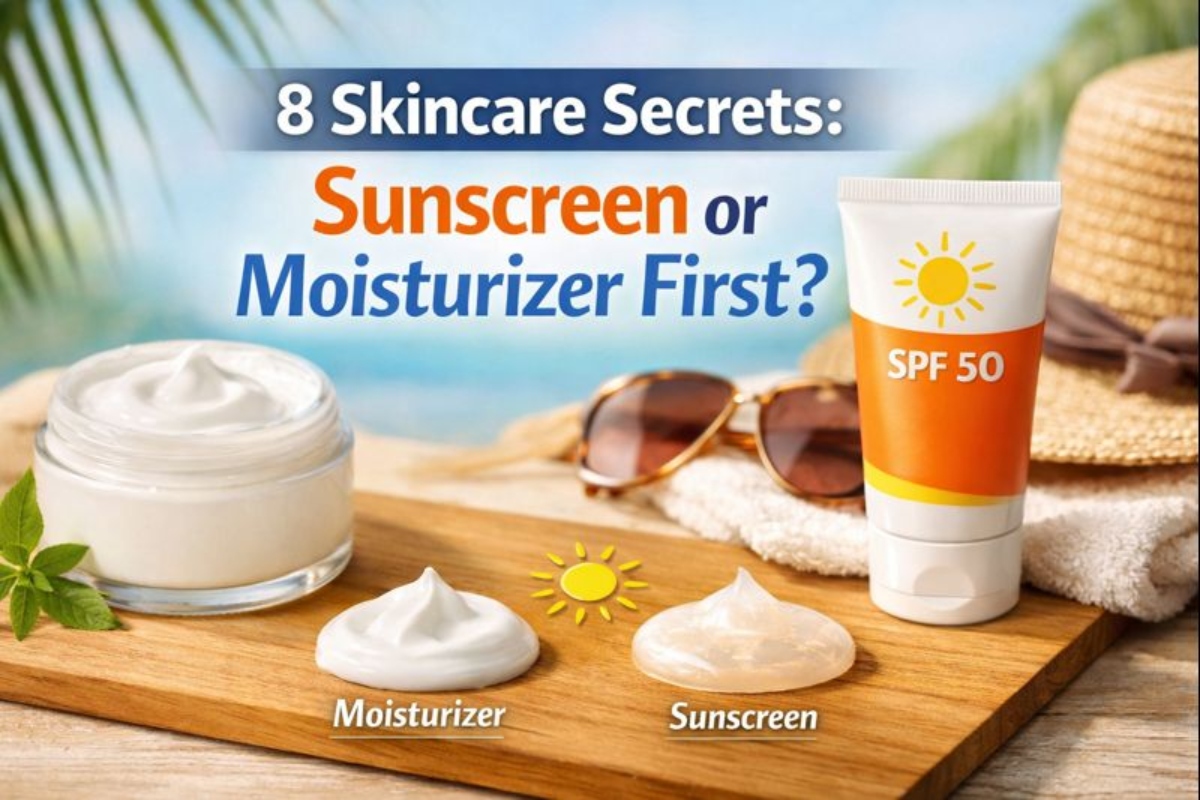
If you have ever stood in front of your mirror wondering whether to use sunscreen or moisturizer first, you are not alone. This question continues to perplex beginners and seasoned skincare users alike, yet it plays a crucial role in determining the true effectiveness of your routine. The order in which products are applied directly affects hydration, sun protection, and the performance of active ingredients.
When products are layered incorrectly, sunscreen coverage can become uneven, hydration may feel insufficient, and the skin barrier can weaken over time. Understanding the correct order is not about following trends, it is about working with how skincare formulations are designed to function. Once this foundation is clear, the entire routine becomes more effective and easier to maintain.
Moisturizer should be applied before sunscreen in a daytime skincare routine. Moisturizer hydrates the skin and supports barrier health, while sunscreen is designed to sit on top of the skin and form a protective layer against UV damage. Applying sunscreen last ensures consistent coverage and reliable sun protection throughout the day.
Why Layering Order Matters in Skincare
Every skincare product serves a specific function, and the order of application directly affects how well each one works. Moisturizers are designed to absorb into the skin, strengthen the protective barrier, and improve concerns like dull skin, while sunscreens are formulated to stay on the surface to block or absorb harmful ultraviolet rays.
When sunscreen is applied too early or disrupted by other products, its protective layer can become uneven or weakened. Likewise, applying moisturizer over sunscreen can break this layer and reduce overall effectiveness. Proper layering ensures hydration reaches the skin where it is needed and sun protection remains intact, resulting in healthier skin over time and more consistent, visible results.
8 Skincare Secrets of Applying Sunscreen or Moisturizer First
Secret #1: Moisturizer Creates the Right Base for Sun Protection
Moisturizer plays a far more critical role than simply preventing dryness. Hydrated skin is smoother, more flexible, and better able to hold sunscreen evenly across the surface. When skin lacks moisture, sunscreen may cling to dry areas, settle unevenly, or feel uncomfortable throughout the day.
Applying moisturizer first helps soften the skin and reduce flakiness, allowing sunscreen to glide on smoothly and stay in place. This step is crucial for those exposed to air conditioning, heating, or dry environments, where dehydration can quietly compromise both comfort and protection.
Secret #2: Sunscreen Works Best as the Final Skincare Step
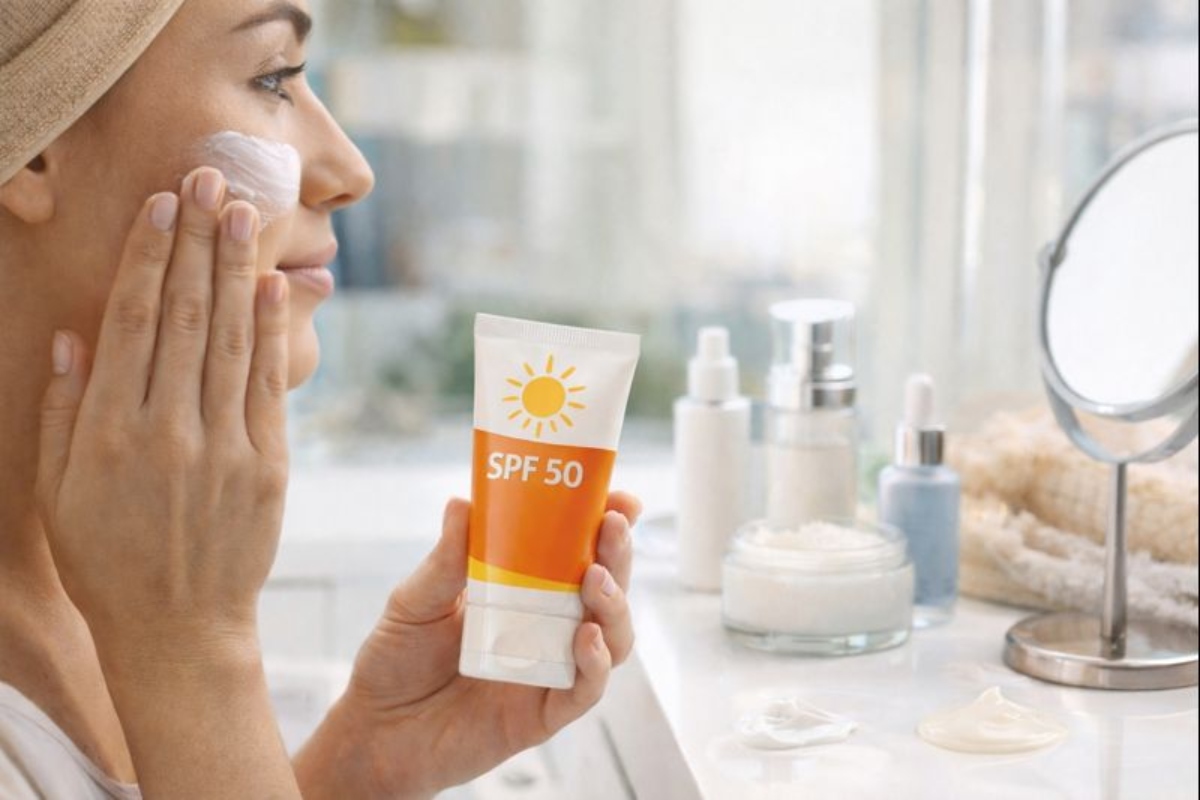 The question sunscreen or moisturizer first matters because sunscreen is fundamentally different from other skincare products. Unlike treatments that absorb into the skin, sunscreen works by creating a protective shield on the surface. Whether mineral or chemical, it needs to create a smooth, continuous layer to effectively defend the skin against harmful UV radiation.
Applying additional skincare products after sunscreen can disturb this protective film, creating gaps that reduce coverage and weaken protection. That is why dermatologists consistently advise applying sunscreen as the final step in a daytime routine, after cleansing, treatments, and moisturizing. Once sunscreen is in place, it should remain undisturbed until makeup is applied, allowing its barrier to stay intact and fully effective throughout the day.
Secret #3: Sunscreen Type Changes Texture, Not Application Order
The difference between chemical and mineral sunscreen affects how the product feels on the skin, but it does not change the order in which it should be applied. Chemical sunscreens tend to feel lighter and absorb more quickly, while mineral sunscreens sit on the surface and may feel thicker or more visible.
Despite these differences, both types require a moisturized base and should always be applied last. Adjusting your moisturizer texture can help improve how sunscreen wears, but the sequence itself should remain consistent.
Secret #4: A Logical Morning Routine Improves Results
A well structured morning routine ensures that each product can perform its role without interference. Cleansing removes residue and oil, Vitamin C Serum addresses specific skin concerns while providing antioxidant support, moisturizer supports hydration, and sunscreen provides essential protection.
When this order is followed consistently, products absorb more effectively and the skin responds better over time. Skipping steps or changing the order often leads to irritation, reduced protection, or products failing to deliver visible benefits.
Secret #5: Makeup Cannot Replace Dedicated Sunscreen
Although many foundations and tinted products contain SPF, they are not reliable substitutes for sunscreen. Most people apply far less makeup than needed to reach the labelled SPF level, resulting in insufficient UV protection.
Sunscreen must always be applied as a separate step before makeup. Makeup enhances appearance, while sunscreen protects skin health. Treating them as interchangeable often leads to long term damage that becomes visible years later.
Secret #6: Skin Type Affects Formula Choice, Not Layering Order
Different skin types require different product textures, but the layering sequence remains the same. Lightweight moisturizers work well for oily or acne prone skin, while richer creams better support dry or compromised skin barriers.Regardless of skin type, moisturizer should always come before sunscreen. Choosing the right formulas ensures comfort and consistency, while maintaining the correct order ensures effectiveness.
Secret #7: Allowing Time Between Layers Makes a Difference
Rushing through skincare can lead to pilling, uneven application, and reduced performance. Allowing moisturizer to absorb for about a minute before applying sunscreen helps prevent product mixing and improves how sunscreen adheres to the skin.This short pause supports even coverage and helps sunscreen form a stable protective layer. Minor adjustments like this often lead to noticeably better results without adding complexity to the routine.
Secret #8: Daily Consistency Matters More Than Perfection
Even the most carefully layered routine is ineffective if it is not followed consistently. Daily sunscreen use is far more critical than finding the “perfect” product or technique. UV exposure accumulates gradually, meaning small daily habits have a significant long term impact.A simple routine practised every day protects the skin more effectively than an elaborate routine followed occasionally. Consistency is what ultimately preserves skin health and appearance.
Sunscreen or Moisturizer First
Step | Purpose | Why It Matters |
| Moisturizer | Hydration & barrier support | Creates smooth base for sunscreen |
| Sunscreen | UV protection | Forms protective film against sun damage |
| Makeup | Cosmetic coverage | Enhances appearance without replacing SPF |
Practical Tips for Using Sunscreen or Moisturizer Correctly
Using sunscreen or moisturizer correctly isn’t just about the order, it’s about timing, quantity, and technique. Even high quality products can underperform if they’re misapplied or rushed through in a daily routine.
Begin with freshly cleansed skin that’s free from leftover makeup, oil, or cleanser residue. Clean skin allows moisturizer to absorb more effectively and prevents sunscreen from sliding or separating. If your skin feels tight after cleansing, apply moisturiser while it’s still slightly damp. This helps trap water in the skin, supports barrier repair, and improves long term hydration rather than just surface softness.
When applying moisturizer, focus on even distribution across the face, neck, and jawline. These areas are often exposed equally to environmental stress but are commonly neglected. Use gentle, upward motions and allow at least 30–60 seconds for absorption. Rushing this step can cause sunscreen to mix unevenly with moisturizer, reducing both hydration and protection.
Sunscreen should always be applied generously and intentionally. Most adults need approximately two fingers length of product for the face and neck combined. Applying too little dramatically reduces SPF effectiveness, even if the label claims high protection. Instead of aggressively rubbing, gently spread and press the sunscreen into the skin to form a uniform protective layer.
Pay extra attention to high risk zones such as the hairline, sides of the nose, lips, chin, and ears. These areas are often missed but are highly prone to sun damage. Allow sunscreen to set for at least one to two minutes before applying makeup to prevent pilling and maintain even coverage.
Common Mistakes That Reduce Sun Protection
Many people unintentionally reduce the effectiveness of their sunscreen through everyday habits that seem harmless. One of the most common issues is applying too little product. Sunscreen needs to be used in a generous amount to form an even protective layer, and using less than recommended leaves parts of the skin exposed without obvious signs.Incorrect layering is another frequent problem. Applying sunscreen before moisturiser or mixing sunscreen directly into moisturiser can dilute its protective strength and prevent it from forming a consistent shield. While combining products may feel convenient, it often results in uneven coverage and reduced SPF performance.
Another overlooked mistake is failing to reapply sunscreen during extended sun exposure. Even when sunscreen is applied correctly in the morning, it gradually breaks down due to sweat, oil, and environmental exposure. Without timely reapplication, protection weakens significantly, increasing the risk of sun damage throughout the day.Addressing these habits and applying sunscreen intentionally helps ensure consistent coverage and reliable protection over time.
Long Term Impact of Correct Layering
 Correctly layering moisturizer and sunscreen plays a critical role in maintaining long term skin health. When sunscreen is applied as the final step, it forms a stable protective barrier that helps preserve collagen levels, which are essential for keeping the skin firm and resilient. This consistent protection also supports a more even skin tone and can help reduce flare ups such as Acne Around Mouth, which may worsen with irritation and sun-induced sensitivity.
UV damage does not occur all at once; it builds gradually through small, daily exposures. Incorrect layering can weaken sunscreen performance just enough to allow this damage to accumulate, even when a routine appears consistent. Over time, this may lead to premature fine lines, uneven texture, and increased sensitivity.By following the correct order each day, the skin is better equipped to defend itself and recover naturally. This proactive approach promotes smoother, healthier-looking skin and reduces the need for corrective treatments.
Conclusion:
The question sunscreen or moisturizer first has a clear, science based answer. Moisturizer nourishes and prepares the skin, while sunscreen seals in protection as the final step. When layered correctly and used consistently, this simple routine protects your skin daily and helps maintain its health and appearance for years to come.
Frequently Asked Questions (FAQs)
1. Should I apply sunscreen or moisturizer first in the morning?
Moisturizer first, sunscreen last.
2. Can I skip moisturizer if my sunscreen feels hydrating?
Some sunscreens hydrate, but a separate moisturizer often provides better barrier support.
3. Does sunscreen go before or after serum?
Serums come before moisturizer, sunscreen is always last.
4. Can I reapply sunscreen over moisturizer during the day?
Yes, using sunscreen sprays or powders designed for reapplication.
5. Is sunscreen necessary indoors?
Yes, UVA rays penetrate glass and contribute to aging.